Nanomedicines promise therapeutic advantages that are difficult to achieve with conventional dosage forms, including improved targeting, altered pharmacokinetics, protected delivery of fragile payloads, and platform adaptability across drug classes. Yet these benefits depend on manufacturing systems that can repeatedly generate nanoscale products within narrow physicochemical and biological performance windows. The central difficulty is that small changes in process conditions can produce disproportionate changes in particle size, morphology, surface properties, encapsulation efficiency, release behaviour, and biological interaction. Despite decades of academic activity, the translation of nanomedicine from laboratory prototypes to routine clinical and industrial products remains limited. Many formulations are optimised in small batches under conditions that are poorly suited to pilot or commercial production. As a result, promising nanocarriers may fail not because their therapeutic concept is weak, but because their quality attributes cannot be reproduced reliably at scale. The analysis identifies a systemic mismatch between laboratory-optimised formulation methods and industrial requirements for control, documentation, comparability, continuous monitoring, and GMP-ready reproducibility. Four tables synthesise manufacturing platforms, scale-up fragility points, reproducibility challenges, and regulatory or industrial barriers. Together, these syntheses support a translational quality framework centred on process understanding, platform logic, critical quality attributes, and regulatory co-evolution. The review concludes that nanomedicine translation cannot rely on linear scale-up assumptions. Robust translation requires a shift toward platform-based manufacturing, quality-by-design development, integrated process analytical technology, orthogonal characterisation, predictive scale-down models, and shared regulatory learning. Nanomedicines will become clinically credible only when therapeutic innovation is matched by reproducible, affordable, and auditable manufacturing systems.
Nanomedicines are not merely small drug particles, but multicomponent colloidal systems whose therapeutic behaviour is inseparable from their manufacturing history. Their clinical performance may depend on particle size distribution, interfacial composition, payload localisation, surface charge, morphology, aggregation state, and stability during storage and administration. This complexity explains why translation remains difficult even when preclinical efficacy is promising, because clinical readiness requires reproducible quality rather than isolated proof of concept [1]. The persistent gap between laboratory promise and clinical delivery has made manufacturing reliability a central determinant of nanomedicine value [2].
The expansion of nanomedicine research has produced sophisticated lipid, polymeric, inorganic, and hybrid nanocarriers, but the number of products reaching routine use remains comparatively narrow. Clinical translation has been strengthened by lipid nanoparticle systems for nucleic acid delivery, especially through mRNA vaccine platforms, yet these successes also exposed the intensity of manufacturing control required for such products [3]. Reviews of lipid nanoparticle diversity show that formulation architecture, ionisable lipid chemistry, mixing environment, and downstream handling jointly shape product identity [4]. Therefore, nanomedicine development cannot be interpreted only as molecular design or biological targeting; it must also be interpreted as manufacturing-system design [5].
The central thesis of this review is that scale-up fragility and reproducibility failure are not secondary technical inconveniences. They are symptoms of a deeper conceptual problem in which formulation discovery is often separated from process architecture, quality risk, and regulatory evidence generation. Critical quality attributes must be defined early, but many academic programmes still treat characterisation as a post-production confirmation rather than as an embedded design principle [6]. Quality-by-design approaches seek to reverse this logic by linking material attributes, process parameters, and quality outcomes from the beginning of development [7, 8].
This review therefore offers a critical conceptual synthesis rather than a catalogue of nanocarrier types. It examines how manufacturing platforms encode different assumptions about mixing, energy input, purification, control, and scalability. Regulatory discussions of nanomedicines increasingly emphasise similarity, comparability, and lifecycle evidence, but the absence of harmonised expectations continues to complicate development strategy [9, 10]. The review focuses on how nanomedicine quality can be translated from benchtop performance to GMP-ready production through more coherent integration of manufacturing science, process engineering, and regulatory thinking [11].
Quality-by-design in nanomedicine refers to a development philosophy in which intended product performance is connected to critical material attributes, critical process parameters, and critical quality attributes. For nanomedicines, CQAs commonly include size distribution, polydispersity, surface charge, morphology, encapsulation efficiency, residual solvents, sterility, stability, release behaviour, and biological interaction [6]. Unlike conventional small-molecule tablets, however, these attributes may be interdependent rather than independently adjustable. This makes QbD particularly important because process changes can shift several quality dimensions simultaneously [8, 12].
Manufacturing fragility should be distinguished from ordinary process variability. Variability implies measurable fluctuation around a controllable target, whereas fragility implies that the system may cross hidden thresholds where mixing regime, nucleation behaviour, aggregation, precipitation, or lipid self-assembly changes qualitatively. Rapid-mixing production of lipid nanoparticles illustrates this distinction, because small alterations in flow ratio, total flow rate, solvent composition, or device geometry may reshape particle formation pathways [13, 14]. Mechanistic work on chaotic micromixers further shows that nanoparticle formation depends on local mixing conditions that are difficult to reproduce by simple geometric enlargement [15].
Reproducibility in nanomedicine also extends beyond chemical identity. Two batches with similar nominal composition may differ in colloidal stability, payload distribution, protein corona formation, immune interaction, release kinetics, or biodistribution. This is why manufacturing and characterisation must be connected to biological relevance rather than limited to a narrow set of physicochemical descriptors [16]. Microfluidic and lipid-based nanomedicine manufacturing reviews increasingly frame reproducibility as a function of platform control, inline monitoring, and process traceability rather than as a final analytical checkpoint [17, 18].
Nanomedicine manufacturing platforms differ because they embody different process logics. Thin-film hydration is accessible and widely used for liposomes, but its dependence on hydration conditions, post-processing, and size reduction can make it difficult to standardise at large scale. Solvent-free and intensified liposome methods attempt to reduce this fragility by improving process continuity and limiting uncontrolled manual steps [19]. Continuous manufacturing concepts for liposomal products similarly shift attention from batch preparation toward residence time, flow control, and integrated downstream processing [20, 21].
Microfluidic manufacturing represents a different logic because nanoparticle formation is governed through controlled microscale mixing rather than bulk vessel agitation. This approach is especially relevant for lipid nanoparticles and nucleic acid delivery, where rapid solvent exchange and self-assembly must be precisely controlled [14]. Reviews of microfluidic nanomedicine manufacturing emphasise scale-independent mixing environments, although industrial translation still requires parallelisation, robust device operation, and reliable process monitoring [17, 22]. The advantage of microfluidics is therefore not automatic scalability, but a stronger basis for defining and controlling formation conditions [18].
Polymeric nanoparticles and solid lipid nanoparticles expose another manufacturing logic in which precipitation, emulsification, homogenisation, or lipid solidification determine product structure. PLGA nanomedicines require close control of polymer properties, solvent removal, purification, and downstream concentration, while solid lipid nanoparticle scale-up depends on thermal history, lipid crystallisation, surfactant behaviour, and homogenisation energy [23, 24]. These platforms often appear simple at laboratory scale because small batches conceal the sensitivity of heat transfer, solvent gradients, and mechanical energy distribution. Broader reviews of polymeric nanoparticle scale-up show that the same nominal formulation may behave differently once equipment geometry and production volume change [25].
Table 1 summarises the dominant nanomedicine manufacturing platforms and their intrinsic design logic. The table highlights that platform selection is never a neutral technical choice, because each method carries specific assumptions about how nanoscale structure is generated and controlled. Lipid nanoparticle production has advanced through rapid-mixing approaches and microfluidic devices, while mass-production studies and comparative antisolvent precipitation work show that equipment architecture directly affects product quality [13, 26, 27]. Emerging solid lipid nanoparticle and semi-continuous Microfluidizer® approaches further suggest that platform maturity depends on linking process principle, monitoring strategy, and industrial operating range [28-30].
Table 1. Nanomedicine Manufacturing Platforms: Design Logic, Process Principles, and Critical Attributes
Manufacturing platform | Dominant design logic | Main process principle | Typical nanomedicine products | Critical attributes most affected | Translational strength | Translational limitation |
Thin-film hydration with size reduction | Laboratory-accessible vesicle formation | Lipid film hydration followed by extrusion, sonication, or homogenisation | Liposomes, lipid vesicles | Size distribution, lamellarity, encapsulation efficiency, residual solvent, sterility | Simple research entry point and broad formulation flexibility | Operator dependency, batch variability, difficult direct scale-up |
Ethanol or solvent injection | Self-assembly driven by solvent dilution | Organic phase injection into aqueous phase under controlled mixing | Liposomes, lipid nanoparticles, polymeric nanoparticles | Particle size, polydispersity, payload distribution, residual solvent | Amenable to rapid formation and process intensification | Sensitive to mixing, solvent removal, and local concentration gradients |
Microfluidic rapid mixing | Controlled microscale assembly | Defined flow rate, flow ratio, mixer geometry, and residence time | Lipid nanoparticles, polymeric nanoparticles, nucleic acid carriers | Size, encapsulation, morphology, batch consistency, nucleic acid protection | Strong process control and potential continuous operation | Scale-out complexity, clogging risk, device robustness, monitoring burden |
Flash nanoprecipitation or antisolvent precipitation | Supersaturation-controlled nucleation | Rapid solvent displacement and precipitation under high mixing intensity | Polymeric nanoparticles, lipid nanoparticles, hydrophobic drug carriers | Nucleation rate, aggregation, residual solvent, drug loading | Suitable for poorly soluble compounds and continuous processing | Narrow operating window and high sensitivity to solvent and mixing conditions |
High-pressure homogenisation and Microfluidizer® processing | Mechanical energy-driven size reduction or dispersion | Shear, cavitation, impact, and recirculation under pressure | Solid lipid nanoparticles, nanostructured lipid carriers, lipid dispersions | Size reduction, thermal stress, crystallinity, stability | Industrial familiarity and semi-continuous potential | Heat generation, equipment wear, scale-dependent energy distribution |
Continuous downstream processing | Quality preservation after formation | Inline dilution, purification, concentration, sterile filtration, and monitoring | Liposomes, lipid nanoparticles, PLGA nanoparticles | Purity, concentration, stability, residual solvent, microbial control | Supports GMP integration and process analytical technology | Downstream steps may become the true scale-up bottleneck |
Figure 1 presents the platform-dependent manufacturing logic that determines how nanomedicine quality attributes emerge from process design.
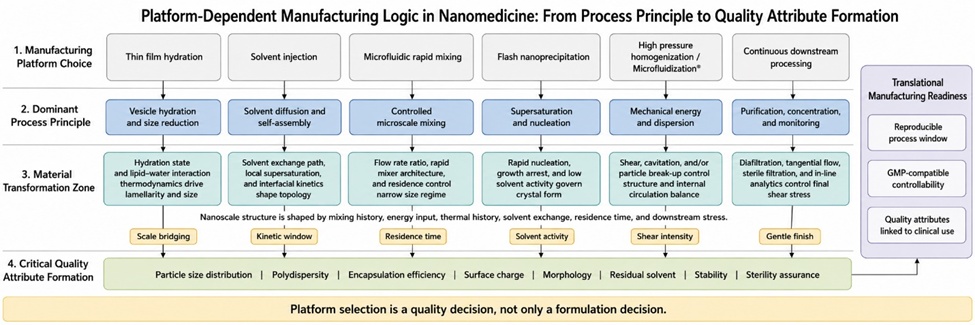
Figure 1. Platform-Dependent Manufacturing Logic in Nanomedicine: From Process Principle to Quality Attribute Formation
Scale-up fragility emerges when nanoscale formation mechanisms are controlled by physical phenomena that do not scale linearly. Mixing time constants, diffusion distances, turbulence regimes, heat transfer surfaces, shear gradients, and residence-time distributions may all change when a formulation moves from millilitres to litres. Liposome and lipid nanoparticle studies show that rapid formation processes are especially dependent on local mixing histories rather than only on final composition [15, 21]. Antisolvent precipitation studies similarly demonstrate that nanoparticle attributes can shift when microscale hydrodynamics change, even if the formulation recipe remains unchanged [27].
Liposomes illustrate how laboratory convenience can design fragility into a product from the outset. Processes that rely on film hydration, sonication, extrusion, or manual transfer steps may generate acceptable research batches but leave unresolved questions about energy input, sterility, process hold times, and reproducible size reduction. Continuous manufacturing proposals for liposomal products attempt to reduce these vulnerabilities by replacing discontinuous handling with defined flow, residence time, and controlled downstream processing [20]. Semi-continuous and solvent-free production studies further show that scale-up success depends on redesigning the process rather than merely enlarging the vessel [19, 28].
Polymeric nanoparticles and PLGA-based nanomedicines reveal a related but distinct fragility. Solvent evaporation, nanoprecipitation, polymer concentration, purification, and drying can each alter size distribution, residual solvent, surface properties, and payload retention. Industrial-scale manufacturing studies of PLGA-based nanomedicines indicate that continuous downstream processing can be as important as nanoparticle formation itself [24, 31]. Broader scale-up reviews reinforce that polymeric systems often fail when laboratory-defined process windows are too narrow to tolerate industrial equipment variability [25].
Table 2 identifies the key scale-up fragility points in nanomedicine production. These fragility points are not isolated defects but interconnected failure pathways through which formulation, equipment, and quality systems interact. Microfluidic lipid nanoparticle production reduces some bulk-mixing uncertainty, but it introduces new challenges associated with device robustness, parallelisation, pressure control, clogging, and inline monitoring [14, 17]. Mass-production and Microfluidizer® studies suggest that scalable operation becomes credible only when critical process parameters are coupled to real-time or at-line quality feedback [26, 29].
Table 2. Scale-Up Fragility Points in Nanomedicine Manufacturing: Process Parameters, Failure Modes, and Mitigation Strategies
Fragility point | Scale-sensitive process parameter | Typical failure mode | Quality consequence | Most affected platforms | Mitigation strategy |
Mixing regime shift | Mixing time, flow ratio, Reynolds number, residence time | Different nucleation or self-assembly pathway | Broader size distribution, altered morphology, poor encapsulation | Lipid nanoparticles, polymeric nanoparticles, antisolvent precipitation systems | Use scale-down mixing models, microfluidic control, defined residence-time distributions |
Heat transfer limitation | Temperature gradient, cooling rate, energy dissipation | Lipid phase transition or polymer precipitation changes | Instability, crystallinity change, aggregation, payload leakage | Solid lipid nanoparticles, nanostructured lipid carriers, liposomes | Monitor thermal history, control jacket design, validate temperature mapping |
Shear and pressure heterogeneity | Homogenisation pressure, shear intensity, recirculation cycles | Over-processing or under-processing of particles | Degradation, size drift, structural damage, poor batch consistency | High-pressure homogenisation, Microfluidizer® systems | Define energy input per volume, monitor pressure profiles, validate cycle number |
Solvent removal bottleneck | Evaporation rate, dilution ratio, diafiltration rate, residual solvent limit | Incomplete solvent clearance or destabilisation during purification | Toxicity risk, instability, regulatory non-compliance | PLGA nanoparticles, lipid nanoparticles, solvent-injection products | Integrate inline dilution, tangential-flow filtration, residual solvent monitoring |
Raw material sensitivity | Lipid purity, polymer molecular weight, surfactant grade, nucleic acid quality | Batch-to-batch product drift despite same recipe | Changed potency, release, stability, or immune interaction | All nanomedicine platforms | Define material CQAs, qualify suppliers, use incoming material comparability testing |
Downstream process mismatch | Filtration, concentration, sterilisation, lyophilisation, storage | Aggregation, loss of payload, filter fouling, sterility failure | Reduced yield, altered potency, poor shelf-life | Liposomes, LNPs, polymeric nanoparticles | Develop downstream steps with formation process, not after formulation lock |
Scale-out complexity | Number of channels, manifold design, pressure balancing | Non-uniform production across parallel units | Inter-batch or intra-batch heterogeneity | Microfluidic and continuous-flow systems | Validate channel equivalence, pressure balancing, automated cleaning and monitoring |
Figure 2 illustrates how scale-up fragility emerges when nanoscale formation mechanisms are transferred into larger or more complex production environments.
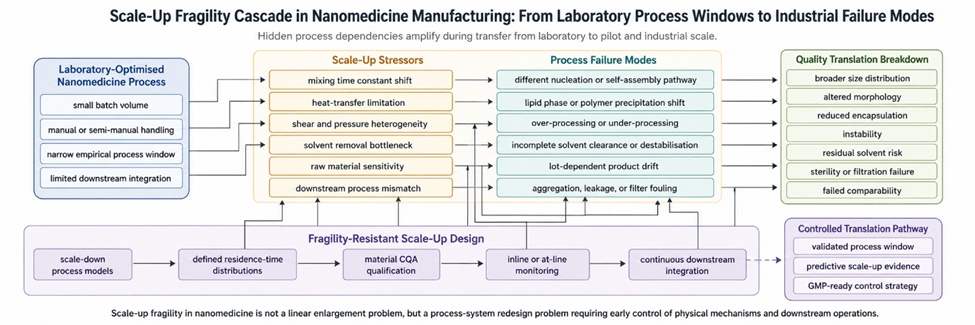
Figure 2. Scale-Up Fragility Cascade in Nanomedicine Manufacturing: From Laboratory Process Windows to Industrial Failure Modes
Reproducibility in nanomedicine is weakened when process knowledge is less mature than formulation ambition. Many studies report particle size, polydispersity, and zeta potential, but these descriptors may not fully capture morphology, internal structure, surface heterogeneity, payload distribution, or biological response. Critical quality attribute frameworks therefore emphasise that analytical simplicity can create false confidence if the measured properties are not sufficiently linked to clinical performance [6]. QbD-based nanomedicine development attempts to make reproducibility a designed outcome rather than a retrospective claim [7, 8].
Hidden variables are a major source of irreproducibility. Solvent grade, water quality, polymer molecular weight distribution, lipid oxidation, tubing material, stirring-bar geometry, filtration membrane, hold time, temperature history, and operator sequence may affect product attributes without being recorded as formal process parameters. Solid lipid nanoparticle scale-up reviews show that thermal and compositional sensitivity can generate quality drift even when nominal formulation variables remain unchanged [23]. PLGA and microfluidic formation studies similarly demonstrate that small changes in material or mixing conditions may be amplified into measurable product differences [15, 24].
Lipid nanoparticle reproducibility is particularly important because nucleic acid delivery depends on structure-function relationships that are still incompletely captured by routine assays. mRNA lipid nanoparticles require controlled encapsulation, protection from degradation, appropriate ionisable lipid behaviour, and stable colloidal properties during storage and administration [3]. Reviews of clinical and vaccine applications show that successful translation depends on manufacturing consistency as much as on lipid composition or biological target [4, 5]. Manufacturing-focused microfluidic studies therefore place increasing emphasis on process control and quality monitoring rather than only on formulation screening [14].
Table 3 compiles the reproducibility challenges reported for nanomedicine batches. The table frames reproducibility as an interaction among raw materials, process conditions, analytical limits, and biological interpretation. Advanced microfluidic reviews suggest that tighter process definition can reduce variability, but they also warn that device design, operating conditions, and scale-out strategy must be controlled with equal rigour [18, 22]. Recent solid lipid nanoparticle microfluidic developments show that reproducibility gains are meaningful only when analytical methods can detect the attributes that matter for safety and efficacy [30].
Table 3. Reproducibility Challenges in Nanomedicine Manufacturing: Sources of Variability, Analytical Gaps, and Quality Implications
Reproducibility challenge | Source of variability | Analytical gap | Quality implication | Translational risk |
Inter-batch size drift | Minor changes in mixing, temperature, solvent ratio, or energy input | Mean size may hide distribution tails | Altered biodistribution, filtration behaviour, and stability | Batch rejection or failed comparability |
Intra-batch heterogeneity | Poor mixing, dead zones, channel imbalance, non-uniform residence time | Sampling may not represent full batch | Variable dose quality within the same lot | Inconsistent potency and safety interpretation |
Raw material variability | Lipid purity, polymer molecular weight, surfactant grade, nucleic acid integrity | Supplier specifications may be too broad | Changed self-assembly, encapsulation, and release | Poor reproducibility after supplier or lot change |
Operator dependency | Manual addition rate, hydration time, transfer sequence, cleaning practice | Procedural details are often under-documented | Unexplained batch-to-batch differences | Difficult technology transfer |
Incomplete structural characterisation | Reliance on size, PDI, and zeta potential alone | Internal structure, morphology, surface heterogeneity, and payload localisation may be missed | Apparently similar batches may perform differently | Weak IVIVC and uncertain regulatory confidence |
Downstream-induced variability | Filtration, concentration, washing, lyophilisation, freezing, thawing | Formation and downstream effects are not always separated | Aggregation, leakage, degradation, or concentration error | Reduced stability and yield |
Biological assay inconsistency | Cell line, serum, protein corona, incubation protocol, animal model | Physicochemical sameness may not predict biological sameness | Divergent uptake, toxicity, or efficacy | Weak translational predictability |
Documentation gaps | Missing equipment geometry, material lot, environmental condition, or process timing | Methods cannot be reproduced externally | Poor cross-laboratory comparability | Low confidence in published nanomedicine claims |
Quality translation means converting a benchtop definition of “successful formulation” into a GMP-grade, regulatorily defensible, and clinically meaningful specification. In academic nanomedicine, success may be defined by favourable size, encapsulation efficiency, and preliminary biological activity, but industrial quality requires validated methods, acceptance criteria, process capability, impurity control, microbial control, stability, and comparability. CQA-focused discussions argue that quality must be linked to intended use and risk rather than selected only because an assay is convenient [6]. QbD reviews similarly show that translation requires explicit connection between design space, process controls, and final product performance [7, 12].
A translational quality framework must begin before scale-up. It should define the target product profile, identify clinically relevant CQAs, map critical material attributes, and establish process parameters that can be controlled across development stages. Regulatory risk-based approaches reinforce that nanomedicine development must generate evidence explaining how the product is made, why attributes matter, and how changes are managed over the lifecycle [9]. In this sense, quality translation is not only analytical validation; it is the disciplined conversion of formulation knowledge into manufacturing and regulatory knowledge [8, 16].
Current analytical tools create a further challenge because many nanomedicine attributes are dynamic, heterogeneous, and context-dependent. Offline batch testing may detect size or concentration after production but may miss transient aggregation, early destabilisation, solvent-gradient effects, or process excursions during formation. Microfluidic and lipid nanoparticle manufacturing studies therefore point toward inline or at-line monitoring, particularly where rapid mixing and semi-continuous production create opportunities for real-time quality feedback [18]. Microfluidizer®-based work on real-time size monitoring indicates how process analytical technology can begin to close the gap between production and release testing [28, 29].
The proposed translational quality framework therefore has four linked layers: platform selection, process understanding, analytical control, and lifecycle governance. Platform selection asks whether the chosen manufacturing method can realistically deliver the intended CQAs at clinical and commercial scale. Process understanding connects formation and downstream operations, while analytical control requires orthogonal methods that capture both physicochemical and biologically relevant properties. Continuous PLGA processing, inline liposome purification, and mass-production lipid nanoparticle studies illustrate how these layers can be integrated into a more credible quality translation pathway [21, 26, 31].
Regulatory ambiguity remains a major barrier because nanomedicines challenge conventional assumptions about sameness, active substance identity, and formulation comparability. Follow-on versions may not be adequately evaluated through generic paradigms if manufacturing differences alter nanoscale structure or biological behaviour [10]. Global regulatory reviews show that nanomedicine oversight remains uneven across jurisdictions, creating uncertainty for developers seeking coherent CMC expectations [11]. Translation hurdles are therefore not only scientific but institutional, because sponsors must anticipate evolving expectations without a fully harmonised evidentiary template [1].
Industrial implementation also lags because nanomedicine production often requires specialised equipment, controlled environments, advanced analytics, expensive raw materials, and highly trained personnel. Clinical translation reviews emphasise that manufacturing cost, scalability, batch release complexity, and regulatory uncertainty can narrow the commercial rationale even for scientifically promising systems [2, 32]. Lipid nanoparticle success has increased industrial confidence, but it has also demonstrated that reliable production depends on supply-chain robustness, process control, cold-chain strategy, and quality infrastructure [4, 5]. Legacy manufacturing infrastructure may therefore resist adoption unless new platforms show clear operational and economic advantages.
Table 4 maps the regulatory and industrial implementation barriers preventing quality translation. The table shows that barriers are mutually reinforcing: regulatory uncertainty discourages investment, weak standards complicate comparability, and limited manufacturing infrastructure increases cost. Risk-based regulatory thinking can help, but it must be paired with practical industrial enablers such as validated platform processes, shared standards, robust analytics, and lifecycle data systems [9, 11]. Semi-continuous manufacturing studies suggest that industrial adoption will accelerate only when process capability and monitoring evidence are visible before late-stage development [28, 29].
Table 4. Regulatory and Industrial Implementation Barriers for Nanomedicine Quality Translation: Current Hurdles and Required Enablers
Barrier | Current hurdle | Consequence for translation | Required enabler | Expected quality impact |
Ambiguous nanomedicine similarity | Unclear criteria for sameness or follow-on comparability | Regulatory uncertainty and delayed development | Product-specific comparability frameworks | Stronger lifecycle confidence |
Non-harmonised CMC expectations | Different regional expectations for characterisation and documentation | Duplicated work and strategic uncertainty | International guidance alignment | More predictable submissions |
Weak linkage between CQAs and clinical performance | Limited IVIVC and incomplete biological relevance of routine assays | Uncertain acceptance criteria | Mechanistic and orthogonal characterisation | Clinically meaningful specifications |
Limited process analytical technology | Heavy reliance on offline release testing | Late detection of failures and weak process learning | Inline size, concentration, solvent, and stability monitoring | Faster feedback and improved control |
Specialised equipment burden | High cost of microfluidics, homogenisation, sterile processing, and analytics | Barrier to small-company and academic translation | Shared facilities and modular manufacturing platforms | Lower entry cost and better standardisation |
Raw material supply-chain fragility | Variable lipid, polymer, surfactant, and nucleic acid attributes | Batch drift and comparability failures | Supplier qualification and material CQA control | More reproducible product identity |
Legacy infrastructure inertia | Existing plants are optimised for conventional dosage forms | Slow adoption of nanomanufacturing technologies | Flexible GMP suites and platform-based production lines | Faster scale-up and technology transfer |
Limited shared failure data | Negative scale-up outcomes are rarely published | Repeated mistakes and poor predictive learning | Pre-competitive databases and regulatory sandboxes | Better scale-up models and risk anticipation |
Future nanomedicine manufacturing should move from product-by-product improvisation toward modular, platform-based production. Microfluidics, controlled rapid mixing, and advanced solid lipid nanoparticle techniques provide a foundation for this shift, but only if device design, operating ranges, cleaning, sterility, monitoring, and scale-out are standardised [1, 17]. Platform maturity should be judged not by novelty, but by the ability to repeatedly produce defined CQAs across materials, payloads, and production volumes. Advanced microfluidic and nucleic-acid delivery reviews suggest that the next step is not simply smaller devices or faster screening, but integrated digital quality assurance across the full manufacturing chain [18, 30].
Regulatory sandboxes and pre-competitive consortia could accelerate quality translation by generating shared evidence on scale-up failure modes, characterisation standards, and acceptable control strategies. QbD literature already provides a conceptual basis for structured risk assessment, but fragmented implementation limits its impact [7, 12]. Regulatory science frameworks should therefore support controlled learning environments where sponsors, regulators, equipment vendors, and academic groups can evaluate platform data before pivotal development decisions [9]. Global regulatory harmonisation would be especially valuable for reducing duplicative uncertainty and encouraging investment in robust manufacturing systems [11].
Predictive scale-down models and in-silico process design should become central tools for future development. Instead of discovering fragility during expensive pilot-scale transfer, developers should model mixing, heat transfer, precipitation, lipid self-assembly, purification, concentration, and storage under representative constraints. PLGA continuous processing, lipid nanoparticle rapid-mixing studies, and antisolvent precipitation comparisons show that process behaviour can be studied systematically when equipment architecture is treated as part of the product design problem [13, 24, 27, 31]. Mass-production research further indicates that scalable nanomedicine requires validated links between small-scale models, production-scale parameters, and quality outcomes [26].
Figure 3 proposes a translational quality framework for moving nanomedicines from benchtop innovation to GMP-ready manufacturing systems.
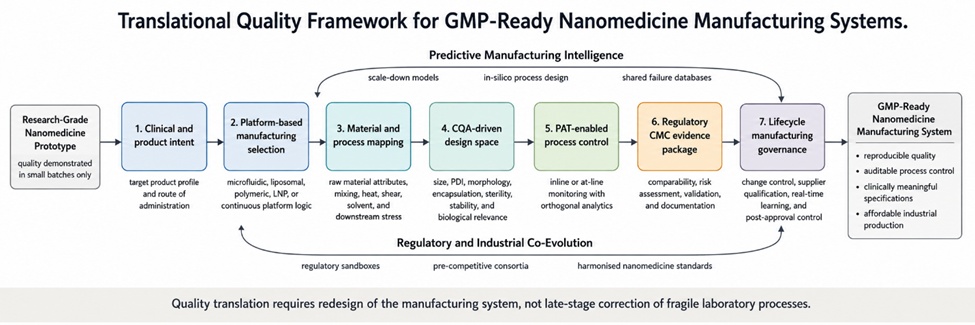
Figure 3. Translational Quality Framework for GMP-Ready Nanomedicine Manufacturing Systems
Nanomedicine scale-up fragility and poor reproducibility are not isolated technical problems that can be solved only by better equipment or more extensive final testing. They reflect a development paradigm that often treats manufacturing as an implementation step after formulation discovery has already occurred. This paradigm is inadequate for products whose identity is generated through process-dependent nanoscale assembly.
The central requirement for quality translation is therefore conceptual as well as technical. Nanomedicine development must integrate platform choice, process physics, material variability, analytical capability, regulatory evidence, and industrial feasibility from the beginning. Linear scale-up thinking should be replaced by a quality-centric model in which manufacturability is treated as a core attribute of therapeutic design.
Reliable and affordable nanomedicines will require collaboration among formulation scientists, process engineers, analytical scientists, regulators, clinicians, equipment developers, and manufacturers. The field must learn not only from successful products, but also from scale-up failures, reproducibility gaps, and abandoned translation attempts. Only then can nanomedicines become not merely scientifically achievable, but consistently manufacturable and clinically dependable.
None
None
None
None
Open Access The author(s) retain copyright. This article is licensed under the Creative Commons Attribution-NonCommercial-ShareAlike 4.0 International License. It may be shared and adapted for non-commercial purposes with appropriate attribution, an indication of changes, and distribution of adaptations under the same license. Third-party material may be subject to separate terms identified in its credit line. View the license at https://creativecommons.org/licenses/by-nc-sa/4.0/.
 Publication System