Smart pharmaceutical systems are emerging as integrated therapeutic platforms that combine physiological sensing, algorithmic interpretation, and automated drug release. They mark a shift from passive delivery technologies toward systems that can respond to changing biological states in near real time. Their promise lies in reducing therapeutic delay, personalising dose adjustment, and extending pharmacotherapy beyond fixed schedules and clinician-mediated titration. The central challenge is that therapeutic intelligence changes the risk profile of pharmaceutical products. A delivery system that senses inaccurately, computes incorrectly, or actuates unpredictably can convert a pharmacological benefit into an autonomous harm pathway. This makes safety assurance inseparable from system architecture, rather than a downstream verification step. The review identifies a recurring sense–control–deliver architecture, but argues that this architecture remains unevenly mature. Glucose-responsive and automated insulin systems provide the strongest clinical evidence, whereas multi-analyte drug monitoring, implantable autonomous platforms, and reinforcement-learning controllers remain closer to proof-of-concept or early translational validation. Four tables organise the system logic, sensor landscape, feedback-control approaches, and safety oversight framework. The review concludes that smart pharmaceutical systems should not be judged solely by pharmacokinetic precision or device performance. Their clinical legitimacy will depend on robust control under uncertainty, interpretable autonomy, resilient human oversight, and regulatory pathways that can evaluate integrated drug–device–software behaviour. Safe therapeutic autonomy will require co-development of engineering validation, clinical governance, and patient-centred design.
Drug delivery has historically progressed from passive release formulations toward increasingly responsive platforms that adapt dosing to biological need. In this trajectory, smart pharmaceutical systems represent a more ambitious integration of sensing, computation, and actuation than conventional controlled-release products, because they attempt to close the therapeutic loop rather than merely extend exposure [1]. The strongest clinical precedent is automated insulin delivery, where continuous glucose sensing, embedded control algorithms, and pump actuation have moved closed-loop therapy from engineering aspiration to routine clinical use in selected populations [2].
The scope of smart pharmaceutical systems extends beyond diabetes, although diabetes remains the most developed exemplar. Continuous biosensing platforms, electrochemical aptamer sensors, wearable microneedle arrays, ingestible devices, and implantable drug delivery units illustrate a widening design space in which biochemical or physiological information can trigger drug release decisions [3, 4]. This review uses the term smart pharmaceutical system to describe an integrated product in which a sensor layer informs an algorithmic control layer that modifies delivery by an actuator layer.
The conceptual appeal of these systems is easy to understand, but their evidentiary burden is unusually high. Closed-loop technologies must demonstrate not only that the drug works and the device delivers, but also that the combined system behaves safely under drift, delay, patient variability, software error, and real-world use conditions [5]. Clinical trials of artificial pancreas systems show meaningful improvements in glycaemic outcomes, yet they also reveal the importance of boundary conditions, user training, fallback modes, and careful population selection [6, 7].
This review critically evaluates the design logic, technological maturity, safety implications, and translation barriers of smart pharmaceutical systems. It treats therapeutic autonomy as a spectrum rather than a binary property, ranging from decision support to fully automated dosing. The central argument is that autonomy in drug delivery can be clinically valuable only when the sensing, control, and actuation layers are co-designed with oversight, verification, and failure containment in mind [8].
The review was constructed around a targeted literature strategy focused on peer-reviewed articles from 2017 to 2026 that addressed sensor-enabled delivery, closed-loop control, therapeutic autonomy, or translational governance. The selected literature included critical reviews of closed-loop drug delivery, clinical trials of automated insulin delivery, biosensor studies relevant to real-time pharmacological monitoring, and control-system studies applying model predictive control or reinforcement learning to dosing [1, 9]. Priority was given to publications that linked at least two system layers rather than analysing sensors, algorithms, or delivery devices in isolation.
The inclusion logic reflected the interdisciplinary nature of smart pharmaceutical systems. Articles were included when they contributed to the architecture of closed-loop therapy, demonstrated sensor–actuator integration, evaluated automated drug delivery in humans, or analysed risks and barriers relevant to autonomous pharmacotherapy [3, 10]. This approach allowed the review to combine mature clinical evidence from diabetes technology with earlier-stage platforms for continuous drug monitoring, microneedle-based sensing, and implantable or ingestible therapeutic systems [11, 12].
Purely component-level studies were excluded when they lacked a plausible route to integrated therapeutic control. For example, a sensor paper was considered relevant only when the sensing modality had implications for dosing decisions, longitudinal monitoring, or closed-loop integration. This criterion was necessary because the field contains many technically sophisticated devices that do not yet function as pharmaceutical systems; the review therefore focuses on technologies that contribute to the sense–control–deliver logic rather than on isolated materials innovation [5, 13].
A smart pharmaceutical system can be understood as a three-layer therapeutic architecture: a sensor layer that detects physiological or biochemical state, a control layer that converts information into a dosing decision, and an actuator layer that changes drug input. This architecture is visible in automated insulin delivery, but it also appears in broader visions of continuous biosensing linked to closed-loop therapy [2, 5]. Its defining feature is not merely digital monitoring, but the presence of a decision pathway that can alter therapy without waiting for a conventional clinical encounter.
The sensor layer supplies the system’s view of the patient, but that view is always partial, delayed, and vulnerable to error. The control layer must therefore interpret imperfect measurements while accounting for pharmacokinetics, pharmacodynamics, patient behaviour, and physiological variability [9]. The actuator layer then translates the decision into delivery, making mechanical reliability, dose granularity, reservoir stability, and tissue interface performance central to therapeutic safety [8].
The logic of these systems requires co-design rather than sequential assembly. A highly accurate sensor may be unsafe if paired with an unstable controller, while a conservative controller may underperform if the actuator is too slow or imprecise. The most clinically credible systems therefore include constraints, alarms, fallback modes, and human-supervised overrides as part of the core architecture rather than optional accessories [14]. Table 1 defines the core logic and components of smart pharmaceutical systems.
Table 1. Core Logic and Components of Smart Pharmaceutical Systems: Sensors, Algorithms, Actuators, and Integration Principles
System component | Core function | Examples from the reviewed literature | Critical design requirements | Principal translational risk |
Sensor layer | Acquires physiological, biochemical, or pharmacological signals that represent therapeutic state | Continuous glucose monitors, electrochemical aptamer sensors, sweat glucose platforms, microneedle biosensors [4, 11, 15] | Accuracy, stability, calibration control, biocompatibility, resistance to drift and fouling | Erroneous or delayed measurements may drive inappropriate dose decisions |
Control layer | Converts sensor inputs into dosing recommendations or automated actuation commands | Model predictive control, adaptive control, reinforcement learning, hybrid closed-loop algorithms [9, 16, 17] | Robustness under uncertainty, interpretability, constraints, validation across populations | Algorithmic over-correction may produce unsafe dosing trajectories |
Actuator layer | Delivers drug according to algorithmic or user-mediated commands | Insulin pumps, electroosmotic microneedle pumps, implantable delivery systems, automated infusion regulators [8, 11] | Dose precision, mechanical reliability, reservoir integrity, fail-safe interruption | Pump occlusion, runaway infusion, or delivery interruption may cause harm |
Integration interface | Links sensing, computation, and actuation into a usable therapeutic product | Wearable, ingestible, implantable, and networked closed-loop systems [3, 10] | Secure communication, low latency, power management, human factors compatibility | Connectivity failure or cybersecurity breach may compromise therapy |
Oversight layer | Provides human supervision, safety constraints, and escalation pathways | Meaningful human control, alarm prioritisation, override design, training | Excessive automation may reduce vigilance or create misplaced trust |
The maturity of this logic varies markedly by therapeutic area. Diabetes technologies benefit from decades of glucose sensing, insulin pharmacology, and clinical control research, whereas many non-diabetes applications still lack validated biomarkers that can reliably drive dosing [19]. As a result, claims of smartness should be assessed by closed-loop performance and safety under realistic conditions, not by the mere presence of sensors or software [1].
Figure 1 presents the sense–control–deliver architecture through which smart pharmaceutical systems convert patient-state information into controlled therapeutic action.
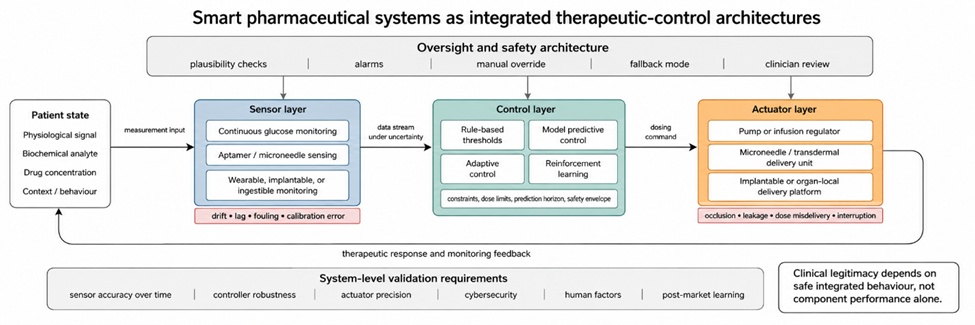
Figure 1. Sense–Control–Deliver Architecture of Smart Pharmaceutical Systems
Sensor-enabled delivery depends on the premise that relevant therapeutic information can be captured continuously or repeatedly at the point of care. Continuous glucose monitoring has made this premise clinically credible in diabetes, enabling hybrid closed-loop systems that improve time in range across adults, children, and older users [6, 20, 21]. Yet glucose is an unusually favourable analyte because its measurement, clinical target range, and dosing relationship to insulin are comparatively well defined.
Outside glucose control, sensor-enabled delivery is less mature but rapidly diversifying. Electrochemical aptamer sensors have been proposed for precision dosing of drugs with narrow therapeutic windows, including platforms that use microneedle-based sampling to monitor drug concentrations in interstitial fluid [4]. Methotrexate monitoring and delivery concepts show how therapeutic drug monitoring could be made more continuous, although the leap from measurement to autonomous dose adjustment remains substantial [12].
Sensor limitations are not peripheral engineering details; they define the safe operating envelope of autonomy. Signal drift, biofouling, calibration instability, lag between compartments, and local tissue responses can all distort the controller’s estimate of patient state [22]. In autonomous delivery, such distortions are amplified because the system may act on erroneous data before a patient or clinician recognises the fault [14]. Table 2 categorises sensor technologies used in pharmaceutical delivery systems.
Table 2. Sensor Technologies for Pharmaceutical Delivery: Detection Principles, Target Analytes, and Integration Formats
Sensor technology | Detection principle | Target analytes or signals | Integration format | Key strengths | Key limitations for autonomy |
Continuous glucose monitoring | Enzymatic electrochemical detection of interstitial glucose | Glucose for insulin dosing | Wearable subcutaneous sensor linked to pump or controller [2, 6] | Clinically validated, continuous data stream, strong closed-loop evidence | Lag, compression artefacts, calibration and sensor-failure risks |
Electrochemical aptamer sensing | Target binding changes electrochemical signal | Small-molecule drugs and biomarkers | Wearable or microneedle-based monitoring platforms [4, 22] | Potential for real-time therapeutic drug monitoring | Stability, fouling, signal degradation, limited clinical validation |
Microneedle biosensing arrays | Minimally invasive sampling and electrochemical detection | Drugs, metabolites, inflammatory markers | Skin-worn patches with sensing and possible delivery functions [12] | Local interstitial access, compatibility with patch-based delivery | Skin variability, mechanical durability, analyte validation challenges |
Sweat-based sensing | Non-invasive biochemical detection in sweat | Glucose and other metabolites | Wearable patches linked to software and transdermal delivery concepts [15] | Patient-friendly sampling and potential low-cost deployment | Sweat-rate dependence, uncertain correlation with blood or tissue levels |
Cell-based or biologically responsive sensors | Biological response used as a proxy for disease state | Glucose-regulated endocrine or cellular signals | Implantable or extracorporeal biosensor concepts [23] | Physiological signal integration and disease-specific responsiveness | Complexity, immune response, long-term stability, manufacturing burden |
Networked physiological sensing | Measurement of physiological variables or device status | Activity, heart rate, infusion status, adherence, alarms | Wearable, ingestible, implantable, and connected platforms [10] | Contextual information for safer dosing decisions | Data integration, cybersecurity, false alarms, interoperability barriers |
Integrated sensing–dosing units are attractive because they can reduce therapeutic latency, but they also collapse diagnostic, computational, and delivery functions into a single risk-bearing product. The biodegradable hollow microneedle minipatch for closed-loop diabetes illustrates this convergence by combining biosensing with electroosmotic pumping [11]. Such designs are technically compelling, yet their clinical translation will depend on demonstrating that the sensor remains reliable for the full delivery interval and that failure modes produce safe degradation rather than uncontrolled dosing [3].
Feedback control is the computational centre of smart pharmaceutical systems because it determines how sensed information becomes therapeutic action. Early closed-loop drug delivery systems often relied on rule-based or proportional-integral-derivative logic, but contemporary systems increasingly use model predictive control to anticipate future physiological states rather than simply react to present error [9]. In automated insulin delivery, model predictive control is attractive because insulin action is delayed, meals and exercise introduce disturbances, and safety requires constraints on both hypo- and hyperglycaemia [24].
The main limitation of feedback control is that the controller’s internal model is always an approximation of a changing patient. Adaptive model predictive control attempts to update system behaviour as physiology changes, but adaptation introduces validation challenges because the controller may behave differently across time, populations, and contexts [9, 24]. Reinforcement-learning approaches promise greater individualisation, yet they raise sharper safety questions because exploration, reward specification, and rare-event handling are difficult to reconcile with drug dosing risk [16, 17].
Clinical evidence from automated insulin delivery shows that feedback control can improve therapeutic outcomes under real-world conditions. Six-month and paediatric trials of closed-loop control demonstrated improved time in range compared with conventional approaches, while hybrid closed-loop studies across age groups showed that algorithm-guided dosing can reduce user burden without removing the need for informed supervision [6, 7, 21]. However, these successes should not be overgeneralised to all pharmaceutical systems, because insulin dosing benefits from relatively mature sensors, rapid clinical feedback, and measurable endpoints.
Table 3 summarises feedback control algorithms applied in smart pharmaceutical systems. The comparison makes clear that algorithm choice cannot be separated from sensor reliability, actuator dynamics, and clinical risk tolerance [8]. A controller that is mathematically elegant but opaque, data-hungry, or difficult to constrain may be less suitable for autonomous delivery than a simpler architecture with explicit safety boundaries.
Table 3. Feedback Control Algorithms in Smart Pharmaceutical Systems: Types, Requirements, and Validation Approaches
Control algorithm | Core operating principle | Pharmaceutical use context | Data and model requirements | Validation approach | Critical limitation |
Rule-based control | Uses predefined thresholds and decision rules to adjust delivery | Safety cut-offs, basal modulation, alarm-triggered decisions [14] | Clinically defined thresholds and predictable response categories | Scenario testing, usability testing, clinical boundary validation | Limited adaptability to complex physiology |
Proportional-integral-derivative control | Adjusts dosing according to current, accumulated, and changing error | Early closed-loop dosing concepts and engineering prototypes [1] | Continuous signal stream and tuned controller parameters | Bench simulation, in silico testing, controlled clinical trials | Sensitive to delay, noise, and parameter mismatch |
Model predictive control | Predicts future states and optimises constrained dosing actions | Automated insulin delivery and adaptive physiological control [9, 24] | Patient model, disturbance assumptions, constraints, actuator profile | In silico trials, crossover studies, outpatient trials | Model uncertainty and inter-patient variability |
Adaptive control | Updates parameters as patient state or system dynamics change | Personalised insulin delivery and complex physiological systems [9] | Longitudinal data and safe adaptation rules | Prospective testing under changing conditions | Harder to regulate because behaviour changes over time |
Reinforcement learning | Learns dosing policies by maximising defined reward functions | Experimental and computational artificial pancreas controllers [16, 17] | Large training datasets, reward design, safety constraints | Simulation-first testing, stress testing, guarded clinical evaluation | Safety of exploration and interpretability remain unresolved |
Human-supervised hybrid control | Combines automated basal or correction decisions with user input | Commercial hybrid artificial pancreas systems [2, 19] | Sensor data, pump data, meal input, user response | Randomised trials and post-market surveillance | Depends on patient literacy, adherence, and alarm response |
Therapeutic autonomy should be understood as a spectrum of delegated decision-making rather than a single technological state. At the lowest level, a system may only display sensor data or suggest dose adjustments, leaving the patient or clinician to decide. At intermediate levels, hybrid closed-loop systems automate selected dosing functions while retaining meal announcements, alarms, and manual overrides [14, 19]. At the highest level, a fully autonomous system would detect need, select dose, deliver therapy, monitor response, and manage exceptions with minimal human input.
The diabetes artificial pancreas is the clearest exemplar of this autonomy spectrum. Trials comparing closed-loop insulin delivery with sensor-augmented pump therapy, predictive low-glucose suspend, and other hybrid systems show that automation can improve glycaemic control while preserving human participation in key decisions [18, 25, 26]. These systems are therefore not fully autonomous in the strongest sense; they rely on users to manage meals, respond to alerts, maintain hardware, and interpret exceptional conditions.
Meaningful human control remains essential because pharmacological autonomy differs from autonomy in information systems. A wrong algorithmic recommendation may be ignored, but a wrong autonomous infusion may directly alter physiology before correction is possible [8]. The clinical question is not whether humans are present somewhere in the system, but whether they can understand, intervene, and recover control at the moment when oversight is needed [14].
Full autonomy may be appropriate only in tightly bounded contexts where the therapeutic index, sensing reliability, actuation precision, and rescue mechanisms are well characterised. Pancreatic surgery studies using fully closed-loop insulin delivery suggest that supervised inpatient settings may provide a safer transitional environment for higher autonomy than unsupervised home use [27]. This staged approach is important because therapeutic self-governance should be earned through evidence of resilient behaviour, not assumed from software sophistication.
The safety risks of autonomous pharmaceutical systems arise from the coupling of sensing, computation, and delivery. Sensor dropout, calibration error, or signal artefact can generate false estimates of therapeutic need, while algorithmic over-correction can amplify an initial measurement error into unsafe dosing [14, 22]. Actuator failures such as occlusion, leakage, battery depletion, or pump malfunction add a second pathway by which the commanded dose and delivered dose may diverge [3].
Cybersecurity and communication failures are increasingly important because smart pharmaceutical systems often depend on networked wearables, mobile applications, cloud services, or interoperable devices. Communication protocols linking wearables, ingestibles, and implantables create opportunities for richer closed-loop therapy, but they also expand the attack surface and complicate responsibility when system components come from different manufacturers [10]. In this setting, safety cannot be reduced to device reliability; it must include data integrity, authentication, update governance, and fail-safe behaviour.
Oversight should therefore be layered, redundant, and proportionate to autonomy level. Hard-coded dose limits, independent sensor plausibility checks, anomaly detection, alarm escalation, and manual suspension should be treated as core therapeutic functions rather than usability extras [1, 8]. Table 4 maps safety hazards and oversight mechanisms for therapeutic autonomy.
Table 4. Safety Hazards and Oversight Mechanisms in Autonomous Pharmaceutical Systems: Risk Identification, Mitigation, and Regulatory Considerations
Hazard category | Failure mode | Potential clinical consequence | Mitigation strategy | Oversight or regulatory consideration |
Sensor failure | Drift, dropout, compression artefact, fouling, calibration error | Incorrect dosing decision based on false physiological state | Redundant sensing, plausibility checks, calibration safeguards, fallback dosing | Require validation across wear duration, populations, and use environments |
Algorithm error | Over-correction, unstable adaptation, biased model, inappropriate reward function | Hypo-dosing, overdose, oscillatory control, delayed rescue | Constraint-based control, locked safety envelopes, simulation stress testing | Define acceptable algorithm-change protocols and performance thresholds |
Actuator failure | Pump occlusion, leakage, reservoir instability, dose misdelivery | Therapy interruption or unintended infusion | Flow verification, occlusion detection, mechanical fail-safe shutdown | Evaluate drug–device performance as an integrated product |
Connectivity or cybersecurity failure | Data corruption, unauthorised access, delayed command transmission | Loss of control, malicious manipulation, privacy harm | Encryption, authentication, local safe mode, secure software updates | Require cybersecurity lifecycle management and post-market monitoring |
Human oversight failure | Alarm fatigue, poor training, inappropriate override, misplaced trust | Delayed intervention or unsafe manual action | Human factors testing, graded alerts, patient education, clinician dashboards | Assess usability as a safety-critical requirement |
System-level integration failure | Mismatch between sensor lag, control timing, and drug kinetics | Unstable or ineffective therapy | End-to-end validation under realistic scenarios | Regulate combined behaviour rather than isolated components alone |
The safety challenge is especially acute when adaptive or learning algorithms are proposed for dosing. A reinforcement-learning controller may perform well in simulation, but rare physiological states, sensor artefacts, or unexpected patient behaviours can expose unsafe policies that were not represented during training [17]. For this reason, future safety cases should combine in silico challenge testing, controlled clinical trials, post-market surveillance, and transparent incident reporting [28].
The first translation barrier is technological integration. Sensor fouling, power supply limits, wireless reliability, miniaturisation, reservoir stability, and tissue compatibility must all be solved simultaneously for a system to function outside controlled studies [13]. Smart drug delivery concepts based on Internet-of-Things architectures illustrate the potential of connected therapy, but they also show that integration increases dependence on interoperability, software maintenance, and long-term device support [29].
Manufacturing complexity is another barrier because smart pharmaceutical systems are not simply drugs packaged in devices. They combine materials, electronics, software, sensors, actuators, and sometimes biological interfaces, each with its own failure modes and quality requirements [3]. The bladder closed-loop therapy concept and other organ-specific platforms show the appeal of local sensing and on-demand delivery, yet they also highlight the difficulty of building products that are reliable, manufacturable, sterilizable, and clinically acceptable [30].
Regulatory classification remains uncertain because these products sit across drug, device, diagnostic, and software categories. A closed-loop automated drug infusion regulator illustrates how clinically translatable systems may require evidence that the combined product performs safely as a whole, not merely that its components satisfy separate standards [8]. Adaptive algorithms further complicate the issue because regulators must determine when software modification constitutes a new product, a controlled update, or routine learning [17].
Human and economic barriers are equally important. Patients must trust systems that make dose decisions, clinicians must understand when to intervene, and payers must decide whether to reimburse an integrated therapeutic service rather than separate drug and device components [31]. Artificial intelligence-enhanced wearable diabetes systems show a plausible pathway toward more personalised care, but adoption will depend on training, digital literacy, equitable access, and evidence that autonomy improves outcomes without shifting hidden labour onto patients [31, 32].
A credible future pathway begins with standardised performance benchmarks for closed-loop pharmaceutical systems. Benchmarks should include sensor accuracy over time, controller robustness under uncertainty, actuator precision, failure recovery, cybersecurity resilience, and patient-facing usability [1, 10]. Without shared benchmarks, the field risks celebrating prototypes that perform well under narrow demonstrations but fail to meet the reliability requirements of autonomous therapy.
Regulatory science should evolve toward controlled environments for evaluating adaptive and autonomous dosing systems. Regulatory sandboxes could permit staged testing of algorithm updates, simulated rare events, human override behaviour, and post-market learning under defined constraints [17, 28]. Such an approach would be especially valuable for systems using reinforcement learning or adaptive model predictive control, where static premarket validation may not capture future behaviour [9, 16].
Product development should also integrate oversight architecture from the beginning. The goal is not to add alarms after a system is built, but to design human-machine collaboration as part of the therapeutic mechanism [14]. Clinical experience with hybrid closed-loop insulin delivery suggests that partial autonomy may often be preferable to full autonomy when patient input, contextual knowledge, or behavioural flexibility remain necessary for safe dosing [33, 34].
Finally, the field needs broader therapeutic diversification beyond glucose-insulin control. Continuous biosensing for narrow-therapeutic-window drugs, microneedle-based pharmacokinetic monitoring, implantable responsive delivery, and organ-local closed-loop therapy all point toward a more general class of autonomous pharmaceutical systems [4, 12, 30]. Cross-sector collaboration among pharmacologists, control engineers, clinicians, regulators, manufacturers, and patients will be necessary to ensure that autonomy is designed around therapeutic benefit rather than technological novelty [5, 13].
Figure 2 outlines the staged translational pathway required to move smart pharmaceutical systems from sensor-enabled prototypes toward accountable therapeutic autonomy.
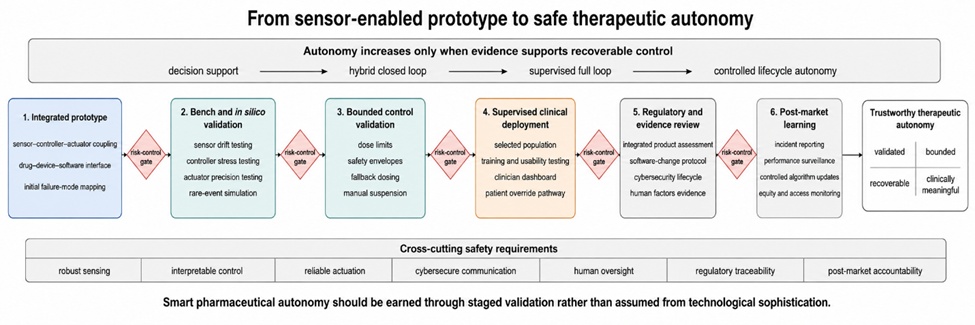
Figure 2. Translational Pathway for Safe Therapeutic Autonomy in Smart Pharmaceutical Systems
Smart pharmaceutical systems are not merely incremental improvements in drug delivery. They represent a shift from products that release medicines according to fixed schedules toward systems that interpret patient state and participate in therapeutic decision-making. This shift creates new opportunities for precision, but it also introduces new responsibilities for engineering, clinical governance, and regulation.
The sense–control–deliver model provides a useful framework for understanding the field. Sensors define what the system can know, algorithms define what it can decide, and actuators define how those decisions become physiological intervention. The weakest layer can determine the safety of the whole system, which means integration quality matters as much as component performance.
Trustworthy therapeutic autonomy will require more than better devices or smarter algorithms. It will require shared benchmarks, transparent validation, robust oversight, patient-centred autonomy design, and regulatory pathways that evaluate dynamic drug–device–software behaviour. The next stage of the field should therefore focus on making autonomy accountable, recoverable, and clinically meaningful.
None
None
None
None
Open Access The author(s) retain copyright. This article is licensed under the Creative Commons Attribution-NonCommercial-ShareAlike 4.0 International License. It may be shared and adapted for non-commercial purposes with appropriate attribution, an indication of changes, and distribution of adaptations under the same license. Third-party material may be subject to separate terms identified in its credit line. View the license at https://creativecommons.org/licenses/by-nc-sa/4.0/.
 Publication System