Most drug delivery systems are still designed around simplified temporal assumptions, such as constant exposure, sustained release, or once-daily convenience. These assumptions have improved practicality and therapeutic coverage, but they do not fully address the fact that diseases, patients, and healthcare systems operate through changing rhythms. A drug release profile that is pharmacologically adequate in average terms may still be poorly timed in relation to disease activity, patient behaviour, or clinical workflow. The central problem addressed in this perspective is temporal misalignment. Disease processes may intensify during specific circadian, ultradian, or episodic windows, while patient routines shape when medicines are actually taken, tolerated, or forgotten. At the same time, care pathways impose their own operational schedules through clinic visits, infusion slots, monitoring intervals, refill cycles, and home-care routines. This article proposes therapeutic synchronization as a systems-theory framework for drug delivery design. Therapeutic synchronization is defined as the deliberate alignment of drug release profiles with three interdependent temporal dimensions: disease rhythm, patient behaviour, and care pathway rhythm. The framework shifts attention from drug release as an isolated pharmaceutical property to drug release as a control input within a wider therapeutic system. The article develops this framework through theoretical synthesis rather than new empirical data. It integrates concepts from chronopharmacology, chrono-tailored drug delivery, bioresponsive and programmable release systems, medication adherence science, digital monitoring, and systems approaches to healthcare design. The objective is to construct an original systems theory model that can guide future drug delivery research and translation. The proposed model argues that synchronized therapy requires tri-axial alignment. Drug release must be timed to pharmacodynamic need, compatible with patient routines and behavioural variability, and feasible within the operational rhythm of care delivery. Four tables support the theory by summarising misalignment consequences, synchronization logic, drug release design options, and the proposed systems model. Therapeutic synchronization offers a forward-looking paradigm for drug delivery systems. Rather than asking only whether a formulation can sustain exposure, the framework asks whether it can deliver the right exposure at the right biological, behavioural, and care-system moment. This shift may support safer, more effective, and more patient-centred therapies.
Disease and life are both temporally structured, yet many drug delivery systems continue to be evaluated as if therapeutic need were stable across the day. Chronopharmacology has shown that drug response may vary with circadian biology, including absorption, distribution, metabolism, target sensitivity, and toxicity windows [1]. This temporal view has been reinforced by circadian medicine, which frames biological timing as a clinical dimension rather than a peripheral biological detail [2]. A theory of synchronized drug delivery therefore begins from the premise that therapeutic exposure must be interpreted in time, not only in dose.
The mismatch between static delivery assumptions and rhythmic disease biology is especially important in conditions where symptoms, risk, or cellular vulnerability fluctuate predictably. Chronopharmacokinetic research has demonstrated that timing can influence drug absorption and disposition, while broader pharmacodynamic models show that physiological rhythms can modify therapeutic and adverse responses [3]. Circadian rhythms also shape physiology, pharmacology, and intervention timing, making temporal design relevant to drug delivery rather than only to prescribing schedules [4]. From this perspective, a sustained-release profile may be convenient but not necessarily synchronized.
Drug delivery research has already produced technologies capable of temporal control, including pulsatile, chrono-modified, stimuli-responsive, wearable, and bioresponsive systems. Chronopharmacological strategies have encouraged drug discovery and delivery design to consider time-dependent biology as part of therapeutic optimisation [5]. Recent chrono-tailored delivery research further suggests that drug release profiles can be engineered to match temporal therapeutic needs rather than merely extend exposure [6]. These developments create the technical basis for a broader theory of therapeutic synchronization.
The purpose of this article is to propose therapeutic synchronization as an original systems theory for drug delivery design. The theory integrates disease rhythms, patient behaviour, and care pathway timing into a tri-axial model of release profile optimisation. It draws on systems chronotherapeutics, closed-loop delivery, adherence technologies, and healthcare systems design to argue that drug release should be treated as a dynamic control input within a multi-level therapeutic system [1, 7, 8]. This article is therefore a perspective and theory article, not a review or meta-analysis.
The systems problem begins when drug release kinetics are optimised independently from the temporal context in which therapy acts. Constant-rate delivery may maintain average exposure, but disease risk may rise and fall across the day, producing windows of under-treatment or excessive exposure. Foundations of circadian medicine indicate that biological time can influence disease expression and treatment response, making timing an essential variable in clinical reasoning [9]. In drug delivery terms, the problem is not only insufficient dose but mistimed pharmacological action.
A second layer of misalignment appears at the patient-behaviour level. Medication adherence research shows that treatment effectiveness depends on how medicines fit into daily routines, beliefs, memory, sleep, meals, work, and care responsibilities [10]. Digital adherence studies further show that technology can monitor medication-taking behaviour, but monitoring alone does not solve the release-timing problem unless it informs formulation or device design [11]. A synchronized system must therefore account for behavioural rhythms as part of drug delivery performance.
A third layer emerges from care pathways, where therapy is shaped by clinic capacity, infusion schedules, refill systems, monitoring visits, and home-care transitions. Systems approaches to healthcare design show that clinical outcomes depend on interactions among people, technologies, processes, and organisational constraints [8]. Drug release profiles that appear optimal pharmacologically may fail operationally if they require unrealistic monitoring, poorly timed administration, or rigid clinical attendance. Table 1 summarises the consequences of misalignment across the disease, patient, and care pathway dimensions.
Table 1. Consequences of Drug Release–System Misalignment across Disease Rhythms, Patient Behaviour, and Care Pathways
Misalignment dimension | Typical source of mismatch | Consequence for therapy | Systems interpretation |
Disease rhythm | Release profile does not match circadian or episodic disease peaks | Suboptimal coverage during high-risk windows and unnecessary exposure during low-need periods | Drug release is disconnected from biological demand |
Patient behaviour | Dosing schedule conflicts with sleep, meals, work, travel, memory, or treatment burden | Missed doses, delayed administration, inconsistent exposure, and reduced trust in therapy | Drug release is disconnected from lived routine |
Care pathway rhythm | Administration or monitoring schedule conflicts with clinic capacity, infusion slots, home-care logistics, or refill cycles | Treatment delays, workflow burden, poor scalability, and fragmented follow-up | Drug release is disconnected from operational feasibility |
Multi-level interaction | Disease, patient, and care rhythms are optimised separately | Local optimisation produces global system inefficiency | The therapeutic system lacks synchronization across levels |
The key theoretical claim is that these three misalignments should not be treated as separate implementation problems. They are coupled because disease activity influences when therapy is needed, patient behaviour influences when therapy is received, and care pathways influence when therapy can be supported. Research on commercial drug delivery evolution shows that successful technologies depend not only on pharmacological concepts but also on usability, manufacturability, and system fit [12]. Therapeutic synchronization therefore reframes drug delivery failure as a system-level timing problem.
Systems theory provides a vocabulary for understanding drug delivery as an interaction among dynamic components rather than as a one-directional transfer of drug from dosage form to body. Systems chronotherapeutics has already shown that therapeutic outcomes can be modelled through interacting biological clocks, drug exposure profiles, and treatment schedules [1]. In this view, release kinetics are not merely formulation outputs; they are temporal signals introduced into a rhythmic biological system. Synchronization becomes the process of aligning that signal with the system’s changing state.
The concept of entrainment is central to this theory. In biology, circadian systems coordinate internal processes with external cycles, while in therapy, drug release can be understood as an artificial timing signal intended to reinforce or counteract pathological rhythms [2]. Chronotherapy in cancer illustrates this logic because treatment timing may affect both therapeutic efficacy and toxicity according to tumour and host rhythms [13, 14]. A synchronized delivery system would therefore seek not only to deliver drug but also to deliver temporally appropriate intervention.
Feedback control is the second systems concept needed for therapeutic synchronization. Bioresponsive closed-loop delivery systems demonstrate that drug release can be linked to physiological signals, allowing release to respond to system state rather than follow a fixed profile [7]. Wearable-integrated transdermal systems extend this logic by connecting sensing, patient monitoring, and delivery actuation within a feedback architecture [15]. These examples support the idea that release profile design can evolve from pre-set kinetics toward adaptive temporal control.
Multi-level alignment is the third systems concept. A systems approach to healthcare emphasises that design must consider interactions across technical, human, and organisational levels, not only the performance of individual components [16]. Applied to drug delivery, this means that formulation timing, patient routines, digital monitoring, clinical workflows, and follow-up pathways must be co-designed. Therapeutic synchronization therefore treats the drug delivery system as part of a larger therapeutic ecology.
Therapeutic synchronization is defined here as the deliberate alignment of drug release profiles with disease rhythm, patient behaviour rhythm, and care pathway rhythm. The first axis concerns biological need: release should correspond to periods when disease activity, symptom intensity, inflammatory signalling, cardiovascular risk, or treatment sensitivity is highest. Circadian regulation of drug responses supports this axis because drug efficacy and toxicity can vary by biological time and may require sex-specific and personalised chronotherapy [17]. This axis asks whether exposure is temporally appropriate for the disease.
The second axis concerns behavioural feasibility. Medication-taking behaviour is not random noise but a patterned feature of the therapeutic system, shaped by daily routines, regimen complexity, and patient interpretation of treatment burden [10]. Ingestible electronic sensors and smart adherence technologies show that behavioural timing can be measured with increasing precision, although such technologies must be connected to meaningful therapeutic decisions [18]. This axis asks whether the release profile reduces dependence on fragile human timing or adapts to predictable routine.
The third axis concerns care pathway compatibility. Healthcare systems operate through schedules, queues, monitoring intervals, staffing patterns, and transitions between clinic and home, all of which shape therapy delivery. Systems design research in healthcare argues that improvement requires attention to service delivery, workflow, and implementation conditions rather than isolated technical performance [8]. Table 2 outlines the core synchronization logic and its three-dimensional alignment targets.
Table 2. Therapeutic Synchronization Logic: Aligning Drug Release with Disease, Patient, and Care Rhythms
Synchronization axis | Primary rhythm | Alignment target | Drug delivery implication | Expected systems benefit |
Disease rhythm alignment | Circadian, ultradian, infradian, episodic, or treatment-sensitive disease dynamics | Release peaks during high-need windows and falls during low-need windows | Chrono-modified, pulsatile, delayed, or responsive release | Improved efficacy-to-toxicity balance |
Patient behaviour alignment | Sleep, meals, work, activity, memory, travel, and adherence routines | Release reduces reliance on difficult dosing moments or adapts to real behaviour | Long-acting, wearable, smart, or behaviour-informed systems | Lower treatment burden and more consistent exposure |
Care pathway alignment | Clinic visits, infusion slots, refill cycles, monitoring intervals, home-care routines | Release profile fits operational support and follow-up capacity | Programmable, refillable, remotely monitored, or pathway-integrated delivery | Better scalability and clinical workflow fit |
Tri-axial synchronization | Coupled biological, behavioural, and organisational rhythms | Drug release functions as a system-level control signal | Integrated design of formulation, sensing, and care process | Emergent therapeutic stability |
The novelty of this logic is that it does not privilege one rhythm as the only design target. A release profile synchronized only to disease biology may fail if it is behaviourally unrealistic, while a patient-friendly regimen may be biologically mistimed. Similarly, a technologically advanced delivery platform may remain translationally weak if it does not fit care pathway operations. Therapeutic synchronization therefore defines optimal release as a relational property of the whole system rather than an intrinsic property of the formulation alone [12, 16].
Figure 1 illustrates therapeutic synchronization as a tri-axial systems alignment model connecting disease rhythms, patient behaviour, care pathway timing, and drug release profile design.
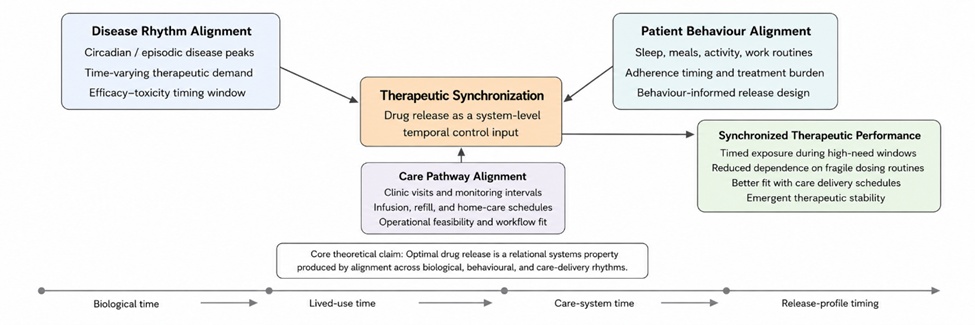
Figure 1. Tri-Axial Therapeutic Synchronization Model for Aligning Drug Release With Disease Rhythms, Patient Behaviour, and Care Pathways
Drug release profile design is the technical layer through which therapeutic synchronization becomes possible. Instead of defining delivery success only by prolonged exposure, synchronized design asks whether the release curve can be shaped around biological demand, patient routine, and care pathway feasibility. Stimuli-responsive polymer systems demonstrate that drug release can be controlled by internal or external triggers, including pH, temperature, light, magnetic fields, enzymes, and redox conditions [19]. These technologies provide a foundation for moving from passive release toward temporally responsive therapeutic systems.
Pulsatile and chrono-modified release systems are especially relevant when disease activity follows predictable daily or episodic patterns. Chrono-tailored delivery systems can delay, accelerate, or pulse drug release to better match circadian therapeutic windows [6]. Bioresponsive transcutaneous patches and closed-loop systems show that drug delivery can also be linked to physiological feedback rather than fixed administration timing [7, 20]. In therapeutic synchronization, such systems become tools for aligning release with disease rhythms rather than simply improving convenience.
Wearable and transdermal delivery platforms extend synchronization from formulation kinetics into patient-centred use environments. Recent advances in wearable transdermal systems show that drug delivery can be integrated with body-worn devices, sensing interfaces, and potentially adaptive release control [21]. Toward closed-loop delivery, wearable technologies can connect physiological monitoring to release modulation, thereby supporting more dynamic coordination between patient state and drug exposure [15]. Table 3 maps drug release technologies to specific synchronization objectives.
Table 3. Drug Release Profile Design for Synchronization: Technologies, Temporal Patterns, and Physiological Targets
Drug release technology | Temporal pattern enabled | Synchronization objective | Relevant physiological or behavioural target | Design limitation |
Delayed-release systems | Lag-time followed by release onset | Match drug availability to predictable symptom or risk peaks | Morning blood pressure surge, nocturnal asthma, early-morning inflammation | Limited adaptability once administered |
Pulsatile release systems | One or more timed release bursts | Provide exposure during discrete high-need windows | Episodic symptoms, cyclical inflammatory activity, scheduled therapy windows | Requires accurate rhythm prediction |
Stimuli-responsive systems | Triggered release in response to internal or external signals | Couple release to changing biological state | pH, temperature, glucose, redox state, enzyme activity, inflammation markers | Trigger specificity and reproducibility remain critical |
Wearable transdermal systems | Programmable or externally controlled delivery | Align therapy with patient activity, monitoring, and daily routines | Sleep-wake cycles, activity patterns, patient-controlled dosing windows | Usability, skin tolerability, and device burden |
Implantable or active programmable systems | Adjustable long-term release or device-controlled dosing | Support sustained synchronization across care pathways | Chronic disease rhythms, refill cycles, monitoring visits, home-care transitions | Invasiveness, maintenance, cost, and regulatory complexity |
Bioresponsive closed-loop systems | Feedback-adjusted release | Adapt drug input to measured physiological need | Glucose, inflammatory markers, physiological signals, sensor-derived risk | Sensor reliability and control algorithm validation |
Implantable and active programmable platforms add another important design direction because they can decouple therapeutic timing from repeated patient action. Active implantable drug delivery systems create opportunities for programmable, long-duration, and potentially remotely adjustable dosing, but they also introduce engineering, safety, maintenance, and translational challenges [22]. Targeted drug delivery strategies for precision medicine also show that delivery design increasingly depends on matching therapeutic action to patient-specific biological contexts [19]. Therapeutic synchronization extends this precision logic from spatial and molecular targeting to temporal and systems-level targeting.
Disease rhythm alignment requires identifying when the disease is most vulnerable, most active, or most dangerous. Circadian and chronopharmacological studies show that biological timing can shape therapeutic response, toxicity, metabolism, and disease expression [3, 4]. In cancer, chronotherapy research has explored how host and tumour rhythms may influence treatment tolerability and efficacy, suggesting that temporal windows can be clinically meaningful [13, 14]. In a synchronized release model, these windows become design inputs for engineering exposure profiles.
Patient behaviour alignment requires treating daily routine as part of the pharmacological system rather than as an external source of error. Medication adherence is influenced by treatment beliefs, regimen complexity, forgetfulness, side effects, social context, and practical barriers [10]. Technologies for adherence monitoring can record medication-taking events, while digital interventions may support behaviour change and feedback-informed care [11, 23]. However, the synchronization framework argues that behavioural data should not only monitor compliance; it should also inform release profile design.
Smart packaging and electronic adherence systems are particularly relevant because they reveal the temporal structure of medication use. Electronic smart blister packages can monitor and support adherence, offering insight into whether therapy is taken at the intended time and under realistic use conditions [24]. Ingestible electronic sensors can provide more immediate evidence of medication ingestion, although their value depends on clinical interpretation and patient acceptability [18]. These technologies can help identify whether a release system should compensate for missed timing, reduce dosing frequency, or shift exposure away from unreliable behavioural windows.
Care pathway alignment requires recognising that treatment timing is shaped by organisational routines as much as by biological need. Clinical services operate through appointment systems, infusion capacity, monitoring schedules, prescription refills, and transitions from hospital to home. A systems approach to healthcare design emphasises that technologies succeed when they fit the wider care process and improve interactions among people, devices, tasks, and institutions [8, 16]. Therapeutic synchronization therefore requires care pathway mapping before finalising the release profile, especially for complex delivery platforms.
The proposed model defines therapeutic synchronization as a dynamic multi-oscillator system. The disease rhythm is the biological oscillator, the patient behaviour rhythm is the lived-use oscillator, and the care pathway rhythm is the organisational oscillator. Drug release acts as a control input that should be modulated to reduce misalignment among these three rhythms. Systems chronotherapeutics provides the conceptual foundation for modelling treatment timing as an interaction between exposure profiles, biological clocks, and therapeutic outcomes [1].
In this model, the release profile is not treated as fixed once the formulation is manufactured. Instead, it is conceptualised as a controllable temporal function that may be pre-programmed, delayed, pulsed, triggered, or feedback-adjusted depending on the platform. Closed-loop drug delivery systems show that measured physiological signals can be used to adapt release in response to changing biological states [7]. Wearable-integrated systems extend this architecture by allowing sensing and delivery to interact with patient behaviour in real-world settings [15].
The model includes four feedback loops. The first loop connects disease monitoring to release adjustment, the second connects adherence or behaviour data to dosing support, the third connects care pathway data to scheduling and follow-up, and the fourth connects clinical outcomes to model refinement. Digital adherence technologies and smart monitoring systems can supply behavioural feedback, while systems-based healthcare design can guide how such feedback is incorporated into clinical operations [8, 11]. Table 4 presents the proposed systems theory model of therapeutic synchronization.
Table 4. Systems Theory Model of Therapeutic Synchronization: Components, Feedbacks, and Emergent Properties
Model component | Systems role | Required input | Drug delivery response | Feedback mechanism | Emergent property |
Disease rhythm oscillator | Defines time-varying therapeutic demand | Circadian, episodic, biomarker, symptom, or risk data | Timed, pulsatile, delayed, or responsive release | Disease-state monitoring and clinical outcome tracking | Biological timing fit |
Patient behaviour oscillator | Defines realistic use conditions | Sleep, meals, activity, adherence, routines, preferences, and burden | Long-acting, wearable, simplified, adaptive, or behaviour-informed delivery | Smart packaging, ingestible sensors, apps, or wearable data | Behavioural feasibility |
Care pathway oscillator | Defines operational feasibility | Clinic schedules, infusion capacity, refill intervals, monitoring windows, home-care logistics | Programmable, refillable, remotely monitored, or pathway-compatible systems | Workflow data, appointment systems, remote monitoring, follow-up outcomes | Care-system integration |
Release profile control input | Modulates therapeutic exposure over time | Integrated biological, behavioural, and care-pathway data | Dynamic exposure shaping across minutes, hours, days, or cycles | Predefined algorithms or adaptive control rules | System-level synchronization |
Synchronization controller | Coordinates the three oscillators | Multi-modal data and prediction models | Adjusts timing, intensity, duration, or triggering of release | Iterative learning from response and implementation data | Therapeutic stability and resilience |
The formal model can be expressed conceptually as a control problem in which release timing is optimised against three coupled temporal targets. A release curve that tracks disease activity but ignores patient routine may remain clinically fragile, while a patient-convenient curve that ignores care pathway capacity may be difficult to sustain. Commercial drug delivery evolution shows that adoption depends on technical performance, usability, manufacturability, and healthcare fit, all of which support a multi-dimensional systems model [12]. Therapeutic synchronization therefore defines drug delivery success as emergent alignment across biology, behaviour, and care delivery.
The first translation step is rhythm characterisation. Developers should identify the temporal pattern of disease activity, the likely behavioural pattern of medication use, and the operational rhythm of the intended care pathway before choosing a release technology. Chronopharmacological strategies already support the idea that timing should influence therapeutic design, while chrono-tailored delivery systems show that release profiles can be shaped around temporal objectives [5, 6]. In practice, this means that rhythm mapping should become an early design requirement rather than a late clinical consideration.
The second step is multi-modal sensing and prediction. Physiological sensors, adherence monitors, smart packaging, ingestible sensors, and care pathway data can collectively define the temporal system in which therapy operates [11, 18, 24]. Digital interventions in medication adherence show that technology can support behaviour change, but synchronization requires these data streams to inform exposure timing and not merely remind patients [23]. Predictive algorithms could then estimate when biological need, patient availability, and care-system support are most likely to converge.
The third step is platform selection and release-profile engineering. Stimuli-responsive polymers, smart polymers, wearable transdermal systems, bioresponsive patches, and active implantable systems each offer different degrees of temporal control, invasiveness, adaptability, and clinical complexity [19-22, 25]. Translation should therefore match the synchronization objective to the least burdensome platform capable of achieving it. For example, predictable circadian risk may require delayed or pulsatile release, while unstable physiological signals may justify responsive or closed-loop systems.
The fourth step is clinical evaluation designed around synchronization benefit. Trials should not assess only average pharmacokinetic exposure, adherence rate, or clinical outcome separately; they should test whether alignment among disease rhythm, patient behaviour, and care pathway timing improves therapeutic stability. Systems approaches to healthcare improvement indicate that implementation, workflow, and organisational context must be evaluated together with technology performance [8, 16]. A synchronized therapy should therefore be judged by whether it produces measurable biological benefit, behavioural feasibility, and care-system compatibility.
Figure 2 presents the translation pathway for moving therapeutic synchronization from rhythm characterization to synchronized clinical evaluation.
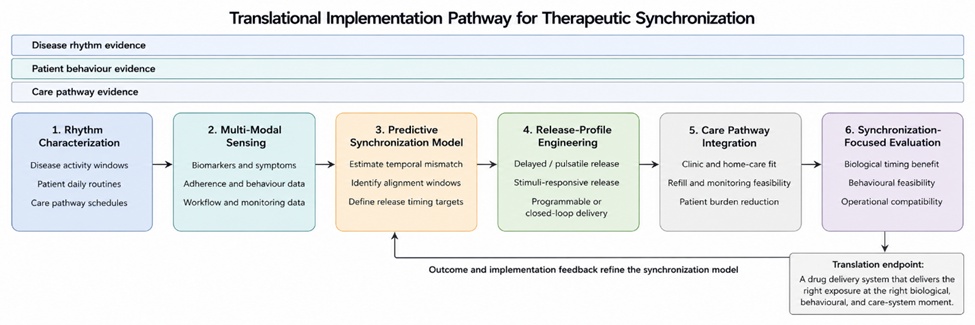
Figure 2. Translational Pathway for Implementing Therapeutic Synchronization in Drug Delivery System Design and Clinical Evaluation
Therapeutic synchronization reframes drug delivery as a systems problem of timing, alignment, and feedback. The central theoretical contribution is the claim that release profiles should be designed not only around pharmacokinetic duration but also around the rhythmic interaction between disease activity, patient behaviour, and care delivery. This perspective shifts drug delivery from a static exposure paradigm toward a dynamic systems paradigm.
The proposed model does not replace existing principles of controlled release, chronopharmacology, adherence science, or healthcare systems design. Instead, it integrates them into a single theoretical framework in which drug release functions as a control input within a multi-level therapeutic system. By doing so, it offers a language for designing therapies that are biologically timed, behaviourally realistic, and operationally feasible.
Future synchronized therapies will require collaboration among formulation scientists, chronobiologists, clinicians, behavioural scientists, engineers, digital health specialists, and healthcare system designers. The promise of therapeutic synchronization lies in its capacity to make drug delivery more responsive to the actual temporal structure of illness and care. If developed carefully, it may help transform therapeutic optimisation from delivering more drug for longer periods to delivering the right drug exposure at the right system moment.
None
None
None
None
Open Access The author(s) retain copyright. This article is licensed under the Creative Commons Attribution-NonCommercial-ShareAlike 4.0 International License. It may be shared and adapted for non-commercial purposes with appropriate attribution, an indication of changes, and distribution of adaptations under the same license. Third-party material may be subject to separate terms identified in its credit line. View the license at https://creativecommons.org/licenses/by-nc-sa/4.0/.
 Publication System