Advanced drug delivery now includes lipid nanoparticles, polymeric carriers, implants, and 3D-printed dosage forms, each offering distinct advantages for controlling where, when, and how drugs are released. These platforms differ in their suitability for nucleic acids, small molecules, biologics, local therapy, systemic exposure, long-acting treatment, and personalised dosing. The breadth of available options has expanded faster than the decision tools used to choose among them. Platform selection is often driven by familiarity, institutional capability, technological enthusiasm, or precedent within a therapeutic area. Such heuristic decisions can produce poor alignment between the drug, the target product profile, the patient population, and the manufacturing pathway. A structured framework is therefore needed to make platform choice more transparent, reproducible, and development-relevant. This article constructs an original decision framework for selecting among lipid nanoparticles, polymeric carriers, implants, and 3D-printed dosage platforms. The framework treats platform choice as a multi-criteria decision problem rather than as a single-attribute optimisation exercise. It integrates drug properties, release requirements, stability, scalability, usability, regulatory precedent, and cost into a practical selection process. A criteria-driven platform selection process can help development teams avoid technology-led formulation choices and instead align delivery strategy with therapeutic purpose. The proposed framework is intended to support early-stage screening, translational planning, quality-by-design discussions, and portfolio decisions. Its central argument is that no advanced delivery platform is inherently superior; the best platform is the one that best satisfies the target product profile under real development constraints.
Advanced drug delivery has moved from a narrow focus on formulation enhancement toward a broader platform landscape that includes lipid nanoparticles, polymeric systems, implants, and additively manufactured dosage forms. Lipid nanoparticles have become prominent for nucleic acid delivery because ionisable lipids, helper lipids, cholesterol, and polyethylene glycol lipids can be combined to protect RNA and promote intracellular delivery [1]. In parallel, polymeric and implantable systems continue to support controlled release, long-acting therapy, and local drug exposure where repeated administration is undesirable [2]. The result is a richer but more complex design space.
This expansion has created a practical problem for formulation scientists: the most visible platform is not always the most appropriate platform. Lipid nanoparticle optimisation for mRNA vaccines shows how formulation composition, route of administration, and particle attributes can determine performance [3]. Similarly, 3D-printed dosage forms can offer dose and geometry flexibility, but their benefits depend on printability, material constraints, and quality control feasibility [4]. Selection therefore requires more than matching a drug to a fashionable technology.
Ad hoc platform selection can also obscure trade-offs that emerge only later in development. A carrier that performs well in vitro may be difficult to sterilise, scale, characterise, or justify in a regulatory submission. Quality-by-design approaches emphasise that development should begin with the quality target product profile and connect desired product performance to critical material attributes and process parameters [5]. This logic is directly relevant to platform choice, yet it is not consistently applied before formulation work begins.
The aim of this article is to develop a practical decision framework that compares lipid nanoparticles, polymeric carriers, implants, and 3D-printed dosage platforms using common criteria. The framework draws from evidence on lipid nanoparticle design and manufacturing [6], biodegradable long-acting injectables [2], implantable delivery systems [7], and pharmaceutical 3D printing [8]. It does not rank technologies in the abstract. Instead, it provides a structured method for selecting the platform that best fits a defined therapeutic, patient, manufacturing, and regulatory context.
Platform selection in advanced drug delivery is a multi-criteria decision problem because the decision-maker must evaluate several feasible platform classes against competing objectives. A lipid nanoparticle may be preferred for intracellular nucleic acid delivery, while a biodegradable implant may be preferred for months-long local exposure [9]. A polymeric injectable may provide sustained systemic release, whereas a 3D-printed dosage form may better support dose individualisation [2, 10]. These choices cannot be reduced to a single metric such as encapsulation efficiency or release duration.
The conflict among criteria is central to the decision problem. Higher drug loading may compromise stability, slower release may require larger device volume, and greater personalisation may reduce manufacturing throughput. Long-acting injectable development illustrates this tension because polymer properties, active pharmaceutical ingredient characteristics, depot formation, and injection acceptability all influence performance [11]. A decision framework must therefore make trade-offs visible rather than allowing them to remain implicit.
Uncertainty further complicates platform selection. Early development teams often have incomplete information about drug stability, degradation pathways, local tolerability, scale-up feasibility, and clinical acceptability. For lipid nanoparticles, changes in mixing technology, lipid composition, or particle size distribution can alter product quality and biological performance [12]. For 3D-printed products, the same nominal dose may be affected by print resolution, material behaviour, and post-processing conditions [13]. The framework must therefore support provisional scoring and iterative updating as evidence improves.
The scope of the decision problem in this article includes small molecules and biologics intended for systemic or local delivery. It includes short-term, long-acting, personalised, and complex-release use cases, but it excludes decisions based only on commercial preference or institutional habit. The framework is aligned with quality-by-design thinking because platform choice should be connected to the target product profile, evidence inputs, and critical quality attributes from the beginning [14]. In this sense, platform selection becomes a development decision rather than a formulation afterthought.
The first step in platform selection is to define the target product profile in practical rather than aspirational terms. The development team should specify the intended patient population, route, dose, duration of therapy, release profile, storage conditions, administration setting, and acceptable burden for patients and clinicians. Lipid nanoparticle examples show that the same broad platform can behave differently depending on whether the goal is hepatic gene regulation, intramuscular vaccination, or systemic nucleic acid delivery [15, 16]. A target product profile therefore anchors the comparison before any platform is favoured.
The second step is to translate the target product profile into required delivery performance. For nucleic acids, the decisive requirements may include encapsulation, protection from degradation, endosomal escape, and reproducible particle manufacture [17]. For long-acting systems, the decisive requirements may include drug-polymer compatibility, release duration, depot tolerability, and predictable degradation [2]. For personalised oral products, the decisive requirements may include dose flexibility, print fidelity, palatability, and manufacturability at the point or near point of care [18].
The third step is to map those requirements to platform-specific capabilities and limitations. Lipid nanoparticles are strong candidates when intracellular delivery of RNA or gene-regulating cargo is central, but they may require careful stability and cold-chain evaluation [19]. Polymeric carriers and implants are strong candidates when sustained release is more important than rapid intracellular delivery, although polymer degradation and residual process-related risks must be controlled [20]. 3D-printed dosage forms are strong candidates when geometry, dose personalisation, or multiple release compartments provide clear value [21].
The final step is to compare platforms using common criteria, then revise the comparison as new data become available. Table 1 outlines the platform selection logic linking drug delivery goals to platform classes. This process should involve formulation, analytical, manufacturing, clinical, regulatory, and commercial perspectives early rather than after a lead platform has already been chosen [11]. In practice, the framework is intended to support an evidence-informed recommendation, not to replace expert judgement.
Table 1. Platform Selection Logic for Advanced Drug Delivery: Decision Steps, Platform Options, and Key Trade-Offs
Decision step | Core question | Evidence input | Platform options most directly informed | Key trade-off |
Define target product profile | What clinical, patient, and product outcome must the dosage system achieve? | Indication, route, dose, duration, patient population, storage target, administration setting | All four platforms | Ambition versus feasibility |
Translate into delivery requirements | What must the platform do to achieve the target profile? | Loading need, release kinetics, intracellular delivery need, localisation, dose flexibility | Lipid nanoparticles, polymeric carriers, implants, 3D-printed dosage forms | Performance specificity versus development flexibility |
Match drug properties to platform constraints | Is the drug compatible with the platform’s materials and process? | Molecular weight, solubility, charge, stability, potency, degradation sensitivity | All four platforms | Drug compatibility versus desired release behaviour |
Assess manufacturability | Can the platform be produced reproducibly at the intended scale? | Process capability, critical process parameters, sterility strategy, batch size, analytical control | Especially lipid nanoparticles, polymeric carriers, implants | Technical sophistication versus robustness |
Assess patient and clinical use | Will the platform be acceptable and usable in the real care pathway? | Injection burden, surgical need, removability, swallowability, personalisation need | Especially implants and 3D-printed dosage forms | Convenience versus invasiveness or operational complexity |
Assess regulatory and translational pathway | Is there a credible path to quality control, safety justification, and approval? | Precedent, quality attributes, material safety, device combination issues, control strategy | All four platforms | Innovation value versus regulatory uncertainty |
Score and iterate | Which platform gives the best weighted fit under uncertainty? | Literature, experiments, modelling, expert judgement, risk assessment | All four platforms | Early decision speed versus evidence completeness |
Figure 1 presents the proposed criteria-driven decision framework for translating a target product profile into an evidence-weighted selection among lipid nanoparticles, polymeric carriers, implants, and 3D-printed dosage platforms.
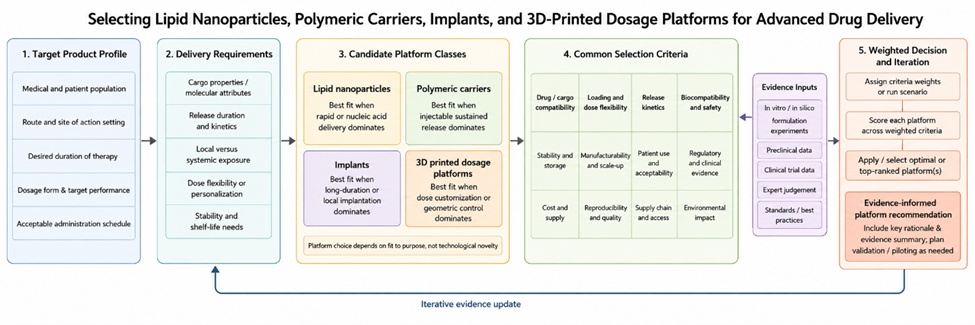
Figure 1. Criteria-driven decision framework for selecting advanced drug delivery platforms.
Universal selection criteria are needed because platform-specific enthusiasm can otherwise dominate the decision. Drug loading capacity is a primary criterion because it influences dose volume, unit size, injection feasibility, and the number of administrations. In lipid nanoparticles, loading and particle attributes are closely connected to lipid composition and mixing process [6]. In polymeric and implantable systems, loading must be interpreted together with polymer-drug compatibility and release mechanism [22].
Release kinetics are the second universal criterion because they link platform design to therapeutic exposure. A drug requiring rapid intracellular expression may fit a lipid nanoparticle better than a depot implant, while a drug requiring months of exposure may fit an implant or long-acting injectable better than a conventional nanoparticle [7, 9]. 3D printing adds a different kind of release control by allowing geometry, infill, layering, and material placement to shape dissolution or release profiles [23]. The framework therefore treats release not as “fast” or “slow” but as a match between exposure requirement and platform mechanism.
Biocompatibility, stability, scalability, and regulatory precedent form the next group of criteria. Lipid nanoparticles require evaluation of lipid tolerability, colloidal stability, biological fluid interactions, and manufacturing reproducibility [24]. Polymeric carriers and implants require attention to degradation products, local tissue response, residual solvents, sterilisation, and removal or bioresorption [7, 20]. 3D-printed products require assessment of excipient suitability, thermal or photochemical stress, print reproducibility, and quality standards that are still evolving [25].
Patient acceptability and cost complete the universal criteria because a technically elegant platform can still fail if it is burdensome or economically unrealistic. Implant platforms may reduce dosing frequency but introduce insertion, removal, or procedural considerations [7]. Personalised 3D-printed products may improve dose fit and acceptability, especially in paediatric contexts, but may complicate production logistics and quality assurance [18, 26]. Evidence inputs for scoring should therefore include literature data, preclinical studies, process characterisation, computational predictions, clinician input, patient preference evidence, and expert judgement when direct data are unavailable.
Lipid nanoparticle selection begins with the match between cargo biology and particle function. For mRNA, small interfering RNA, and other nucleic acid cargos, the decisive criteria include encapsulation efficiency, protection against nuclease degradation, biodistribution, cellular uptake, and endosomal escape [1]. Ionisable lipid chemistry is especially important because it influences RNA complexation during formulation and intracellular release after uptake [17]. Helper lipids, cholesterol, and polyethylene glycol lipids then refine particle stability, circulation behaviour, and tolerability [16].
The most decision-relevant critical quality attributes for lipid nanoparticles are particle size, polydispersity, surface charge, encapsulation efficiency, lipid composition, residual impurities, and physical stability. Manufacturing evidence is essential because rapid mixing methods can produce different particle attributes depending on flow rate, mixing geometry, solvent ratio, and scale-up strategy [6]. Process robustness studies comparing microfluidic and turbulent jet mixing show that manufacturing choice is not a secondary operational issue but part of platform selection itself [12]. Table 2 summarises the selection criteria for lipid nanoparticle platforms.
Table 2. Lipid Nanoparticle Platform Selection Criteria: Critical Attributes, Evidence Inputs, and Decision Thresholds
Criterion | Evidence input | Favourable decision signal | Caution signal | Implication for platform selection |
Cargo compatibility | Cargo size, charge, nuclease sensitivity, required intracellular site of action | Nucleic acid or gene-regulating cargo requiring intracellular delivery | Cargo does not require intracellular delivery or is unstable in formulation solvent conditions | Strongly favours lipid nanoparticles when intracellular nucleic acid delivery is essential |
Encapsulation efficiency | Assay of free versus encapsulated cargo, lipid-to-cargo ratio | High encapsulation at acceptable lipid burden | Low loading requiring excessive lipid dose | Determines feasibility of dose and injection volume |
Particle size and polydispersity | Dynamic light scattering, orthogonal particle sizing, batch reproducibility | Narrow distribution consistent with route and biodistribution target | Broad distribution or aggregation during storage | Drives biological performance and control strategy |
Surface charge and lipid composition | Zeta potential, lipid identity, molar ratios, impurity profile | Neutral or mildly favourable profile at physiological pH with efficient delivery | Excess charge, instability, or toxicity risk | Governs tolerability, uptake, and formulation robustness |
Biological-fluid stability | Serum incubation, protein interaction, potency retention | Stable potency and size profile after relevant exposure | Rapid aggregation, leakage, or potency loss | Indicates whether systemic or local administration is credible |
Storage and cold-chain need | Stability studies under intended storage conditions | Acceptable potency retention under realistic storage | Strict frozen storage incompatible with target setting | Affects translation, cost, and access |
Manufacturing scalability | Mixing platform, flow rate range, in-process controls, sterile filtration feasibility | Reproducible attributes across scales | Process-sensitive product with narrow operating window | Determines whether the platform is suitable beyond laboratory scale |
Regulatory and clinical precedent | Comparable products, safety database, analytical control strategy | Established precedent for similar cargo and route | Novel lipid composition or route with limited precedent | Influences development risk and evidence burden |
Clinical and translational evidence should be weighted according to route, indication, and cargo type rather than borrowed indiscriminately across use cases. Intramuscular mRNA vaccine optimisation provides useful evidence for lipid composition and immunogenicity, but hepatic gene regulation or systemic delivery may require different biodistribution and safety assumptions [3, 9]. Broader reviews of mRNA lipid nanoparticles also show that cold-chain needs, innate immune activation, and tissue targeting remain active constraints [19, 24]. Lipid nanoparticles should therefore be selected when their intracellular delivery advantage is decisive enough to justify formulation complexity, stability demands, and specialised manufacturing.
Polymeric carrier selection is driven by the relationship between polymer chemistry, drug properties, release mechanism, and intended duration of action. Biodegradable long-acting injectables show that polymer molecular weight, lactide-to-glycolide ratio, end-group chemistry, crystallinity, and degradation rate can strongly influence release [2]. Drug solubility, potency, acid sensitivity, and compatibility with organic solvents must be assessed early because they determine loading and stability during fabrication. These factors make polymeric carriers particularly useful when sustained release is required but surgical implantation is not preferred.
Polymeric carriers overlap with lipid nanoparticles in their need for particle control, loading efficiency, and stability, but they differ in their dominant release mechanisms. Lipid nanoparticles are typically chosen for intracellular delivery, whereas polymeric micro- and nanoparticles are often chosen for diffusion-controlled or degradation-controlled release [1, 2]. Polymeric systems also require careful evaluation of residual solvent, sterilisation method, burst release, and degradation-associated local pH changes [22]. Table 3 summarises the selection criteria for polymeric carrier platforms.
Table 3. Polymeric Carrier Platform Selection Criteria: Polymer Properties, Degradation, Drug Loading, and Performance Indicators
Criterion | Evidence input | Favourable decision signal | Caution signal | Implication for platform selection |
Polymer type | Polymer identity, molecular weight, end group, crystallinity, safety record | Biodegradable polymer with known clinical use and suitable degradation rate | Novel polymer with limited safety or degradation data | Determines translational confidence and release feasibility |
Drug-polymer compatibility | Solubility, thermal stability, solvent stability, interaction studies | Stable drug dispersion or encapsulation with acceptable loading | Drug degradation, crystallisation, or phase separation | Governs dose feasibility and product stability |
Release mechanism | In vitro release, modelling, erosion and diffusion evidence | Predictable release aligned with target exposure | High burst release or incomplete release | Determines whether the system meets pharmacokinetic needs |
Fabrication method | Emulsion, nanoprecipitation, spray drying, extrusion, or other process evidence | Reproducible size and loading under scalable conditions | Lab-scale process with poor control or solvent burden | Affects development risk and manufacturing route |
Residual solvent and impurities | Residual solvent testing, impurity qualification, process clearance | Residues below acceptable limits | Solvent required for loading but difficult to remove | Influences safety and regulatory burden |
Sterilisation compatibility | Gamma, aseptic processing, filtration, heat, or alternative strategy | Sterilisation does not alter release or drug stability | Sterilisation changes polymer or drug performance | Determines clinical manufacturability |
Biocompatibility and degradation products | Local tolerance, degradation chemistry, inflammatory response | Degradation products are acceptable for route and duration | Acidic microenvironment or tissue reaction risk | Guides route and dose-volume acceptability |
Scale-up readiness | Batch reproducibility, analytical methods, process controls | Controllable process parameters and validated assays | High batch variability or narrow process window | Indicates whether the platform is suitable for development |
A polymeric platform should be favoured when the product requires sustained delivery over days to months, when the drug is potent enough for feasible loading, and when degradation can be matched to the desired exposure profile. Industry perspectives on long-acting injectables emphasise that polymer and active pharmaceutical ingredient attributes must be considered together rather than sequentially [11]. Polymeric strategies may also be relevant in cancer nanomedicine, although targeting claims should be tested carefully because biological delivery barriers can limit apparent advantages [27]. The decision threshold is strongest when polymeric release offers a clear therapeutic or adherence benefit that cannot be achieved by simpler dosage forms.
Implant selection begins with the intended duration of therapy, anatomical site, and need for reversibility. Non-degradable reservoir systems can offer controlled release and possible removal, while biodegradable matrix systems can avoid a removal procedure but require confidence in degradation and local tolerance [7]. The material choice must therefore be linked to whether the therapeutic programme values reversibility, long duration, minimal follow-up, or complete bioresorption. This decision is especially important when the implant is intended for chronic disease management.
Implant geometry and release mechanism are as important as material identity. Dimensions, surface area, porosity, drug distribution, and device architecture influence whether release is governed mainly by diffusion, matrix erosion, osmotic driving force, or a combination of mechanisms [20]. Long-acting implant engineering demonstrates that small changes in design and fabrication can produce substantial differences in release duration and mechanical performance [13]. Table 4 summarises the selection criteria for implant platforms.
Table 4. Implant Platform Selection Criteria: Material, Geometry, Release Mechanism, and Biocompatibility Factors
Criterion | Evidence input | Favourable decision signal | Caution signal | Implication for platform selection |
Material class | Biodegradable or non-degradable polymer, elastomer, or composite evidence | Material has route-relevant safety and performance precedent | Limited material safety data or degradation uncertainty | Determines regulatory and clinical risk |
Duration of action | Target pharmacokinetic profile, drug potency, release modelling | Release duration matches adherence or therapeutic need | Required duration demands excessive implant size | Establishes whether an implant is justified |
Geometry and dimensions | Device size, surface area, porosity, insertion route | Geometry supports release and acceptable insertion | Large, fragile, or difficult-to-place device | Links performance to clinical usability |
Release mechanism | Diffusion, erosion, reservoir, osmotic, or hybrid evidence | Mechanism is predictable and testable | Uncontrolled burst or dose dumping risk | Determines safety margin and monitoring needs |
Insertion and removal | Procedure requirements, clinician training, reversibility | Simple insertion and clear removal pathway if needed | Complex procedure or difficult retrieval | Governs patient and clinician acceptance |
Bioresorption | Degradation profile, tissue response, residual fragments | Complete and tolerable degradation | Persistent fragments or inflammatory degradation | Supports use when removal is undesirable |
Mechanical integrity | Handling, fracture, migration, swelling, deformation | Stable device during insertion and residence | Fracture, migration, or deformation risk | Influences reliability in real use |
Cost and care pathway | Procedure cost, follow-up visits, administration setting | Reduced long-term treatment burden offsets procedure | High procedural burden without clear benefit | Determines health-system suitability |
Patient and clinician acceptance can determine whether an implant’s pharmacological advantage translates into real-world value. Long-acting implants and inserts may improve adherence, but they introduce procedural needs, possible discomfort, anxiety about removal, and care-pathway dependency [7]. Biodegradable solid implants can reduce removal burden, yet they shift the decision burden toward degradation control, local safety, and dose termination risk [20]. Implants should therefore be selected when long duration, local exposure, or adherence improvement outweigh the invasiveness and procedural requirements.
3D-printed dosage platform selection starts with the reason personalisation or geometry control is needed. Fused deposition modelling, semisolid extrusion, stereolithography, and inkjet-based approaches can produce different dose architectures, material demands, and quality risks [13, 21]. If the target product profile requires only a conventional fixed dose, 3D printing may add unnecessary complexity. If it requires flexible dose strength, layered release, paediatric acceptability, or complex geometry, 3D printing becomes more compelling [18].
Material and process compatibility are decisive because printability does not automatically imply pharmaceutical suitability. Thermoplastic polyurethane printlets demonstrate how high drug loading can be achieved under certain hot-melt conditions, but thermal exposure and excipient selection may limit drug choice [28]. Extrusion-based gastro-floating tablets show how geometry can be used to create functional performance, yet the translation of such designs depends on reproducible printing and robust release testing [23]. Stereolithographic and photopolymerisation-based approaches add further concerns about photoinitiators, post-curing, and residual reactive species [21].
Scalability and quality standards remain central limitations for 3D-printed dosage forms. Anti-counterfeit and track-and-trace functions demonstrate the design flexibility of printing, but they also show that product identity, digital workflow, and control strategy become part of the dosage platform [26]. Recent development-focused discussions highlight that early-phase applications may be more mature than broad commercial-scale manufacturing for personalised solid oral products [25]. 3D printing should therefore be selected when its unique capacity for personalised dose, geometry, or multi-release architecture provides a clinical advantage large enough to justify digital manufacturing controls and evolving regulatory expectations.
The integrated decision matrix converts the preceding criteria into a structured comparison of platform fit. Each row represents a criterion such as loading feasibility, release control, stability, scalability, patient acceptability, regulatory precedent, and cost, while each platform receives a score based on evidence strength and expected performance. Quality-by-design literature supports this approach because it links the intended product profile to measurable quality attributes and process understanding [5, 29]. The matrix is not intended to create false precision; it is intended to make assumptions visible.
Weighting should be assigned before platform scoring to reduce confirmation bias. For an mRNA therapy, intracellular delivery and biological stability may receive high weights, making lipid nanoparticle evidence especially influential [15, 16]. For a long-acting small-molecule therapy, release duration, injection burden, depot tolerability, and manufacturing precedent may dominate [2, 11]. For a paediatric personalised product, dose flexibility, acceptability, and local manufacturing controls may outweigh maximum scalability [10, 18].
Scores can be populated using quantitative data where available and structured expert judgement where evidence is incomplete. Quantitative inputs may include encapsulation efficiency, drug loading, particle size, release half-time, degradation rate, potency retention, storage stability, batch variability, and estimated cost [12, 22]. Qualitative inputs may include regulatory precedent, usability, clinician acceptance, and feasibility of analytical control. Multi-criteria decision analysis methods are useful here because they provide transparent aggregation while still allowing sensitivity analysis of uncertain assumptions [30].
The final recommendation should be based on weighted fit, unacceptable-risk flags, and sensitivity testing rather than on the highest raw score alone. A platform with strong performance but unresolved sterility or safety risks may be deprioritised despite a favourable technical profile. Table 5 presents the integrated decision matrix for platform selection. The matrix should be updated iteratively as formulation experiments, stability studies, manufacturability assessments, and stakeholder inputs refine the evidence base [14].
Table 5. Integrated Decision Matrix for Advanced Drug Delivery Platforms: Criteria Weighting, Scoring, and Comparative Platform Profiles
Selection criterion | Suggested weighting logic | Lipid nanoparticles | Polymeric carriers | Implants | 3D-printed dosage platforms |
Drug and cargo compatibility | Weight highly when drug stability or cargo class limits feasible options | Strong for nucleic acids and intracellular cargos; variable for small molecules | Strong for potent small molecules and some biologics if compatible with process | Strong for potent drugs suitable for sustained release | Strong when drug tolerates printing conditions and dose flexibility is needed |
Loading capacity and dose feasibility | Weight highly when dose is large or administration volume is constrained | Often constrained by lipid dose and particle composition | Dependent on polymer-drug compatibility and fabrication process | Dependent on implant size, drug potency, and matrix capacity | Dependent on printable drug loading and unit geometry |
Release kinetics | Weight highly when exposure profile drives efficacy or safety | Better for delivery and expression than prolonged zero-order release | Strong for sustained release through diffusion and degradation | Very strong for long-duration local or systemic release | Strong for geometry-driven and multi-compartment release |
Biological targeting or localisation | Weight highly for intracellular or localised therapy | Strong for nucleic acid delivery, especially when biodistribution is engineered | Moderate and context-dependent; biological barriers remain important | Strong for local exposure at implant site | Usually limited to dosage-form design rather than biological targeting |
Stability and storage | Weight highly for global access or decentralised use | May require cold-chain or specialised stability controls | Often manageable but drug and polymer dependent | Often favourable if solid-state stability is achieved | Drug, polymer, and process dependent; digital workflow adds control needs |
Manufacturability and scale-up | Weight highly for commercial products | Requires controlled mixing and lipid supply chain | Requires reproducible particle or depot manufacturing and sterility strategy | Requires device fabrication, sterility, and mechanical controls | Strong for flexible manufacture, weaker for high-throughput conventional scale |
Patient acceptability | Weight highly for chronic, paediatric, or adherence-sensitive therapy | Injection or infusion burden depends on route | Can reduce dosing frequency but may involve injections | Can greatly reduce dosing frequency but requires insertion and possible removal | Strong for personalised oral products and paediatric-friendly designs |
Regulatory precedent | Weight highly when timeline or risk tolerance is constrained | Growing precedent for RNA products but cargo-specific | Established precedent for several long-acting systems | Established for some implants, complex for novel materials | Emerging precedent; control strategies still maturing |
Cost and operational fit | Weight highly in resource-limited or decentralised settings | Potentially high cost and storage burden | Moderate to high depending on process and sterility | Procedure costs may be offset by adherence gains | Digital infrastructure and validation costs must be justified |
Overall best-fit signal | Use weighted score plus unacceptable-risk review | Select when intracellular nucleic acid delivery dominates | Select when injectable sustained release dominates | Select when very long duration or local depot value dominates | Select when personalisation or geometry control dominates |
A hypothetical long-acting antipsychotic illustrates how the matrix produces a platform-specific recommendation. The target product profile might require stable plasma exposure for one to three months, low peak-to-trough fluctuation, acceptable injection volume, and administration in an outpatient setting. Lipid nanoparticles would usually score poorly unless intracellular delivery were required, while 3D printing would not address the central need for prolonged systemic exposure [10, 16]. Polymeric long-acting injectables and biodegradable implants would therefore become the main candidates because their release mechanisms can be aligned with adherence-driven therapy [2, 7].
The choice between a polymeric injectable and an implant for this antipsychotic would depend on reversibility, dose size, clinician workflow, and patient preference. If the drug is potent, stable in a polymer matrix, and compatible with injectable depot fabrication, a polymeric carrier may provide the best balance of sustained release and practical administration [11]. If very long duration is required and the care pathway can support insertion, an implant may score higher, especially where missed doses are a major clinical risk [7]. The framework therefore does not simply choose “long acting” as a category; it differentiates the operational consequences of long-acting technologies.
A personalised paediatric dose creates a different decision pattern. The target product profile may require flexible dose strengths, swallowable or chewable dosage geometry, acceptable taste and appearance, and rapid adaptation as body weight changes. In that case, 3D-printed gummies or multi-drug printlets may score strongly because they can adjust dose and design in ways that conventional fixed-dose manufacturing cannot [10, 18]. Lipid nanoparticles, polymeric carriers, and implants would usually be inappropriate unless the paediatric indication also required nucleic acid delivery or long-term exposure.
The translation pathway should integrate the framework into early development rather than applying it after platform commitment. Teams can begin with a target product profile, assign criterion weights, score platform options with available evidence, and identify experiments needed to reduce uncertainty. The output can then support quality-by-design discussions by connecting platform selection to critical quality attributes, process parameters, and control strategy [5, 14]. Over time, the matrix could also be adapted for regulatory briefing packages, portfolio governance, and structured comparison of emerging platform variants.
Advanced drug delivery platform selection should be treated as a structured development decision rather than a technology preference. Lipid nanoparticles, polymeric carriers, implants, and 3D-printed dosage platforms each provide distinctive capabilities, but those capabilities become valuable only when they match the drug, disease, patient population, release requirement, and manufacturing pathway. The decision framework presented here moves platform selection from intuition toward transparent, criteria-based reasoning.
No platform is universally superior. Lipid nanoparticles are compelling when intracellular nucleic acid delivery is central, polymeric carriers when injectable sustained release is needed, implants when long duration or local residence justifies procedural use, and 3D-printed dosage forms when personalisation or complex geometry creates therapeutic value. The practical task is not to identify the most advanced platform, but to identify the most appropriate platform for a specific target product profile.
Future work should validate this framework through real development case studies, retrospective analyses of successful and unsuccessful products, and prospective use in formulation screening. The matrix can be refined as more comparative data become available, especially on manufacturability, patient preference, regulatory precedent, and cost. Its broader adoption could help pharmaceutical teams make earlier, clearer, and more defensible platform choices.
None
None
None
None
Open Access The author(s) retain copyright. This article is licensed under the Creative Commons Attribution-NonCommercial-ShareAlike 4.0 International License. It may be shared and adapted for non-commercial purposes with appropriate attribution, an indication of changes, and distribution of adaptations under the same license. Third-party material may be subject to separate terms identified in its credit line. View the license at https://creativecommons.org/licenses/by-nc-sa/4.0/.
 Publication System