The present investigation retrospectively examined the therapeutic impact of crizotinib in a cohort of patients diagnosed with ALK-positive metastatic lung cancer. A total of 25 individuals participated, and survival outcomes were assessed using Kaplan-Meier estimation and Cox proportional hazards modeling. Among the participants, 52% (13 patients) were male, and the mean age was 55 years, spanning from 30 to 80 years. Notably, 92% (23 patients) presented with de novo metastatic disease. Central nervous system involvement was observed in 32%, while 20% exhibited hepatic metastases. Before the administration of crizotinib, 64% had received systemic chemotherapy, and 20% underwent palliative radiation. The median progression-free survival was calculated at 16.8 months (95% CI: 5.7–27.9). Adverse effects of grade 1–2 severity were recorded in 36% of cases, whereas 12% experienced grade 3–4 toxicities. Upon disease progression, 52% (13 patients) transitioned to alternative therapies, including second-generation ALK inhibitors such as alectinib, ceritinib, or lorlatinib, or received additional chemotherapy. Median overall survival reached 44.2 months (95% CI: 28.5–59.9), with a 37.4% survival rate at the four-year mark. Multivariate analysis identified the ALK positivity ratio as a statistically significant prognostic variable for overall survival (P = 0.02). These results highlight the clinical benefit and tolerability of crizotinib in the management of ALK-mutant metastatic non-small cell lung cancer and reinforce the prognostic relevance of ALK positivity in predicting long-term survival.
Lung cancer remains a leading global cause of cancer-related deaths and continues to be one of the most frequently diagnosed malignancies worldwide [1]. With the emergence of molecular and genomic research in oncology, the paradigm of cancer treatment has shifted toward individualized therapeutic strategies. In metastatic non-small cell lung cancer (mNSCLC), numerous driver mutations have been discovered, leading to the development of mutation-specific targeted therapies [2]. The therapeutic response to these agents is influenced by both the nature of the mutation and the specific drug designed to target it [3]. Evidence from various clinical trials indicates that precision oncology approaches yield superior survival outcomes and reduced toxicity compared to standard cytotoxic regimens [4]. Mutation profiling in mNSCLC is typically conducted using techniques such as immunohistochemistry, next-generation sequencing, or in situ hybridization, although these mutations are relatively uncommon.
One such mutation involves the anaplastic lymphoma kinase (ALK) gene on chromosome 2, which is identified in approximately 4%–6% of mNSCLC cases [5]. ALK encodes a transmembrane receptor tyrosine kinase implicated in pathways regulating cellular proliferation and survival, including PI3K-AKT, MAP kinase, and JAK-STAT signaling cascades [6]. This genetic alteration is more often detected in younger individuals, non-smokers, patients with adenocarcinoma histology, and shows a higher incidence in males than females [7, 8]. Therapeutic options for ALK-mutant mNSCLC include first-generation crizotinib, as well as second- and third-generation agents such as ceritinib, alectinib, brigatinib, and lorlatinib. Second- and third-generation ALK inhibitors have demonstrated improved efficacy over crizotinib, especially in controlling disease progression and crossing the blood-brain barrier [9]. Crizotinib remains a key frontline agent for ALK-mutant mNSCLC, and subsequent administration of later-generation inhibitors after crizotinib resistance has been associated with extended survival [10]. Despite these advancements, there is a paucity of data in the literature on prognostic determinants in ALK-mutant mNSCLC patients treated with crizotinib. This study was undertaken to analyze real-world outcomes in such patients and to identify clinical variables influencing prognosis.
This retrospective investigation was conducted in alignment with established good clinical practice protocols. Participants were identified via the institutional electronic medical record database. Eligibility criteria included individuals diagnosed with metastatic non-small cell lung cancer (mNSCLC) harboring an ALK mutation who were administered crizotinib during their treatment. Cases lacking comprehensive clinical data necessary for statistical processing were omitted from the analysis. Relevant clinical, pathological, and imaging information was meticulously extracted from patient archives. All therapeutic interventions, including chemotherapeutic regimens, radiotherapy, and adjunct treatments, were documented from medical records. Confirmation of ALK positivity was performed at a centralized pathology laboratory using fluorescence in situ hybridization (FISH); a mutation signal exceeding 15% was used as the diagnostic threshold for ALK mutation positivity.
All included patients received oral crizotinib at a dosage of 250 mg twice daily. Disease monitoring was performed through clinical evaluations and imaging studies at 2- to 3-month intervals. Treatment efficacy was assessed using RECIST version 1.1 criteria, and adverse events attributed to crizotinib were recorded during routine visits and graded according to toxicity criteria.
Progression-free survival (PFS) was calculated from the initiation date of crizotinib until the point of documented disease progression. Mortality data were confirmed through the Ministry of Health's death registry system. Overall survival (OS) was defined as the duration from initial metastatic diagnosis to death from any cause. Parameters influencing OS were first examined using univariable analysis, and those found statistically significant were incorporated into a multivariable Cox regression model.
All statistical analyses were conducted using SPSS version 25. Continuous variables were expressed using median values and range (minimum–maximum), whereas categorical variables were reported as counts and percentages. The Kaplan-Meier method was used to estimate survival distributions, and comparisons between groups were performed using the log-rank test. Multivariable analysis to determine independent predictors of OS employed Cox proportional hazards regression. Statistical significance was established at a P-value threshold of < 0.05.
A total of 25 patients met the inclusion criteria for this study. The median age of participants was 55 years, with a range of 30 to 80 years. Adenocarcinoma was the predominant histological subtype, accounting for 96% of cases. Furthermore, 92% (23 patients) presented with de novo metastatic disease at diagnosis. Among extrapulmonary metastatic sites, the skeletal system was the most frequently involved, affecting 40% of patients. A comprehensive overview of patient demographics and clinical features is detailed in Table 1.
Table 1. Patients characteristics
Characteristics | Number of patients (total number = 25) | % |
Gender | ||
Male | 13 | 52% |
Female | 12 | 48% |
Smoking history | ||
Yes | 11 | 44% |
No | 6 | 24% |
Unknown | 8 | 32% |
Primary tumor location | ||
Right side | 13 | 52% |
Left side | 9 | 36% |
Unknown | 3 | 12% |
De novo metastatic disease | ||
Yes | 23 | 92% |
No | 2 | 8% |
Number of metastatic sites | ||
1 | 9 | 36% |
2 | 5 | 20% |
≥ 3 | 8 | 32% |
4 | 1 | 4% |
Unknown | 2 | 8% |
Metastatic sites | ||
Lung | 16 | 64% |
Bone | 10 | 40% |
Brain | 8 | 32% |
Liver | 5 | 20% |
Adrenal gland | 3 | 12% |
Treatments before crizotinib | ||
Palliative chemotherapy | 16 | 64% |
Palliative radiotherapy | 5 | 20% |
The median ALK positivity among patients was 42, with a range of 15 to 100. Before initiating crizotinib therapy, 64% (n = 16) of the individuals underwent palliative chemotherapy, and 20% (n = 5) received palliative radiotherapy. Crizotinib administration resulted in an objective response in 68% (n = 17) of the cohort, and disease control was accomplished in 76% (n = 19), as detailed in Table 2. Treatment had to be discontinued in 4% (n = 1) of the patients due to adverse effects. Mild to moderate adverse events, classified as grade 1-2, were documented in 36% (n = 9) of cases, whereas more severe grade 3-4 toxicities were identified in 12% (n = 3). At the time of analysis, crizotinib therapy had been halted in 80% (n = 20) of patients, either because of disease progression or toxicity. Of these, half (n = 10) transitioned to an alternative ALK inhibitor, while 1 patient (4%) shifted to chemotherapy and 1 to an EGFR inhibitor.
Table 2. Responses of treatment to crizotinib in mNSCLC patients who were treated with crizotinib
Number of patients (total number = 25) | % | Valid-% | |
Response ratios Complete response Partial response Stable disease Progressşon Unknown |
3 14 2 2 4 |
12% 56% 8% 8% 16% |
14.3% 66.7% 9.5% 9.5% |
Objective response ratio Disease control ratio Unknown | 18 20 4 | 68% 76% 16% | 71% 80.5% |
The mean follow-up duration after diagnosis of metastasis was 39 months. Progression-free survival (PFS) associated with crizotinib treatment reached 16.8 months, with a 95% confidence interval of 5.7 to 27.9 (Figure 1). When evaluating outcomes based on ALK positivity levels, patients with ALK positivity below 50% demonstrated a median PFS of 14.3 months (95% CI: 2.1–26.6), whereas those with ALK positivity at or above 50% had a median PFS of 25.9 months (95% CI: 0–60.8), as illustrated in Figure 2. Despite this numerical difference, the variation in PFS by ALK positivity ratio did not reach statistical significance (P = 0.1). Among individuals receiving crizotinib, the one-year PFS rate was 67.3%, and the three-year PFS rate was 33.3%. By the time of evaluation, a total of 14 patients (60.9%) had succumbed. The median overall survival (OS) from the onset of metastasis was 44.2 months (95% CI: 28–59), as shown in Figure 3. Across the entire patient population, the 5-year OS rate was 37.4%. Stratification by ALK positivity revealed a significantly longer median OS in the group with ALK positivity ≥ 50% compared to those with < 50% (P = 0.01) (Figure 4). Univariable and multivariable analyses identified the ALK positivity ratio as a statistically significant prognostic indicator for OS (Table 3).
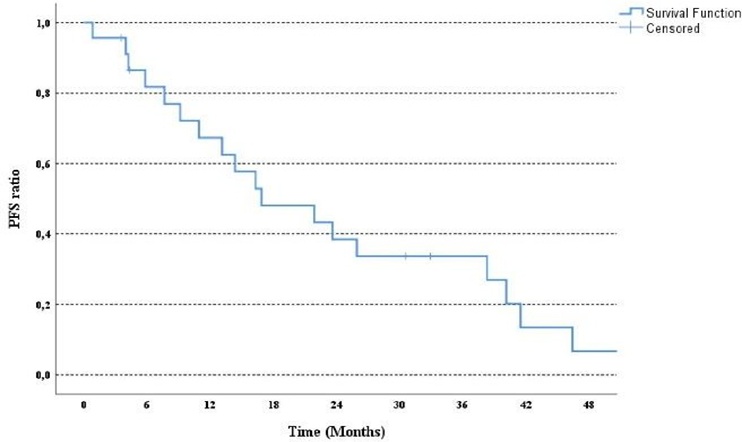
Figure 1. Kaplan-Meier curve for PFS in mNSCLC patients who were treated with crizotinib
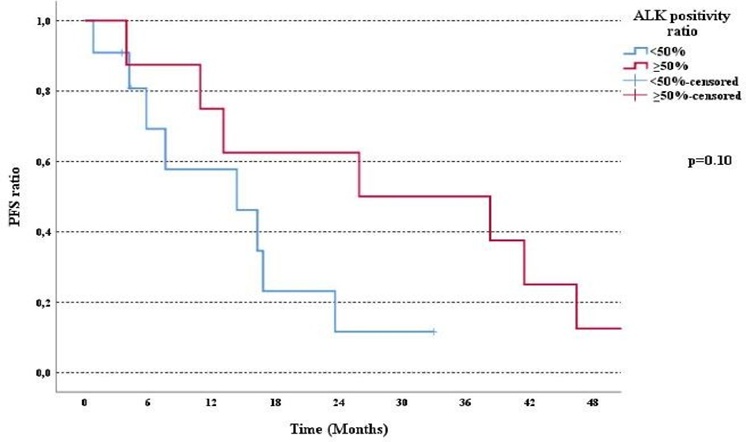
Figure 2. Kaplan-Meier curve for PFS by ALK positivity ratio in mNSCLC patients who were treated with crizotinib.
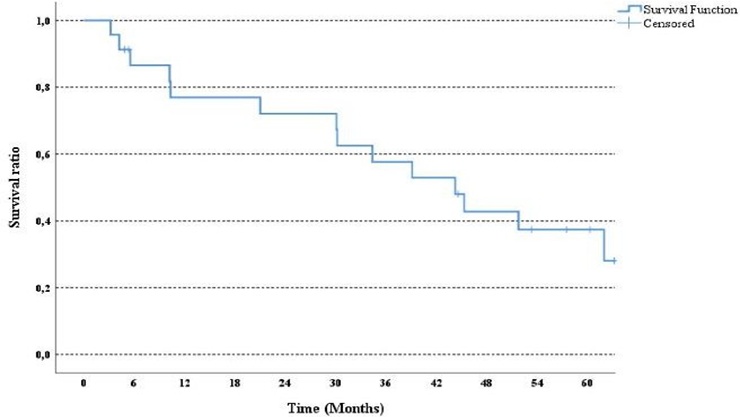
Figure 3. Kaplan-Meier curve for OS in the ALK mutant mNSCLC patients who were treated with crizotinib.
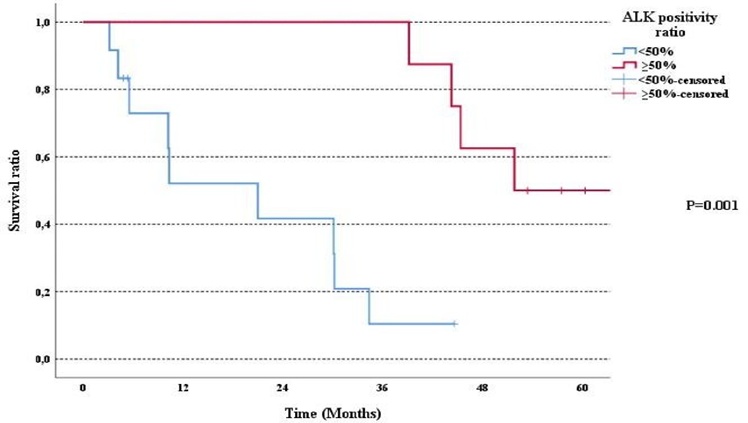
Figure 4. Kaplan-Meier curve for OS by ALK positivity ratio in the ALK mutant mNSCLC patients who were treated with crizotinib.
Table 3. Univariate and multivariate analysis for OS in the mNSCLC patients who were treated with crizotinib
| Univariate analysis | Multivariate analysis |
| P-value | P-value HR-CI 95% |
Age (< 50 vs. ≥ 50) | 0.57 |
|
Gender (Male vs. Female) | 0.55 |
|
Smoking history (Yes vs. No) | 0.52 |
|
Primary tumor site (Right vs. Left) | 0.41 |
|
ALK positivity ratio (≥ 50% vs. < 50%) | 0.001 | 0.022 9.3 (1.3-63) |
Brain metastasis (Yes vs. No) | 0.70 | 0.66 |
Liver metastasis (Yes vs. No) | 0.007 | 0.29 |
Adrenal gland metastasis (Yes vs. No) | < 0.001 | 0.054 |
Palliative chemotherapy (Yes vs. No) | 0.89 | |
Palliative radiotherapy (Yes vs. No) | 0.73 | |
Multivariate analysis model P-value < 0.001 | ||
In this investigation, we established that crizotinib, a first-generation ALK inhibitor, demonstrates both efficacy and safety in treating patients with ALK mutant mNSCLC. The PROFILE 1014 trial, published in 2014, compared crizotinib with standard chemotherapy in treatment-naïve ALK-mutant mNSCLC patients, revealing a median PFS of 10.9 months with crizotinib and 7 months with chemotherapy [11]. The final results of this study, released in 2018, reported that the median OS was not reached in the crizotinib cohort, whereas the chemotherapy group had a median OS of 47.5 months; notably, patients with the longest survival were those who transitioned to other ALK inhibitors after progression [12]. In our current study, although the median PFS was relatively longer, the median OS was approximately 44 months, which may be attributed to the study's retrospective design and the diversity of the patient population. Additionally, real-world retrospective analyses frequently include patients with lower performance status who still receive treatment and are factored into outcome analyses.
Newer-generation ALK inhibitors have improved survival outcomes in ALK-mutant mNSCLC. For instance, the phase 3 ALEX trial, which compared alectinib to crizotinib, reported median PFS of 34.8 months with alectinib and 10.8 months with crizotinib [13]. Similarly, the phase 3 ALTA-1L trial showed median PFS of 24 months with brigatinib and 11.1 months with crizotinib [14], with both alectinib and brigatinib demonstrating superior OS outcomes compared with crizotinib. Sequential ALK inhibition following crizotinib progression appears to enhance survival prospects. The phase III ALUR trial validated the superiority of alectinib over standard chemotherapy in patients with crizotinib resistance, demonstrating enhanced systemic and CNS responses [15]. Likewise, favorable outcomes were noted for brigatinib in the phase 2 ALTA trial [16]. Furthermore, lorlatinib, a third-generation ALK inhibitor, shows potent activity against resistant ALK mutations, including G1202R, and retains effectiveness in patients who have failed both first- and second-generation inhibitors [17]. During crizotinib therapy, emerging ALK mutations and the activation of alternate tyrosine kinase pathways, such as EGFR or KIT, can contribute to acquired resistance and disease progression [18].
This study aimed to identify prognostic indicators associated with crizotinib treatment in ALK-mutant mNSCLC. Our results highlighted the ALK positivity ratio as a prognostic marker. Supporting our findings, a 2018 study by Soria et al. also demonstrated a positive correlation between higher ALK positivity percentages and prolonged PFS [19]. Although our data showed a trend toward improved PFS, a statistically significant improvement in OS was observed among patients with an ALK positivity rate ≥ 50% who received crizotinib. The lack of a significant PFS difference may be due to the small sample size. At the same time, the superior OS could be explained by the subsequent administration of other ALK inhibitors following crizotinib progression. Additionally, the specific ALK variant present may influence response duration; prior studies have indicated that ALK variant 1 is associated with increased crizotinib sensitivity [20]. In a separate study assessing clinical predictors of progression under crizotinib, performance status and extent of metastatic disease were found to significantly impact PFS, whereas variables such as age, gender, smoking history, and presence of brain metastases showed no significant association [21]. Consistent with those findings, our analysis revealed no effect of age, gender, smoking history, or brain metastases on OS among crizotinib-treated patients. Although liver and adrenal metastases were associated with reduced OS in univariate analysis, these associations were not confirmed in multivariate analysis. It is essential to acknowledge the limitations of our study, including its retrospective design, the heterogeneity of the patient group, incomplete datasets, and a relatively small sample size.
This research highlights the clinical outcomes associated with crizotinib use in individuals with ALK-mutant mNSCLC. Our findings affirm that crizotinib offers both efficacy and tolerability in this patient population. Notably, those with an ALK positivity rate of 50% or greater had more favorable prognostic outcomes. Given the rarity of ALK mutations and the current scarcity of robust prognostic investigations, there remains a critical need for large, multicenter trials to elucidate resistance pathways to ALK inhibitors better and to distinguish subsets of patients who derive the greatest therapeutic benefit.
None
None
None
Ethical clearance was obtained from the local ethics board at Istanbul University Faculty of Medicine under approval number 266748.
Open Access The author(s) retain copyright. This article is licensed under the Creative Commons Attribution-NonCommercial-ShareAlike 4.0 International License. It may be shared and adapted for non-commercial purposes with appropriate attribution, an indication of changes, and distribution of adaptations under the same license. Third-party material may be subject to separate terms identified in its credit line. View the license at https://creativecommons.org/licenses/by-nc-sa/4.0/.
 Publication System