Advanced pharmaceutical technologies are reshaping the meaning of a dosage form. Products such as personalised 3D-printed tablets, long-acting injectable depots, implantable systems, nanoparticulate carriers, and digitally enabled drug-device combinations no longer fit neatly within the traditional categories of tablet, capsule, or simple injection. Their performance depends not only on chemical composition, but also on architecture, spatial distribution, release programming, device function, and sometimes digital feedback. The regulatory challenge is that evidence standards for pharmaceutical products were largely built around assumptions of batch uniformity, reproducible manufacturing, conventional dissolution, standardised stability testing, and population-level bioequivalence. These assumptions remain essential for many products, but they may be insufficient when the dosage form is personalised, structurally heterogeneous, programmable, implantable, or integrated with sensors. This creates uncertainty for both regulators and developers because the critical evidence needed to demonstrate quality, safety, and performance is not always clearly defined. This review critically examines how current regulatory expectations apply to non-traditional dosage systems and where they fail to capture technology-specific risks. It focuses on evidence standards across chemistry, manufacturing, and controls; non-clinical performance testing; clinical evaluation; and post-market evidence generation. The aim is not to propose lower evidentiary thresholds, but to argue for standards that are better aligned with the mechanisms by which advanced dosage systems achieve therapeutic performance. The review concludes that regulatory science must move from a one-size-fits-all model toward a flexible, risk-proportionate system for advanced pharmaceutical technologies. Such a system should preserve high standards for patient protection while allowing evidence requirements to vary according to product complexity, novelty, exposure duration, reversibility, and clinical uncertainty. International coordination, structured regulator-innovator dialogue, and post-market learning will be essential to prevent regulatory evidence standards from lagging behind pharmaceutical innovation.
Advanced pharmaceutical technologies have widened the distance between the physical identity of a dosage form and the regulatory categories traditionally used to assess it. Three-dimensional printing has made it possible to design medicines whose dose, geometry, porosity, and disintegration profile may be customised for individual patients, rather than manufactured as fixed, standardised units [1]. At the same time, long-acting injectable and implantable platforms are extending drug exposure over weeks, months, or longer, creating performance expectations that cannot be fully captured by conventional release or bioequivalence tests [2]. These developments signal a shift from dosage forms as passive carriers to dosage systems as engineered therapeutic platforms.
The evidence standards used in pharmaceutical regulation have historically been strongest where products are chemically well defined, physically homogeneous, and manufactured through stable industrial processes. In contrast, advanced drug delivery systems often rely on architectural complexity, material-programmed release, nanoscale interfaces, or device-mediated administration to achieve their intended effect [3]. Nanomedicines illustrate this shift particularly clearly because their clinical performance may depend on particle size distribution, surface properties, aggregation behaviour, and interaction with biological systems, not only on the active ingredient [4]. These features complicate the translation of conventional chemistry, manufacturing, and controls expectations into product-specific evidence packages.
The regulatory question is therefore not whether advanced technologies should meet robust standards, but which standards are scientifically appropriate for their mechanisms of performance. For 3D-printed medicines, evidence may need to address print-path reproducibility, spatial dose distribution, and patient-specific manufacturing controls, rather than only average content uniformity [5]. For polymer-based depots and implants, evidence may need to integrate in vitro release, in vivo degradation, injection-site behaviour, and prolonged systemic exposure [6]. For digitally enabled products, the evidence boundary may extend beyond the formulation to include sensor reliability, data interpretation, adherence measurement, and human factors [7].
This review analyses the regulatory science gap between inherited evidence standards and the quality attributes of non-traditional dosage systems. It draws on literature covering pharmaceutical 3D printing, nanomedicine, long-acting products, drug-device combinations, digital pills, and innovation policy to construct a critical synthesis [8]. The objective is to develop a risk-based approach that preserves regulatory confidence while making evidence expectations more transparent, proportionate, and technology-sensitive. The central argument is that advanced dosage systems require regulatory standards that are not weaker, but more specifically matched to the risks they introduce.
The core regulatory science problem is that many current evidence standards assume a degree of product sameness that advanced dosage systems may not exhibit. Conventional products are commonly assessed through batch-level specifications, dissolution profiles, stability data, impurity control, and pharmacokinetic comparability, all of which presume that the unit presented to the patient is materially similar across production [1]. Personalised 3D printing challenges this assumption by making controlled variation part of the product concept, rather than a deviation from it [9]. The regulatory task is therefore to distinguish acceptable design flexibility from uncontrolled variability.
This problem is especially acute when quality attributes are linked to structure rather than composition alone. A printed tablet’s infill pattern, layer adhesion, and geometry may influence disintegration and release even when the nominal dose is unchanged [10]. Similarly, nanocarrier-based systems may have performance attributes embedded in particle architecture, surface chemistry, and colloidal stability, which are not fully described by conventional assay and impurity tests [11]. These examples show why traditional evidence standards may under-specify the attributes that matter most for product performance.
The mismatch also produces tension between regulator caution and innovator frustration. Regulators must protect patients from products whose risks may not be visible through familiar tests, while innovators may face uncertainty about what evidence will be considered sufficient for novel platforms [12]. This tension can slow development when guidance is silent or ambiguous, particularly for non-biological complex drug products where sameness, substitutability, and performance comparability are difficult to establish [13]. The result is not merely procedural delay, but a deeper uncertainty about how regulatory confidence should be generated.
Products at the intersection of drug, device, and digital technology sharpen this challenge because their risk profile is distributed across multiple regulatory domains. Injectable drug-device combination products may require evidence on formulation quality, device performance, user interaction, sterility, and clinical administration strategy [14]. Digital pills introduce further complexity because the regulated object may include a drug, ingestible sensor, wearable receiver, software component, and adherence-related data stream [15]. A tablet-and-capsule evidence paradigm is poorly equipped to evaluate such integrated systems without a more explicit framework for cross-domain evidence.
The design logic of advanced pharmaceutical technologies can be understood as a move from fixed dosage units toward engineered therapeutic functions. Three-dimensional printing enables personalisation by linking digital design files to pharmaceutical manufacturing, allowing dose strength, release geometry, and dosage form shape to be modified within a controlled design space [16]. This shifts the critical quality question from whether every unit is identical to whether every permitted variation remains within validated performance limits [17]. Regulatory standards must therefore account for both manufacturing reproducibility and controlled customisation.
Long-acting injectable and implantable systems are built around programmed release, where formulation design intentionally delays, sustains, or localises drug exposure. In polymer-based products, release may depend on diffusion, erosion, degradation, depot microstructure, injection conditions, and physiological environment [18]. These mechanisms make simple short-duration dissolution tests scientifically inadequate unless they are linked to meaningful in vivo performance. The regulatory logic must therefore connect material attributes, release kinetics, exposure duration, and clinical reversibility.
Nanoparticulate delivery systems operate through tissue targeting, altered biodistribution, protection of labile payloads, and interaction with biological barriers. Their quality is not reducible to the active substance because the carrier can shape pharmacokinetics, safety, immunogenicity, and therapeutic index [19]. Orthogonal measurement strategies are often needed because no single method can fully characterise nanoscale size, morphology, surface properties, aggregation, and drug association [20]. For regulators, this means that evidence standards must address the complete drug-carrier system as the functional medicinal product.
Digitally enabled and combination products add a further design logic: feedback, monitoring, or user-mediated delivery becomes part of therapeutic performance. Design control considerations for biologic-device combination products show that product quality may depend on the interaction between formulation, container closure, delivery mechanism, and user behaviour [21]. Digital pills extend this logic by incorporating adherence monitoring and data generation into the product ecosystem [7]. Table 1 classifies advanced pharmaceutical technologies and their unique regulatory quality dimensions.
Table 1. Classification of Advanced Pharmaceutical Technologies for Non-Traditional Dosage Systems: Design Features, Critical Quality Dimensions, and Regulatory Novelty
Advanced technology class | Representative non-traditional dosage systems | Core design feature | Critical quality dimensions | Regulatory novelty |
Personalised 3D-printed medicines | Printed tablets, polypills, orodispersible dosage forms, customised dose units | Digital design translated into patient-specific solid dosage architecture | Print resolution, layer adhesion, spatial dose distribution, infill geometry, dose flexibility, disintegration profile | Challenges batch homogeneity assumptions and requires validation of design-space variability |
Long-acting injectable and implantable systems | Polymer depots, injectable suspensions, biodegradable implants, non-biodegradable implants | Programmed drug release over extended periods | Release kinetics, depot morphology, polymer degradation, injection-site behaviour, sterility, residual drug burden | Requires long-horizon performance evidence and scientifically justified in vitro–in vivo relationships |
Lipid and polymeric nanocarriers | Liposomes, polymeric nanoparticles, lipid nanoparticles, nanosuspensions | Nanoscale carrier controls biodistribution, stability, and biological interaction | Particle size distribution, surface charge, morphology, encapsulation, aggregation, drug release, colloidal stability | Product identity includes carrier architecture, not only active ingredient composition |
Drug-device combination products | Prefilled injectors, implantable delivery devices, biologic-device systems | Device function mediates dose delivery or administration reliability | Device accuracy, usability, container closure compatibility, mechanical performance, sterility assurance | Requires integration of pharmaceutical quality evidence with device design control evidence |
Digitally enabled dosage systems | Digital pills, ingestible sensors, wearable-linked adherence systems | Drug administration is coupled to sensing, monitoring, or data transmission | Sensor function, signal reliability, software-data integrity, human factors, privacy-relevant performance | Expands evidence standards beyond CMC into digital performance and real-world use conditions |
Non-traditional dosage systems are best understood as products whose therapeutic performance cannot be inferred from active ingredient identity and conventional unit-dose specifications alone. Three-dimensional printed tablets and orodispersible systems may vary in geometry, porosity, surface area, infill density, and layer structure, all of which can alter disintegration and release behaviour [22]. Reviews of pharmaceutical printing increasingly describe the dosage form as a digitally specified object, meaning that the manufacturing file, printer parameters, feedstock properties, and post-print controls become part of the evidence package [23]. This creates regulatory uncertainty because a product may be chemically conventional while being technologically non-conventional.
Long-acting injectable depots and implants represent a second major class of non-traditional systems because the dose is not simply administered and absorbed, but released through a programmed material system over time. Industry perspectives on PLGA and other long-acting platforms show that release can be shaped by particle morphology, polymer composition, sterilisation effects, injection procedure, and local tissue environment [18]. Workshop analyses of long-acting injectable aqueous suspensions similarly emphasise the need to connect formulation microstructure with clinical exposure, rather than relying on short-term release assays alone [24]. These systems challenge conventional evidence standards because failures may emerge late, persist for long periods, or be difficult to reverse.
Lipid and polymeric nanocarriers are non-traditional because the carrier is not an inert excipient shell, but a determinant of biological fate. Nanomedicine quality may depend on nanoscale size distributions, surface chemistry, morphology, encapsulation state, aggregation, and interactions with proteins or immune pathways [4]. Industry discussions of nanomedicine drug products indicate that release testing, analytical comparability, and manufacturing scale-up remain recurring challenges even for relatively mature platforms [25]. Regulatory classification becomes difficult when small changes in process or composition may alter biodistribution without producing obvious changes in conventional potency assays.
Digitally enabled products and drug-device combinations add a further layer of regulatory complexity because product performance depends on integrated use. Injectable combination products may require evidence that the device delivers the intended dose reliably under real use conditions, while also preserving formulation stability and sterility [14]. Digital pill systems raise questions about whether adherence data, sensor transmission, patient behaviour, and software interpretation should be treated as supportive tools or regulated performance attributes [15]. These examples show that non-traditional dosage systems generate uncertainty not because they escape regulation, but because their critical attributes cross the boundaries of existing regulatory categories.
Current pharmaceutical evidence standards are anchored in chemistry, manufacturing, and controls data that demonstrate identity, strength, purity, potency, stability, and manufacturing reproducibility. For conventional dosage forms, these expectations are usually operationalised through specifications, process validation, dissolution testing, impurity limits, stability studies, and bioavailability or bioequivalence evidence [1]. Quality-by-design principles can broaden this model by linking formulation and process variables to critical quality attributes, but the approach still requires that the relevant attributes be identifiable, measurable, and controlled [26]. For advanced dosage systems, the difficulty lies in defining which attributes are truly critical when performance is structure-mediated, prolonged, or digitally dependent.
For 3D-printed medicines, conventional evidence standards translate only partially because the unit is shaped by a digital and mechanical manufacturing process. Content uniformity and dissolution remain relevant, but they may not capture spatial drug distribution, print-path reproducibility, nozzle or extrusion variability, or the consequences of patient-specific dose adjustment [5]. Personalised medicine applications also raise questions about whether regulatory evidence should focus on a fixed product, a manufacturing platform, a validated design space, or a set of permissible clinical modifications [16]. This ambiguity is not a reason to abandon established tests, but it shows that those tests must be embedded in a broader control strategy.
For long-acting injectables and implants, evidence standards include formulation characterisation, sterility assurance, stability, in vitro release testing, pharmacokinetic evaluation, and clinical performance assessment. However, in vitro release methods for long-acting injectable suspensions may require accelerated or real-time approaches that are difficult to correlate with in vivo exposure [6]. Recent work on in vitro–in vivo correlation for long-acting injectable and implantable products argues that meaningful correlation depends on product mechanism, release duration, and the biological environment in which release occurs [27]. Table 2 maps current regulatory evidence standards to the specific challenges of non-traditional dosage systems.
Table 2. Current Evidence Standards for Pharmaceutical Products: Applicability and Limitations for Non-Traditional Dosage Systems
Evidence standard | Conventional regulatory purpose | Applicability to non-traditional dosage systems | Key limitation for advanced technologies | Regulatory implication |
CMC composition and specifications | Demonstrate identity, strength, purity, potency, and batch consistency | Remains essential for all dosage systems | May not capture architecture, device function, nanoscale organisation, or digital performance | Specifications must include technology-specific critical quality attributes |
Process validation | Demonstrate reproducible manufacturing under defined conditions | Applicable to printing, nanoparticle manufacture, depot production, and device assembly | Conventional batch validation may not fit personalised or distributed manufacturing | Platform validation and design-space controls may be needed |
Dissolution or in vitro release testing | Predict or control drug release from dosage forms | Useful but incomplete for printed systems, depots, implants, and nanoparticles | Test duration, media, apparatus, and discriminatory power may not reflect in vivo performance | Release methods should be justified by mechanism and linked to clinical relevance |
Stability testing | Demonstrate product quality through shelf life | Applicable to formulations, carriers, implants, devices, and digital components | Programmable or integrated systems may have chemical, mechanical, electronic, and software-related stability concerns | Stability protocols should cover the whole product system |
Bioequivalence or pharmacokinetic comparability | Support therapeutic equivalence or bridging | Relevant for follow-on versions and product changes | Conventional metrics may be insufficient for non-biological complex products and long-acting platforms | Equivalence may require combined analytical, functional, pharmacokinetic, and clinical evidence |
Device and human factors evidence | Demonstrate reliable delivery and safe use | Essential for combination and digitally enabled products | May be treated separately from pharmaceutical quality despite direct impact on delivered dose | Integrated review is needed across drug, device, and user-interface evidence |
Post-market evidence | Detect rare, delayed, or real-world performance issues | Highly relevant for persistent, implantable, or digitally monitored systems | Often not systematically linked to premarket uncertainty | Conditional learning plans can support risk-proportionate approval pathways |
For nanocarrier and non-biological complex drug products, current evidence standards are often most strained when a follow-on or modified version is proposed. Regulatory science analyses of follow-on non-biological complex products show that sameness may require more than compositional comparison because the manufacturing process and supramolecular structure can be integral to clinical performance [13]. Nanomedicine regulatory reviews also emphasise that orthogonal characterisation and fit-for-purpose assays are needed to support risk assessment, particularly when conventional pharmacopoeial tests are not discriminatory [11]. The result is an evidence landscape in which existing standards remain necessary but are frequently not sufficient.
The first major evidence gap concerns spatial and structural heterogeneity in printed dosage forms. Pharmaceutical 3D printing can deliberately vary shape, infill pattern, dose, and release geometry, but regulatory standards for spatial dose uniformity and architecture-dependent dissolution are still underdeveloped [10]. Technical reviews have identified printer performance, material behaviour, resolution limits, and post-processing variability as factors that may affect product quality in ways not captured by conventional tablet testing [3]. Without standardised expectations, reviewers may differ in how much evidence they require for each permitted design variation.
The second gap concerns in vitro release and in vitro–in vivo relationships for long-acting injectable and implantable systems. For these products, clinically meaningful release may occur over months, while routine laboratory methods must provide practical, discriminatory, and reproducible evidence within development timelines [24]. Patient-centric analyses of long-acting injectable and implantable platforms also show that acceptability, reversibility, administration route, and duration of exposure affect the regulatory significance of release failure [28]. The lack of harmonised standards can make it difficult to determine when an accelerated method, real-time method, or clinical bridging study is necessary.
The third gap concerns nanocarrier characterisation for quality release and comparability. Nanomedicine products often require multiple analytical methods because particle size, morphology, surface properties, drug loading, and aggregation are interdependent and method-sensitive [20]. Regulatory safety evaluations further indicate that nanoscale products may raise toxicological and biodistribution questions that are not predicted by conventional active substance assessment alone [19]. This creates uncertainty about which assays should be mandatory, which should be supportive, and which should be product-specific.
The fourth gap concerns digitally enabled and integrated combination products, where performance evidence extends beyond the formulation. Digital pill literature shows that adherence monitoring can alter the evidentiary purpose of the product by generating behavioural and clinical-use data, yet ethical, legal, and regulatory boundaries remain unsettled [7]. Drug-device combination product literature similarly shows that device performance, user handling, and formulation compatibility can determine whether the patient receives the intended dose [21]. The consequence is a risk of inconsistent review outcomes, conservative evidence requests, delayed submissions, and reduced investment in platforms whose regulatory path is not predictable.
A risk-based assessment framework for non-traditional dosage systems should begin by separating technological novelty from patient risk. A product may be highly novel but low risk if exposure is short, dose is reversible, and uncertainty can be controlled through release testing; conversely, a modestly novel implant may be high risk because exposure is prolonged and retrieval is difficult [2]. Regulatory evidence should therefore scale with duration of exposure, reversibility, route of administration, manufacturing variability, clinical consequence of failure, and extent of prior platform knowledge [27]. This approach aligns evidence generation with patient protection rather than with novelty alone.
Low-risk products would include advanced dosage forms whose critical attributes are well understood, whose release or performance can be verified before use, and whose clinical consequences of failure are limited. Some printed immediate-release tablets within a validated design space may fall into this tier if print variability, dose accuracy, and dissolution behaviour are demonstrably controlled [17]. Medium-risk products would include systems with moderate structural complexity, limited platform experience, or partial uncertainty about in vivo translation, such as modified printed release systems or certain injectable depots [6]. High-risk products would include long-duration implants, complex nanocarriers with uncertain biodistribution, and integrated digital or device-mediated systems where failure may persist or escape immediate detection [25].
The corresponding evidence packages should be cumulative and proportionate. Low-risk products may rely on enhanced CMC, validated process controls, discriminatory performance testing, and justified design-space boundaries, while medium-risk products may require mechanistic in vitro–in vivo linkage, expanded stability evidence, usability evidence, or pharmacokinetic bridging [26]. High-risk products should require integrated analytical, non-clinical, clinical, human factors, and post-market learning plans, especially where reversibility is limited or platform experience is sparse [28]. Table 3 presents a risk-based regulatory assessment framework for evidence generation.
Table 3. Proposed Risk-Based Regulatory Assessment Criteria for Non-Traditional Dosage Systems: Evidence Tiers, Decision Logic, and Acceptance Pathways
Risk tier | Product characteristics | Main regulatory concern | Core evidence package | Acceptance pathway |
Low risk | Well-characterised technology, short exposure, reversible use, validated design space, limited clinical consequence of failure | Ensuring controlled variability without unnecessary evidentiary burden | Enhanced CMC, validated manufacturing parameters, discriminatory release or performance tests, stability data, justification of permissible variation | Standard review with technology-specific specifications and lifecycle controls |
Medium risk | Moderate novelty, partial platform experience, prolonged but manageable exposure, uncertain in vitro–in vivo translation | Demonstrating that laboratory tests are clinically meaningful | Mechanistic release testing, pharmacokinetic bridging, expanded stability, process robustness, targeted usability or administration evidence | Enhanced scientific advice, staged evidence submission, defined post-approval commitments |
High risk | First-in-class platform, long exposure, limited reversibility, nanoscale biodistribution uncertainty, device or digital dependence | Managing uncertainty that could affect safety, efficacy, or delivered dose over time | Integrated CMC, non-clinical, clinical, device, digital, and human factors evidence; post-market evidence plan; risk mitigation strategy | Iterative regulatory dialogue, conditional or adaptive evidence pathway, active lifecycle surveillance |
Platform-learning category | Repeated products using a common validated technology platform | Determining when prior evidence can be leveraged | Platform master file, prior knowledge justification, bridging studies, comparability evidence, change-control strategy | Reliance on accumulated platform evidence with product-specific confirmation |
First-in-class exploratory category | Novel product class with no settled standards | Avoiding both under-regulation and innovation paralysis | Jointly agreed evidence plan, pre-competitive methods, sandbox-style testing, staged milestones | Regulatory sandbox or structured pilot pathway before formal guidance codification |
This framework can be operationalised within existing quality-by-design and quality risk management concepts without requiring a complete break from current regulation. Quality-by-design dossiers can define the relationship between material attributes, process parameters, and product performance, while risk management can justify why certain evidence is essential, supportive, or unnecessary [26]. For nanomedicines and non-biological complex products, prior knowledge and orthogonal characterisation can be used to build confidence where simple sameness standards are inadequate [13]. The aim is to make regulatory discretion more transparent by linking evidence requests to explicit risk criteria.
Figure 1 presents a risk-proportionate regulatory evidence framework showing how evidence requirements for non-traditional dosage systems should scale according to product complexity, exposure duration, reversibility, technological novelty, and uncertainty.
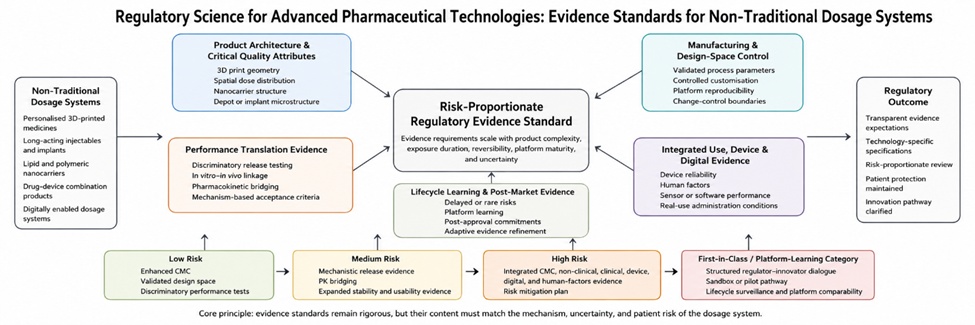
Figure 1. Risk-Proportionate Evidence Framework for Regulatory Assessment of Non-Traditional Dosage Systems
The first policy step should be the creation of an international advanced dosage form working group that can translate emerging scientific consensus into harmonised evidence expectations. Such a group could focus on cross-cutting issues that recur across platforms, including structure-mediated performance, personalised manufacturing, prolonged release, nanoscale characterisation, and integrated device or digital function [29]. Its role would not be to write product-specific rules for every technology, but to define principles for when conventional tests are sufficient and when additional evidence is scientifically necessary. International coordination is essential because fragmented national expectations would increase development uncertainty and slow patient access.
The second step should be structured regulatory sandbox programmes for first-in-class or high-uncertainty dosage systems. Sandbox approaches have been discussed in health technology assessment as mechanisms for controlled learning under regulatory supervision, and the same logic can support pharmaceutical evidence development when standards are immature [30]. In this setting, developers and regulators could agree on exploratory methods, interim evidence milestones, and post-market learning obligations before a full evidentiary template exists. This would reduce the risk that innovators either overbuild evidence packages defensively or underprepare for concerns that regulators later identify.
The third step should be pre-competitive collaboration to generate shared methods and reference standards. Nanomedicine and long-acting product development both demonstrate that platform-wide analytical problems cannot be solved efficiently by isolated sponsors working behind confidential submissions [25]. Collaborative studies could compare release methods, printing controls, nanoparticle assays, device-use simulations, and digital performance metrics under transparent conditions. The resulting knowledge could then be incorporated into guidance, pharmacopoeial standards, and reviewer training.
The fourth step should be a lifecycle evidence pathway that links premarket uncertainty to post-market learning. For persistent implants, digital pills, and complex nanocarriers, some clinically relevant uncertainties may only become visible after broader use, making post-market evidence a scientific necessity rather than a regulatory afterthought [15]. Adaptive policy models can allow earlier structured access where uncertainty is bounded, evidence generation is enforceable, and risk mitigation is proportionate to patient need [30]. Regulatory science should therefore move toward an iterative model in which evidence standards evolve with accumulated platform experience.
Advanced pharmaceutical technologies have exposed a structural weakness in evidence standards built for simpler and more homogeneous dosage forms. The problem is not that current standards are obsolete, but that they are incomplete when product performance depends on architecture, nanoscale organisation, prolonged release, device function, digital integration, or patient-specific manufacture. A modern regulatory science framework must therefore ask not only whether a product meets familiar tests, but whether those tests measure the attributes that determine safety, quality, and therapeutic performance.
A risk-based approach offers a practical path forward because it links evidence requirements to product complexity, novelty, exposure duration, reversibility, and uncertainty. This approach preserves rigorous patient protection while avoiding a rigid one-size-fits-all model that may either overburden low-risk innovations or under-characterise high-risk platforms. The central policy task is to make regulatory judgement more transparent, predictable, and scientifically grounded.
The next stage of regulatory modernisation should be coordinated internationally. Dedicated working groups, sandbox-style regulatory learning, pre-competitive method development, and lifecycle evidence commitments can help close the gap between technological innovation and regulatory expectation. Without such action, evidence standards will continue to lag behind the dosage systems they are meant to evaluate.
None
None
None
None
Open Access The author(s) retain copyright. This article is licensed under the Creative Commons Attribution-NonCommercial-ShareAlike 4.0 International License. It may be shared and adapted for non-commercial purposes with appropriate attribution, an indication of changes, and distribution of adaptations under the same license. Third-party material may be subject to separate terms identified in its credit line. View the license at https://creativecommons.org/licenses/by-nc-sa/4.0/.
 Publication System