The clinical success of mRNA–lipid nanoparticle vaccines transformed lipid nanoparticle technology from a specialised drug delivery field into a central modality for modern biopharmaceutical development. That success demonstrated that nucleic acid therapeutics can be manufactured, distributed, and deployed at unprecedented speed when formulation science, process engineering, and regulatory urgency align. Yet the same success also exposed how dependent LNP products remain on tightly constrained composition, process history, and cold-chain stability. The central problem is that processes optimised rapidly under pandemic conditions do not automatically constitute robust manufacturing platforms. Many LNP processes remain product-specific, empirically tuned, and sensitive to changes in lipid composition, aqueous phase conditions, mixing geometry, and downstream handling. The language of “platform” is therefore often stronger than the underlying evidence for generalisable process robustness. The review maps the structural and functional logic of LNP platforms, evaluates how mRNA delivery requirements shaped formulation choices, and assesses preclinical and manufacturing evidence across laboratory, preclinical, and scalable production contexts. It identifies recurrent fragility points including mixing sensitivity, particle heterogeneity, aggregation, mRNA degradation, storage instability, and incomplete comparability evidence after process change. Five tables summarise platform design, mRNA delivery requirements, manufacturing evidence, fragility points, and a system design strategy for robust LNP production. The post-mRNA era requires a shift from emergency product development to platform-centred system design. LNP manufacturing must become modular, measurable, scalable, and quality-resilient rather than merely reproducible under narrowly defined conditions. Achieving this transition is essential if LNP technologies are to move beyond COVID-19 vaccines into broader therapeutic applications and more equitable global health deployment.
The mRNA–LNP vaccine era showed that lipid nanoparticles can carry fragile nucleic acids from molecular design to global clinical deployment with extraordinary speed. Reviews of mRNA-LNP systems emphasise that this achievement rested on decades of work in ionizable lipids, rapid-mixing manufacture, nucleic acid chemistry, and nanoparticle characterisation rather than on a single emergency innovation [1, 2]. The platform narrative is therefore justified in one sense: LNPs created a repeatable delivery architecture for a new class of medicines. However, the same evidence also shows that the platform is highly conditional, because biological performance emerges from a narrow alignment of formulation, process, cargo, and route of administration [3].
The pandemic compressed formulation optimisation, process development, analytical method selection, and scale-up into timelines that would normally be considered incompatible with mature manufacturing science. Manufacturing-focused analyses of mRNA products describe bottlenecks in raw materials, process capacity, fill-finish operations, and cold-chain distribution that were mitigated under crisis conditions but not eliminated as structural limitations [4, 5]. This distinction matters because emergency success can mask incomplete process understanding. A product made reproducibly during a crisis is not necessarily a robust platform for multiple cargos, indications, dose levels, and geographies.
The current field faces a critical juncture between continuing empirical product-by-product optimisation and constructing a more explicit LNP platform logic. The foundational literature shows that ionizable lipid identity, helper lipid selection, cholesterol content, PEG-lipid behaviour, particle morphology, and payload distribution all shape performance in ways that are not trivially interchangeable across products [6-8]. At the same time, emerging datasets and design platforms suggest that larger formulation spaces can be organised more systematically if manufacturing and analytical metadata are captured in standardised ways [9-11]. The translational challenge is therefore to convert accumulated product experience into design rules that remain valid under scale-up and lifecycle change.
This review argues that the mRNA platform’s success revealed, rather than solved, the fragility of the current LNP manufacturing paradigm. It critically assesses evidence on LNP composition, mRNA delivery, preclinical translation, manufacturing process parameters, quality attributes, and scalability to identify where platform claims are strong and where they remain aspirational [12, 13]. The review then frames LNP development as a system design problem rather than a formulation problem alone. Its objective is to chart a pathway from product-specific emergency manufacturing toward robust, modular, quality-resilient LNP platforms.
The canonical LNP architecture combines an ionizable lipid, a helper phospholipid, cholesterol, and a PEG-lipid to create a particle that can encapsulate nucleic acid, remain colloidally stable, and promote intracellular delivery. The ionizable lipid is generally neutral or weakly charged at physiological pH but protonates under acidic conditions, supporting nucleic acid complexation during formulation and endosomal disruption after uptake [1, 3]. Helper phospholipids and cholesterol contribute membrane packing, structural integrity, and fusogenic behaviour, while PEG-lipids regulate particle size and steric stabilisation during formation [6]. This composition is often presented as a modular platform, but the modules are functionally coupled rather than independently exchangeable.
Self-assembly is driven by rapid mixing of an ethanolic lipid phase with an acidic aqueous nucleic acid phase, producing transient local environments that determine nucleation, growth, and final particle structure. Rapid-mixing studies and morphology analyses show that lipid composition and mixing kinetics influence particle size, internal organisation, and encapsulation behaviour [7, 13]. LNPs are therefore process-defined materials as much as composition-defined materials. A nominally identical lipid molar ratio may not yield an equivalent product if the mixing field, solvent removal, buffer exchange, or hold conditions differ.
The structural logic of LNPs is inseparable from their delivery function, because morphology, ionizable lipid pKa, surface PEG density, and payload distribution affect both stability and biological potency. Ionizable lipid discovery studies demonstrate that small chemical changes can alter endosomal escape, organ tropism, tolerability, and duration of pharmacology [14-18]. These findings challenge the assumption that one successful LNP composition can serve as a universal chassis. Instead, the platform should be understood as a constrained design family whose members share broad principles but require product-specific verification.
The post-COVID use of LNPs has sometimes treated the vaccine formulation paradigm as a general template for all nucleic acid products, yet the evidence supports a more cautious interpretation. Reviews of lipid component function and gene-regulation applications show that the optimal design for hepatic siRNA, systemic mRNA, vaccine antigen expression, or tissue-selective delivery may differ substantially [6, 12]. Table 1 summarises the core LNP compositions and their functional design logic. The platform value of LNPs lies not in a fixed composition, but in a transferable relationship between lipid chemistry, self-assembly, structure, and delivery performance.
Table 1. Lipid Nanoparticle Platform Design: Core Compositions, Structural Features, and Functional Logic across Product Types
LNP design element | Core structural or process role | Functional design logic | Translational implication across product types |
Ionizable lipid | Forms nucleic acid-associated internal domains and changes charge with pH | Enables acidic-phase encapsulation and supports endosomal escape after cellular uptake | Small chemical changes can alter potency, tolerability, organ tropism, and manufacturability |
Helper phospholipid | Supports membrane organisation and lipid packing | Tunes bilayer-like behaviour, fusion propensity, and particle stability | May require retuning when cargo size, dose, or route changes |
Cholesterol | Modulates membrane rigidity, packing defects, and colloidal stability | Stabilises particle structure while influencing release and intracellular trafficking | Provides formulation robustness but can also change morphology and payload distribution |
PEG-lipid | Provides steric stabilisation during formation and storage | Controls particle size, aggregation tendency, and circulation behaviour | PEG-lipid identity and molar fraction strongly affect scale-up, filtration, and biodistribution |
Nucleic acid cargo | Drives electrostatic assembly and internal organisation | Cargo length, charge density, and secondary structure affect encapsulation and stability | mRNA, siRNA, and genome-editing payloads cannot be assumed to share identical process spaces |
Rapid-mixing environment | Determines supersaturation, nucleation, and growth | Flow rate ratio, total flow rate, lipid concentration, and mixer geometry shape CQAs | Platform transfer requires equipment-independent process understanding, not simple recipe transfer |
Downstream buffer exchange | Removes ethanol and establishes final product medium | Buffer composition and dialysis or tangential flow conditions influence aggregation and stability | Downstream operations must be integrated into platform design rather than treated as cleanup steps |
Final product presentation | Defines storage, dilution, and administration context | Cryoprotection, frozen storage, and handling conditions preserve potency and integrity | Product-specific cold-chain needs limit generalisability and global deployment |
Figure 1 illustrates why lipid nanoparticles should be understood as conditional, process-defined platform systems rather than universally interchangeable four-lipid formulations.
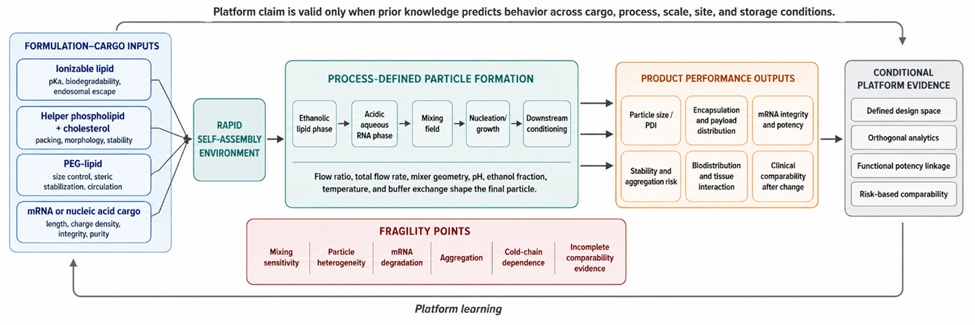
Figure 1. Conditional Platform Logic of Lipid Nanoparticles after the mRNA Era: From Four-Lipid Composition to Process-Defined Product Performance
mRNA is a demanding payload because it is large, polyanionic, conformationally complex, and susceptible to hydrolysis, oxidation, and nuclease-mediated degradation. LNPs address these vulnerabilities by encapsulating mRNA during rapid assembly, shielding it during extracellular transport, and enabling delivery to cells capable of translation [1, 2]. The required sequence of events is unforgiving: the product must preserve mRNA integrity before administration, promote uptake, escape endosomes, release cargo into the cytosol, and allow ribosomal translation. Failure at any step can appear as reduced potency even when conventional physicochemical attributes remain within acceptable ranges.
The optimisation of LNPs for mRNA delivery produced formulations that are highly effective but not automatically generalisable. Studies of amino lipids and ionizable lipid libraries show that endosomal escape and sustained expression depend on lipid structure, apparent pKa, biodegradability, and tissue interaction [15-18]. Size also matters, because particle dimensions can influence immune activation, biodistribution, and vaccine immunogenicity [19]. Thus, mRNA delivery imposes a structure–activity problem that links molecular design to both biological and manufacturing outcomes.
Payload-specific behaviour adds another layer of complexity because mRNA length, sequence, purity, and secondary structure can influence encapsulation and product stability. Evidence on payload distribution indicates that mRNA may not be uniformly packaged across particles, meaning that bulk encapsulation efficiency may not fully describe product architecture [8]. Stability work further shows that loss of mRNA activity may occur through mechanisms not captured by simple particle-size measurements [20, 21]. These observations make mRNA-LNPs difficult to reduce to a small set of universal CQAs.
The delivery context also constrains how platform logic should be applied to future products. LNPs optimised for vaccine antigen expression may not meet the needs of protein replacement, gene editing, placental delivery, or tissue-selective therapy without major redesign [18, 22, 23]. Table 2 maps the specific demands of mRNA delivery and how LNP design parameters meet those demands. A mature platform must therefore define which delivery requirements are shared across mRNA products and which must be revalidated for each indication, route, and dose.
Table 2. mRNA Delivery by Lipid Nanoparticles: Key Formulation Parameters, Structure-Activity Relationships, and Translational Performance
mRNA delivery demand | Relevant LNP design parameter | Structure-activity relationship | Translational performance concern |
Protection from nucleases | Encapsulation efficiency, internal organisation, lipid packing | More complete encapsulation can reduce enzymatic exposure but may not ensure functional integrity | Release testing must distinguish intact, translatable mRNA from merely encapsulated nucleic acid |
Efficient cellular uptake | Particle size, PEG-lipid content, surface properties | Size and surface shielding influence interaction with proteins and cells | Potency may shift when particle size changes during scale-up or storage |
Endosomal escape | Ionizable lipid pKa, lipid shape, helper lipid composition | Protonation and membrane disruption support cytosolic access | Small lipid changes can produce large biological effects not predicted by size or encapsulation alone |
Cytosolic mRNA release | Lipid–RNA association strength and internal morphology | Strong association aids encapsulation but can impair release | Formulations must balance stability before delivery with release after uptake |
Translation efficiency | mRNA integrity, purity, cap quality, and release kinetics | Translation requires intact mRNA and productive intracellular trafficking | Analytical methods must connect molecular integrity to functional potency |
Immunogenicity control | Lipid composition, particle size, RNA impurities, dose | Innate immune activation can support vaccines but limit chronic therapies | Platform transfer must consider indication-specific immune tolerance |
Storage stability | Buffer, cryoprotectant, temperature, residual ethanol | Hydrolysis, aggregation, and lipid rearrangement may reduce activity over time | Cold-chain and handling constraints remain central barriers to global access |
Tissue selectivity | Ionizable lipid chemistry, lipid ratios, protein corona interactions | Composition can alter organ distribution and cell-type targeting | Tissue-targeted products require new comparability and biodistribution evidence |
Published manufacturing evidence for LNP-mRNA products spans laboratory microfluidics, parallelised microfluidic production, and broader discussions of scalable mixing technologies. Microfluidic formulation work has been central because it enables controlled mixing at small scale while rapidly screening lipid compositions and process parameters [13, 24]. Parallelised devices and throughput-scalable systems demonstrate that microfluidic principles can be extended beyond discovery settings, although equipment geometry and channel uniformity become part of the process definition [25, 26]. The evidence supports scalability in principle but also shows that process transfer is not merely a matter of increasing volume.
Critical process parameters repeatedly include flow rate ratio, total flow rate, lipid concentration, aqueous buffer pH, ethanol fraction, temperature, and downstream buffer exchange conditions. These parameters affect particle size, polydispersity, encapsulation efficiency, residual solvent removal, aggregation, and mRNA integrity [27-29]. The interaction among parameters is especially important because a formulation may tolerate variation in one setting but fail when multiple conditions shift simultaneously. This is a classic sign of a fragile design space rather than a robust platform space.
Preclinical evidence has expanded the apparent versatility of LNPs, including organ-selective delivery, placenta-directed delivery, immune-cell targeting, and data-driven design approaches. Selective organ targeting and tissue-specific mRNA delivery studies show that lipid composition can redirect biological distribution and functional expression [18, 22]. Machine-learning and database-oriented studies further suggest that formulation-performance relationships can be learned if datasets include sufficient chemical, process, and biological metadata [9-11]. However, much of this evidence remains preclinical or computationally organised rather than validated through multi-product GMP manufacturing campaigns.
The main evidence gap is the scarcity of public, large-scale, multi-product comparability data linking process changes to clinically meaningful quality and potency outcomes. Manufacturing reviews and mRNA production analyses identify bottlenecks but also highlight how much industrial process knowledge remains proprietary [4, 5]. Table 3 collates preclinical and manufacturing evidence for LNP-mRNA products across scales. The translational field therefore has strong proof that LNP-mRNA products can be made and scaled, but weaker public evidence defining how broad, transferable, and resilient the platform truly is.
Table 3. Preclinical and Manufacturing Evidence for LNP-mRNA Products: Process Scales, Critical Quality Attributes, and Comparability Findings
Evidence domain | Representative process scale | Main process variables | Principal CQAs evaluated | Comparability or translation finding |
Laboratory rapid mixing | Microlitre to millilitre formulation screening | Flow rate ratio, lipid concentration, pH, ethanol fraction | Size, polydispersity, encapsulation efficiency, surface charge | Useful for discovery, but equipment-specific mixing fields limit direct extrapolation |
Microfluidic formulation | Millilitre to litre-scale development | Channel geometry, total flow rate, parallelisation, temperature | Size distribution, encapsulation, reproducibility, residual solvent | Scalable concepts exist, but device design becomes part of the manufacturing control strategy |
Parallelised microfluidics | Higher-throughput preclinical production | Channel uniformity, flow balancing, pressure control | Batch consistency, particle size, mRNA integrity, potency | Parallelisation can increase output but introduces manifold and channel-to-channel comparability concerns |
Impingement or turbulent mixing | Development to commercial-relevant production | Mixing intensity, residence time, lipid and aqueous stream control | Size, polydispersity, encapsulation, aggregation | More suitable for scale, but public evidence on multi-product robustness remains limited |
Downstream buffer exchange | Post-assembly processing | Dialysis or filtration conditions, buffer composition, ethanol removal | Aggregation, osmolality, pH, residual ethanol, mRNA stability | Downstream processing can materially alter CQAs and must be treated as part of particle formation history |
Stability and storage studies | Preclinical and product-support settings | Temperature, freeze-thaw exposure, formulation medium, hold time | mRNA integrity, particle size, potency, aggregation | Activity loss can occur without obvious changes in simple physicochemical measurements |
Analytical characterisation | Research and translational release contexts | Method selection, sample preparation, orthogonality | Encapsulation, lipid content, RNA integrity, morphology, potency | Research methods are informative but not always release-ready or standardised |
Data-driven design | Literature-scale and experimental datasets | Lipid structures, molar ratios, cargo, process descriptors | Predicted potency, organ targeting, size, formulation performance | Useful for platform learning only when metadata are sufficiently complete and comparable |
Manufacturing fragility in LNP production begins with the fact that particle formation is governed by fast, local, and difficult-to-observe mixing events. Rapid-mixing reviews show that LNP attributes depend on the time scale over which lipids, ethanol, aqueous buffer, and nucleic acid encounter one another, making flow rate ratio, total flow rate, and mixer geometry central determinants of product quality [13, 24]. This means that the process is not simply a recipe but a dynamic self-assembly event. When equipment changes, the same nominal formulation can experience a different mixing history and produce different particle populations.
The fragility becomes more visible during scale-up because microfluidic control does not automatically translate into industrial robustness. Parallelised microfluidic manufacturing can increase throughput, but it also introduces risks related to channel-to-channel variability, pressure balancing, clogging, and manifold design [25, 26]. Recent reviews of LNP-mRNA encapsulation unit operations similarly emphasise that mixing technologies, formulation parameters, and process scale interact to determine final physicochemical characteristics [27]. Processes developed for rapid deployment may therefore be reproducible within one manufacturing configuration but vulnerable when transferred, intensified, or adapted to a different product.
Downstream processing adds another layer of vulnerability because LNPs continue to respond to their environment after initial assembly. Dialysis and buffer-exchange studies show that post-formation conditions can modulate the interaction between critical process parameters and final particle attributes [29]. Stability studies further indicate that mRNA-LNP activity can decline under nonfrozen conditions through mechanisms that may not be obvious from particle size alone [21]. Table 4 identifies specific fragility points in LNP manufacturing and their quality consequences.
Table 4. Manufacturing Fragility Points in Lipid Nanoparticle Production: Process Parameters, Failure Modes, and Impact on Critical Quality Attributes
Manufacturing stage | Fragility point | Likely failure mode | Impact on critical quality attributes | Translational control need |
Lipid preparation | Lipid concentration, solvent quality, lipid purity | Incomplete dissolution, lipid oxidation, compositional drift | Lipid composition, particle size, potency, impurity profile | Qualified raw materials, defined hold times, and lipid-specific stability controls |
Rapid mixing | Flow rate ratio, total flow rate, mixer geometry | Nonuniform nucleation, broad particle-size distribution, variable encapsulation | Size, polydispersity, encapsulation efficiency, batch consistency | Equipment-linked design space and scale-aware mixing characterisation |
Aqueous phase preparation | Buffer pH, ionic strength, RNA concentration | Altered lipid protonation, RNA precipitation, reduced complexation | Encapsulation efficiency, mRNA integrity, particle morphology | Tight buffer control and compatibility testing across cargo types |
Temperature control | Temperature during mixing, filtration, freezing, thawing | Aggregation, lipid phase changes, accelerated RNA degradation | Size, aggregation, potency, RNA integrity | Thermal mapping, controlled hold conditions, and freeze-thaw validation |
Downstream buffer exchange | Dialysis or filtration parameters, residual ethanol removal | Particle restructuring, dilution stress, aggregation | Residual solvent, osmolality, size, potency | Integrated downstream process design rather than end-stage correction |
Sterile filtration and filling | Filter compatibility, shear exposure, adsorption | Particle loss, size selection, aggregation, lipid adsorption | Dose accuracy, particle concentration, sterility assurance, potency | Filter validation using product-relevant CQAs |
Storage and transport | Cold-chain excursions, nonfrozen holds, freeze-thaw cycles | Activity loss, hydrolysis, aggregation, leakage | Potency, mRNA integrity, particle size, appearance | Stability-indicating assays and real-world distribution stress studies |
Process transfer | Equipment change, site change, operator change | Loss of comparability despite nominally identical inputs | All release and extended characterisation attributes | Risk-based comparability protocols linked to mechanism and performance |
mRNA degradation represents a particularly important fragility point because the cargo is both the active pharmaceutical component and a structural participant in particle formation. Mechanistic work on loss of mRNA activity indicates that functional decline may arise from chemical and structural processes not fully captured by standard encapsulation measurements [20]. Payload distribution studies also suggest that bulk measurements can obscure heterogeneity among particles, leaving uncertain how much of a batch contains productively loaded LNPs [8]. This evidence supports the view that current LNP manufacturing fragility is not accidental, but a consequence of designing for urgent product success before fully establishing robust platform control.
Quality translation is the movement from informative research characterisation to validated, release-capable, clinically meaningful quality control. In LNP development, this transition remains incomplete because commonly measured attributes such as size, polydispersity, encapsulation efficiency, and surface charge do not fully explain potency, stability, or biodistribution [2, 30]. Structural characterisation studies show that benchmark formulations can differ in RNA cargo behaviour and particle architecture even when standard measurements appear acceptable [30]. The field therefore risks overinterpreting convenient assays as sufficient evidence of product sameness.
The analytical challenge is intensified by the hybrid nature of mRNA-LNP products. These products contain a fragile biological macromolecule, multiple synthetic or semisynthetic lipids, solvent and buffer residues, and supramolecular particle structures that can change over time [1, 3]. Mass-spectrometric approaches to mRNA quantification in LNPs illustrate the need for more precise tools that can measure cargo-related attributes within complex nanoparticle matrices [31]. However, sophisticated research assays must still be translated into methods that are robust, validated, scalable, and suitable for GMP decision-making.
Clinically relevant specifications are difficult to define because the relationship between measured CQAs and in vivo performance is often indirect. Studies on particle size and vaccine immunogenicity show that size can influence biological response, but size alone cannot explain the full delivery cascade [19]. Ionizable lipid structure, tissue interaction, and intracellular trafficking also contribute to potency and safety, as shown by lipid library and organ-targeting studies [15-18]. A specification strategy based only on conventional physicochemical attributes therefore risks missing failure modes that matter clinically.
A stronger quality translation framework would use orthogonal methods, stability-indicating assays, and functional potency readouts to connect manufacturing variability with biological performance. Reviews of mRNA vaccine structure and stability emphasise that RNA integrity, particle stability, and storage conditions must be assessed together rather than as isolated attributes [2, 21]. Data-oriented LNP resources may help identify which formulation and process descriptors best predict quality outcomes, but only if datasets include analytical methods, process conditions, and biological endpoints in comparable formats [9-11]. The next quality challenge is not simply adding more assays; it is selecting assays that reveal the mechanisms by which manufacturing variation becomes clinical risk.
Scalability barriers for LNP products extend well beyond the volume of nanoparticle suspension that can be produced per hour. Manufacturing analyses of mRNA vaccines describe a system constrained by specialised raw materials, enzymatic mRNA production, purification capacity, sterile processing, fill-finish limitations, and cold-chain infrastructure [4, 5]. LNP assembly is only one node in this chain. A scalable LNP platform must therefore be judged by its ability to coordinate upstream lipid and RNA supply, particle formation, downstream processing, testing, release, and distribution.
Specialised ionizable lipids are a central bottleneck because they are often proprietary, structurally complex, and product-defining. Ionizable lipid studies demonstrate that potency and tolerability can be highly sensitive to lipid chemistry, which makes substitution difficult without extensive comparability evidence [14-17]. This creates a strategic tension between innovation and supply resilience: the most effective lipid for a given product may also be the hardest to source, qualify, and replace. Platform scalability requires lipid supply chains that are robust enough to support both clinical innovation and global manufacturing demand.
Cold-chain dependence remains another scalability barrier because mRNA-LNP products can lose activity during storage and transport even when they remain visibly unchanged. Stability studies under nonfrozen conditions indicate that shelf-life behaviour is multidimensional, involving mRNA integrity, lipid organisation, and functional activity [21]. Reviews of mRNA-LNP vaccine structure similarly show that frozen storage, thawing, dilution, and handling conditions are part of the product’s real-world performance profile [2]. Thus, global scalability is not only a factory problem but also a logistics, training, and infrastructure problem.
The economics of single-product manufacturing lines further limit the platform promise. If each LNP product requires bespoke lipid sourcing, mixer configuration, downstream conditions, analytical methods, and stability strategy, then the platform functions more like a family of artisanal processes than a modular industrial technology [12, 27]. Comprehensive formulation analyses and design datasets point toward broader learning across compositions, but the translation of that learning into reusable manufacturing assets remains incomplete [9-11, 32]. Scalability should therefore be redefined as system scalability: the capacity to adapt, qualify, and distribute multiple LNP products without rebuilding the manufacturing paradigm each time.
A system design strategy for LNP manufacturing begins by treating the platform as an integrated architecture rather than a fixed formulation. The architecture should separate lipid synthesis and qualification, RNA production, nanoparticle assembly, downstream conditioning, sterile processing, analytics, and cold-chain control into interoperable but independently optimised modules [4, 5]. This modularity would allow improvements in one part of the system without destabilising the entire product lifecycle. It would also make comparability more transparent because each module could have defined inputs, outputs, controls, and risk boundaries.
Process robustness must be decoupled from product specificity through deliberate design-space exploration. Rapid-mixing and manufacturing studies show that flow conditions, lipid concentration, buffer pH, and mixer geometry define the local self-assembly environment, so these variables should be mapped mechanistically rather than adjusted empirically [13, 24-27]. Quality-by-design principles can be applied retrospectively to existing LNP processes by identifying high-risk parameters, linking them to CQAs, and establishing acceptable operating ranges supported by orthogonal analytics. The goal is not to remove product-specific optimisation, but to embed it inside a platform control strategy.
Integrated process analytical technology should become a central component of this system design. Current quality translation gaps arise partly because many important attributes are measured offline, slowly, or with methods that do not capture transient instability [30, 31]. Real-time or near-real-time monitoring of particle size, concentration, residual solvent, aggregation risk, and environmental conditions would allow process deviations to be detected before they become batch failures. Table 5 presents the proposed system design strategy for robust, scalable LNP manufacturing.
Table 5. System Design Strategy for Robust Lipid Nanoparticle Manufacturing: Modularity, Process Control, and Quality-by-Design Integration
System design element | Operational purpose | Implementation strategy | Expected platform benefit |
Modular raw-material qualification | Reduce dependence on fragile single-source inputs | Define lipid, RNA, buffer, and excipient acceptance criteria with supplier comparability plans | Greater resilience to supply disruption and process change |
Mechanistic mixing design space | Decouple particle quality from one specific mixer configuration | Map flow rate ratio, total flow rate, geometry, concentration, and pH against CQAs | More predictable scale-up and site transfer |
Integrated downstream design | Treat buffer exchange, filtration, and filling as quality-forming steps | Link downstream conditions to aggregation, residual ethanol, osmolality, and potency | Fewer late-stage failures and stronger lifecycle control |
Orthogonal analytical control | Avoid reliance on single convenient assays | Combine physicochemical, molecular, structural, and functional measurements | Better detection of hidden heterogeneity and clinically relevant variation |
Process analytical technology | Detect drift during manufacturing rather than after batch completion | Use inline or at-line monitoring for size, concentration, solvent, and environmental variables | Faster corrective action and improved batch consistency |
Platform comparability framework | Enable process and site changes without full reinvention | Predefine risk-based comparability packages for equipment, scale, lipid, and buffer changes | More efficient lifecycle management across products |
Data infrastructure | Convert product experience into reusable platform knowledge | Capture formulation, process, analytical, stability, and biological metadata in standard formats | Improved predictive modelling and cross-product learning |
Global deployment design | Build manufacturing for access, not only for launch speed | Include cold-chain minimisation, regional production, and raw-material redundancy in development plans | Broader reach and improved preparedness for future health needs |
Data infrastructure is the final pillar because LNP platform learning depends on the quality of the evidence captured across products. Machine-learning-guided design platforms and LNP databases demonstrate that formulation-performance relationships can be organised computationally, but their value depends on consistent metadata describing lipid structures, process conditions, assays, and biological outcomes [9-11]. A system design strategy should therefore make data capture a manufacturing requirement, not an academic afterthought. Only then can empirical development evolve into a true platform logic that is robust across products, scales, and sites.
Figure 2 presents a practical system-design pathway for converting product-specific LNP manufacturing experience into a modular, quality-resilient, and lifecycle-governed platform.
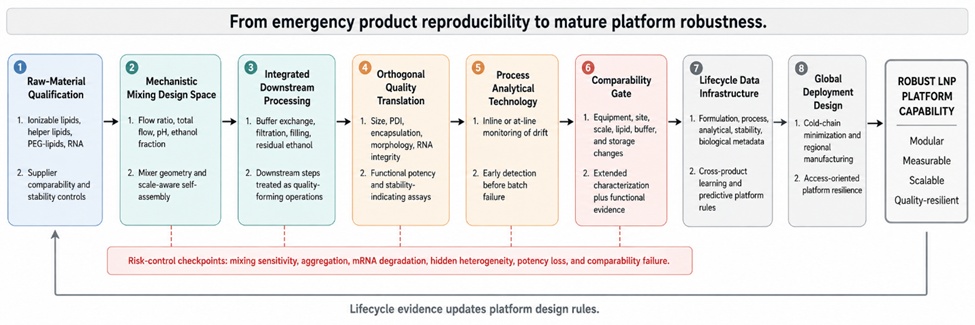
Figure 2. System Design Strategy for Robust Lipid Nanoparticle Manufacturing: Modular Control, Quality Translation, and Lifecycle Platform Learning
The regulatory translation pathway for next-generation LNPs should begin with a realistic definition of what is and is not platform knowledge. Existing LNP and mRNA literature supports shared principles of lipid composition, nucleic acid encapsulation, rapid mixing, and stability control, but it also shows that performance is composition-, cargo-, and process-dependent [1, 6, 12]. Regulators are therefore unlikely to accept platform claims unless sponsors can show how prior knowledge predicts the behaviour of a new product. The industrial task is to convert platform language into documented design rules, validated controls, and comparability evidence.
Comparability after process change will be one of the most important regulatory challenges. LNP products may be affected by changes in mixer geometry, lipid supplier, lipid purity, buffer-exchange method, scale, site, filtration conditions, or storage profile [21, 27, 29]. Because several of these changes can alter particle structure or mRNA activity without producing obvious visual defects, comparability packages must include extended characterisation and functional potency rather than relying only on routine release tests [20, 30]. Regulatory confidence will depend on whether the sponsor can explain why a change should or should not affect clinically relevant performance.
Platform-based validation should not mean weaker product-specific evidence; it should mean better organised prior knowledge. For example, repeated demonstration that a defined mixing design space controls particle size, encapsulation, and potency across related mRNA cargos would strengthen future development programs [25, 26]. Similarly, standardised datasets linking lipid chemistry, composition, process parameters, and performance could help justify risk-based development if they are curated with enough detail for regulatory interpretation [9-11]. The pathway forward is therefore cumulative: each product should add to a shared platform evidence base rather than remain an isolated case.
Industrial translation will also require pre-competitive collaboration because many of the most important platform questions are too broad for one company or product. Shared best practices for analytical methods, stability stress conditions, raw-material qualification, and process comparability would reduce duplication while preserving competition in lipid chemistry and product design [4, 5, 31]. A coordinated industry-regulatory effort could support modular manufacturing facilities, common terminology for LNP CQAs, and clearer expectations for lifecycle changes. In this model, regulation becomes not a late barrier to innovation but a mechanism for transforming emergency manufacturing knowledge into durable platform capability.
The mRNA vaccine triumph established LNPs as one of the defining drug delivery technologies of the current era. It also revealed that successful emergency manufacturing is not the same as mature platform manufacturing. The post-mRNA challenge is to confront the fragility hidden inside product-specific optimisation and to build systems that remain reliable when cargo, scale, site, and clinical purpose change.
A robust LNP platform must be more than a familiar four-lipid composition or a rapid-mixing unit operation. It must integrate raw-material resilience, mechanistic process understanding, orthogonal analytics, stability control, modular manufacturing, and data infrastructure. Only this kind of system design can decouple process robustness from the narrow conditions under which an individual product was first optimised.
The next generation of LNP technologies will depend on coordinated action across academia, industry, regulators, and public-health manufacturing networks. The field now has enough evidence to move from reactive problem solving to intentional platform engineering. That transition is essential if LNPs are to support not only future vaccines, but also broader therapeutic applications and more equitable global access.
None
None
None
None
Open Access The author(s) retain copyright. This article is licensed under the Creative Commons Attribution-NonCommercial-ShareAlike 4.0 International License. It may be shared and adapted for non-commercial purposes with appropriate attribution, an indication of changes, and distribution of adaptations under the same license. Third-party material may be subject to separate terms identified in its credit line. View the license at https://creativecommons.org/licenses/by-nc-sa/4.0/.
 Publication System