Producing enantiomerically pure drugs from racemic mixtures has become a critical objective in modern pharmaceutical science. Racemic compounds typically consist of two or more enantiomers, of which only one may be therapeutically active, while the others may be biologically inactive or even toxic, including teratogenic effects. Hence, the ability to effectively isolate the desired enantiomer is essential for ensuring both the safety and effectiveness of pharmaceutical treatments. This mini-review provides an overview of recent innovations in chiral stationary phases (CSPs) employed for the resolution of racemic drugs and mixtures. It covers various classes of CSPs, including those based on Pirkle-type selectors, polysaccharides, polypeptides, inclusion complexes, ligand-exchange mechanisms, macrocyclic antibiotics, and other novel materials. The performance of these phases in a range of separation techniques—such as high-performance liquid chromatography (HPLC), gas chromatography (GC), capillary electrophoresis (CE), supercritical fluid chromatography (SFC), and simulated moving bed (SMB) chromatography—is examined. Emphasis is also placed on the types of molecular interactions between CSPs and target analytes that drive effective enantioseparation.
A racemate refers to a mixture comprising two or more enantiomers, in which only one typically exhibits the desired pharmacological activity. In contrast, the others may be less potent, inert, or even harmful. Historically, racemic drugs were widely administered in clinical settings without separating the enantiomers. However, the thalidomide incident starkly highlighted the need for chiral resolution when the presence of a toxic enantiomer, alongside its therapeutic counterpart, led to over 10,000 cases of phocomelia—a severe congenital deformity [1]. This event drew global attention to the pharmacological differences between enantiomers and the need to isolate the active form to ensure drug safety and efficacy [2]. The critical role of chirality in drug discovery and development is now well established in the scientific literature [3].
In many synthetic scenarios, producing a single enantiomer is not straightforward due to the inherent challenges in achieving regio-, chemo-, and stereoselectivity using chiral catalysts, reagents, or substrates [4–12]. Consequently, the synthesis of racemic mixtures followed by resolution into enantiopure forms remains a practical approach. Several strategies are available for this purpose, including chiral catalysis, the use of the chiral pool, chiral reagents, asymmetric synthesis (via chiral auxiliaries or substrates) [7–11], and methods such as crystallization [13] and direct and indirect resolution techniques [14, 15].
To evaluate the optical purity or enantiomeric excess of such compounds, a variety of analytical methods are employed. These include chromatographic techniques such as gas chromatography (GC) [16], supercritical fluid chromatography (SFC) [17], simulated moving bed (SMB) chromatography [18], high-performance liquid chromatography (HPLC) [19], capillary electrophoresis (CE) [20], and thin-layer chromatography (TLC) [21]; spectroscopic approaches like nuclear magnetic resonance (NMR) [22] and circular dichroism (CD) [23]; structural and thermal analyses such as X-ray diffraction [24], isotopic dilution (ID) [25], differential scanning calorimetry (DSC) [26], and polarimetry [27]; along with various other specialized methods [28]. While some are best suited for analytical-scale (qualitative) studies, others apply to preparative and industrial-scale (quantitative) enantiomeric separations.
Among these techniques, chromatographic methods using chiral mobile-phase additives (CMPAs) and chiral stationary phases (CSPs) have become particularly prominent. This review focuses on the latest advances in the design and application of various CSPs for the resolution of racemic drug compounds.
Both direct and indirect techniques are employed for resolving racemic mixtures. However, indirect methods are less frequently applied due to the high cost of chiral substrates, reagents, and catalysts required to produce enantiomerically pure substances or pharmaceuticals. Consequently, direct resolution approaches are more common. In direct resolution, two major strategies are chiral stationary phases (CSPs) and chiral mobile-phase additives (CMPAs). CSPs are generally preferred over CMPAs due to their broad availability, flexible mobile-phase compatibility, and wide applicability across various systems [29, 30]. This review provides an in-depth discussion of various CSP types, including Pirkle-type, polysaccharide- and polypeptide-based, inclusion-complex, ligand-exchange, macrocyclic antibiotics, and other miscellaneous CSPs.
Named after William Pirkle, a pioneer in developing brush-type CSPs characterized by π-donor–π-acceptor interactions, these stationary phases are also referred to as Pirkle brush CSPs [31]. In this configuration, small chiral selector molecules are densely anchored onto silica or similar adsorbent materials. These CSPs rely on multiple interactions—π-π (acidic/basic), steric hindrance, dipole interactions, and hydrogen bonding—for chiral recognition. Aromatic rings contribute π-electrons and acidic sites conducive to hydrogen bonding. A crucial concept in Pirkle-type CSPs is the “three-point interaction” model: analytes that form three-point contacts with the chiral selector are retained longer, while those with fewer points of contact elute faster. The robust covalent attachment of selectors to the support matrix enables these CSPs to tolerate a wide range of mobile phases, thereby aiding the separation of less soluble compounds. The polarity characteristics—hydrophilic or hydrophobic—of the selector also influence resolution outcomes. Researchers synthesized a new Pirkle-type CSP [32] using a π-acidic N-(3,5-dinitrobenzene)-D-α-phenylglycine unit, linked via 1,2-diaminoethane to quinoxaline-functionalized γ-aminopropyl silica gel. This CSP effectively separated 22 racemic mixtures through hydrogen bonding and π-donor–π-acceptor interactions. Kontrec et al. [33] created another Pirkle-type CSP employing 4-chloro-3,5-dinitrobenzoic acid (CDNB) and 2,4,5,6-tetrachloro-1,3-dicyanobenzene (TCDCB) as core components. Likewise, Çakmak et al. [34] developed a Pirkle-type CSP using an aromatic amine derivative of (R)-2-amino-1-butanol, which achieved enantiomeric excesses of 60.8% for mandelic acid and 27.4% for 2-phenylpropionic acid. Enantioselective binding between the analytes and CSP was explored through molecular docking, dynamic simulation, and quantum mechanics. Levkin et al. [35] analyzed both enantioselective and non-enantioselective interactions in racemic compound separation using brush-type CSPs in liquid chromatography. Recently, Knežević et al. [32] reported novel Pirkle-type CSPs for the resolution of pharmaceutical enantiomers, including ibuprofen, ketoprofen, naproxen, flurbiprofen, suprofen, fenoprofen, lorazepam, oxazepam, and temazepam. Similarly, Aboul-Enein et al. [36] used these CSPs to separate racemic drugs with two chiral centers, including formoterol, labetalol, nadolol, indenolol, and U-54494A. Literature sources offer comprehensive data on the screening and application of Pirkle-type CSPs for enantiomeric separation [37]. Common Pirkle-type (π-donor–π-acceptor) compounds and CSPs are illustrated in Figure 1 [38].
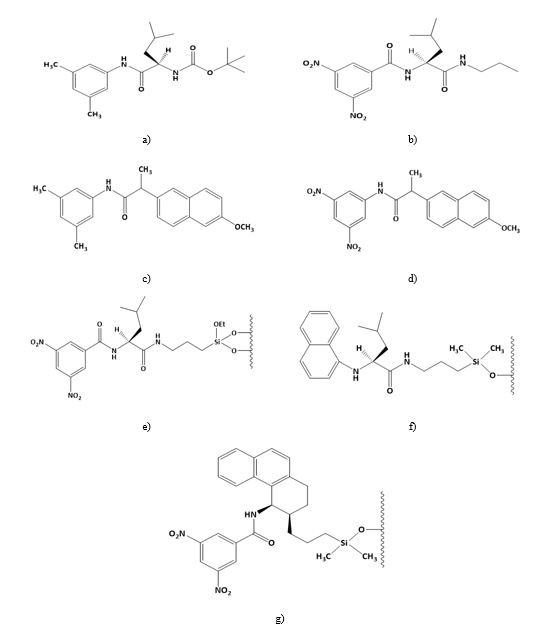
Figure 1. Pirkle type (π-donor–π-acceptor) compounds (a, b, c, and d) and CSPs (e, f, and g).
Polysaccharides are macromolecules composed of monosaccharide units linked by glycosidic bonds and serve as highly adaptable chiral selectors in HPLC, suitable for both analytical and preparative applications. While unmodified polysaccharides like cellulose have limited chiral resolution capacity, their chemically altered forms—such as triacetates, carbamates, and esters—exhibit stronger interactions with racemic mixtures. Among the most common polysaccharides are cellulose, starch, and glycogen, all of which are composed primarily of glucose. The glucose units in cellulose are linked via β-glycosidic bonds, whereas starch and glycogen feature α-glycosidic linkages. Other polysaccharides, such as chitosan, chitin, and amylopectin, have also proven effective as chiral selectors. Due to its extensive hydrogen bonding, cellulose—more so than glycogen or starch—is widely used in chiral separations, especially when modified.
Polysaccharide-based CSPs can either be coated onto a support or chemically immobilized. Coated versions are limited in solvent compatibility, whereas immobilized CSPs offer broader solvent compatibility, which is crucial for expanding their applications [39]. Ali et al. [40] emphasized that immobilized polysaccharide CSPs are superior to coated ones when considering solvent adaptability. Immobilization enhances multiple performance aspects, including solvent and sample compatibility, enantioselective efficiency, sample load capacity, and column durability [41].
Various polysaccharide-derived CSPs are commercially available, including CHIRALCEL OB-H, OD-H, OJ, and CHIRALPAK AD and AS. Protein-based columns, such as CHIRAL AGP and ULTRON ES-OVM, are also used to separate enantiomers. Thunberg et al. [42] compared several CSPs—Chiralpak AD, Chiralpak IA, Chiralcel OD, and Chiralpak IB—when separating 48 different compounds. Their findings showed that Chiralpak AD-H provided superior resolution compared to Chiralpak IA, while Chiralcel OD-H showed higher enantioselectivity than Chiralpak IB. The inclusion of water in the mobile phase can either enhance or hinder enantioseparation depending on the column used [43].
Szabó et al. [44] studied the enantiomeric separation of racecadotril—a gastrointestinal medication—using four different chiral columns (Chiralpak AD, Chiralcel OD, Chiralpak AS, and Chiralcel OJ), combined with five solvents (methanol, ethanol, 1-propanol, 2-propanol, and acetonitrile) across a temperature range of 5 to 40 °C. They found that all columns, except Chiralpak AS, performed better with alcohol-based solvents than with acetonitrile. Ali et al. [45] further explored the application of polysaccharide CSPs in various chromatographic techniques, including HPLC, SFC, CE, and TLC. Their comparison confirmed that immobilized CSPs, while more advanced than coated types, still face limitations at preparative scales.
More recently, Moldovan et al. [46] successfully resolved 16 β-blocker drugs using four different immobilized polysaccharide-based columns. In another study, Bajtai et al. [47] developed polysaccharide CSPs for the chiral separation of both synthetic and naturally derived Cinchona alkaloid analogs via liquid chromatography. The chemical structures of the polysaccharide backbones and cellulose derivatives used in these CSPs are illustrated in Figures 2 and 3, respectively [38].
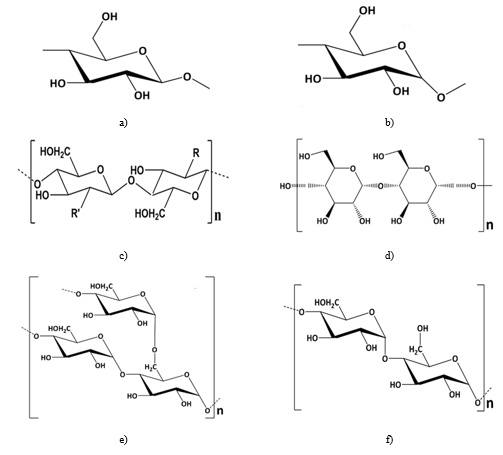
Figure 2. Structures of polysaccharides: (a) cellulose, (b) amylose, (c) chitin (R and R’: -NHCOCH3)/chitosan (R and R’: -NH2), (d) maltodextrin, (e) amylopectin, and (f) dextrans and their ester and carbamate derivatives.
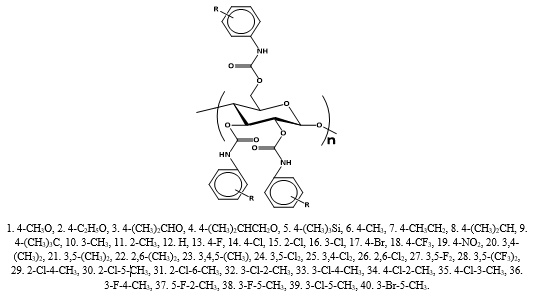
Figure 3. Cellulose-based derivatives as chiral selectors for HPLC, capillary-liquid chromatography (CLC), and capillary electrochromatography (CEC).
Just as polysaccharides, polypeptides are widely used in enantioseparation processes. Owing to their inherent chirality, proteins can interact stereospecifically with enantiomers. During these interactions, proteins adopt complex three-dimensional conformations that facilitate selective recognition of chiral molecules. As chiral selectors, they are commonly employed in techniques such as HPLC and capillary electrophoresis (CE). A key factor in their enantioselective performance is the formation of multiple intermolecular hydrogen bonds.
CSPs derived from amino acids and amides have shown effectiveness in separating compounds such as amino alcohols, amino acids, and hydroxy acids, primarily through multiple hydrogen-bonding interactions. In chiral gas chromatography (GC), stationary phases such as N-trifluoroacetyl-L-amino acid esters and polysiloxanes linked via valine diamides have proven effective for resolving racemic mixtures.
Recently, Li et al. [48] synthesized several tripeptide-based CSPs by altering both amino acid composition and terminal functionalities. One of their developed columns, APS-Pro-Val-Phe-NNC (CSP 1), exhibited strong resolution for analytes capable of π-π interactions. At the same time, another variant, APS-Pro-Phe-Val-DNB (CSP 2), was more efficient at separating hydrophobic compounds. Both types displayed effective responses to adrenoceptor agonists and to compounds containing amide groups or naphthalene structures.
Huang et al. [49] fabricated seven peptide-derived CSPs by adjusting the number of proline residues and the spacer length between peptides and silica. They explored how these structural variations and the choice of mobile phase affected the separation of 53 different chiral analytes. Additional studies in the literature have detailed various CSPs derived from proteins and glycoproteins [50].
In 2016, Zhao et al. [51] introduced CSPs based on silica monoliths functionalized with glutathione (GSH), somatostatin acetate (ST), and ovomucoid (OV) for use in capillary electrophoresis. These stationary phases were capable of separating both dl-amino acids and drug enantiomers. Their study highlighted the potential of peptide- and protein-coated monolithic columns in pharmaceutical and metabolic research. Furthermore, the incorporation of gold nanoparticles (AuNPs) significantly enhanced enantioseparation performance, leading to the development of a modified system: the GSH-AuNP-GSH-silica monolithic capillary column.
Inclusion complex formation depends primarily on host–guest interactions and the dimensional compatibility between the host molecule’s cavity and the guest analyte. A range of macrocyclic compounds—including cyclodextrins (CDs), calix[n]arenes, crown ethers, macrocyclic antibiotics, and their derivatives—are widely employed in chromatographic separation techniques. Among these, cyclodextrins are particularly well studied for their applications in chiral resolution. CDs are cyclic oligosaccharides composed of six (α-CD), seven (β-CD), or eight (γ-CD) glucopyranose rings. These molecules feature a hydrophilic exterior and a hydrophobic interior, allowing them to function effectively in both aqueous and organic environments.
CD-based chiral stationary phases (CSPs) generally outperform others in enantioseparation, with β-CD often showing superior results compared to α- and γ-CD. However, smaller or bulkier analytes may be better separated by α- or γ-CD, respectively. For example, α-CD is effective for aromatic amino acids and monoterpene hydrocarbons, while γ-CD is suitable for resolving steroid epimers and polycyclic aromatic hydrocarbons. CDs are widely used in various chromatographic techniques, including HPLC, GC, TLC, SFC, and CEC.
Lai et al. [52] synthesized silica-bound mono(6A-N-allylamino-6A-deoxy) perphenylcarbamoylated (PICD) α-, β-, and γ-CD derivatives via hydrosilylation. Their study revealed that α-PICD is suitable for resolving flavanones and many aromatic alcohols under normal-phase conditions. Meanwhile, both α- and β-PICD CSPs effectively separated β-adrenergic blockers, amines, and non-protolytic compounds. γ-PICD resolved sterically hindered analytes, such as flavanones, in both normal- and reversed-phase modes. Meng et al. [53] explored the host–guest interaction between β-CD and racemic tryptophan. Additionally, Schurig et al. [54] demonstrated that modified CDs can serve as effective CSPs for enantiomer separation in electrochromatography.
More recently, Tang et al. [55] developed phenyl carbamate-functionalized CD CSPs through click chemistry, which showed strong resolving power for aryl alcohols and flavonoids. Zhou et al. [56] further advanced this concept by creating a cationic CD-based CSP via click chemistry, enabling chiral separations in both reversed- and normal-phase HPLC across a variety of compound classes, including aromatic alcohols, flavonoids, and isoxazoline enantiomers. In another study, Yaghoubnejad et al. [57] assessed the performance of silica-anchored 3-(3,5-dinitrophenylcarbamoyl) deoxycholic acid and (calix[4]arene)-deoxycholic acid CSPs for separating several racemic mixtures, including DL-leucine, DL-valine, omeprazole, and pregabalin. Their results highlighted the superior resolving power of calix[4]arene-based CSPs.
There remains substantial potential for the development and application of macrocyclic host molecules like calix[n]arenes, crown ethers, and macrocyclic antibiotics—along with their derivatives—in chiral chromatography. The structures of various chiral selectors, such as crown ethers, α-, β-, and γ-CDs, and BINOL, have been illustrated in the literature [58–61]. The general mechanism of inclusion complex formation is shown in Figure 4.
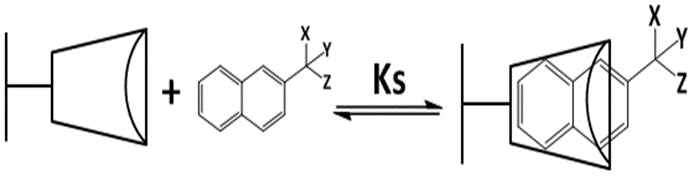
Figure 4. Inclusion of complex formation between CD and an analyte.
The concept of “Ligand Exchange” was first introduced by Davankov and Rogozhim. This method relies on the formation of mixed metal complexes between a chiral selector and the racemic analyte. Enantioseparation arises from the differences in the stability constants of these complexes with the individual enantiomers. The process is primarily dependent on the metal-coordinating capability of both the chiral selector—used either as a chiral mobile phase additive (CMPA) or CSP—and the analyte.
Resolution is facilitated through ionic interactions between the analyte and the selector; however, according to the three-point interaction model, ionic binding alone is insufficient for effective chiral discrimination. Additional interactions—such as hydrogen bonding and dipole–dipole interactions—must also contribute to the enantioselective recognition [62].
Ligand-exchange chromatography operates on the principle of forming reversible coordination complexes between a transition-metal cation and the analyte ligand. Typically, divalent metal ions such as Cu(II) or Ni(II) are immobilized on stationary phases that possess sulfonic or carboxylic acid groups. These metal ions can coordinate with electron-rich functional groups on analyte molecules, creating metal–ligand complexes [63, 64]. Analytes that form stronger interactions with the metal center are retained longer on the column, whereas those that form weaker complexes elute faster.
LEC is a versatile method that has been applied across various chromatographic techniques, including liquid chromatography (LC), thin-layer chromatography (TLC), gas chromatography (GC), capillary electrophoresis (CE), and countercurrent chromatography (CCLC). Among these, GC has seen the most extensive development for ligand exchange-based separations [65]. The aqueous ligand exchange chromatography (ALEC) technique is particularly notable for its cost-effectiveness and ease of implementation, and it holds potential for HPLC, CE, and CEC applications [66–68].
However, because it relies on specific metal–ligand interactions, LEC is primarily limited to resolving compounds such as amino acids, hydroxy acids, dipeptides, diamines, amino alcohols, and related derivatives [65]. In a comparative study, Hyun et al. [69] designed a new silica-bonded CSP incorporating (R)-N,N-carboxymethyl undecyl phenylglycinol mono-sodium salt, which exhibited superior performance in resolving α- and β-amino acids compared to its (S)-N,N-carboxymethyl undecyl leucinol-based counterpart. Although the resolution factor (Rs) was higher for the former, its separation factor (α) was less favorable.
Oi [70] reviewed various silica-supported CSPs for both gas and liquid chromatography. These stationary phases function through mechanisms involving hydrogen bonding, π–π stacking interactions, and metal–ligand complex formation. The general architecture of ligand exchange CSPs is illustrated in Figure 5, and a schematic of racemate–metal ion complexation is shown in Figure 6 [71].
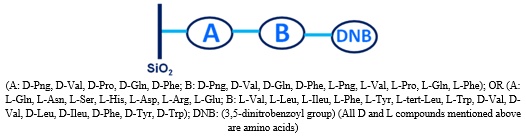
Figure 5. The general structure of ligand exchange CSPs
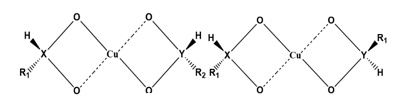
Figure 6. Schematic structures of the ligand complex of the racemate and metal ion
The concept of using macrocyclic antibiotics as chiral selectors in chromatography was first introduced by Armstrong. These antibiotics are broadly categorized into two main groups: ansamycins (such as rifamycin B and rifamycin SV) and glycopeptides (including vancomycin, teicoplanin, ristocetin, and avoparcin). Both classes have found extensive applications as chiral stationary phases (CSPs) in techniques like HPLC, TLC, capillary electrophoresis (CE), and capillary electrochromatography (CEC). Among them, vancomycin and teicoplanin are particularly prominent due to their strong chiral recognition.
The complex molecular architectures of macrocyclic glycopeptides such as vancomycin, teicoplanin, ristocetin, and teicoplanin aglycon have been documented in previous studies [72]. For example, Staroverov et al. [73] utilized silica-based CSPs modified with eremomycin, another macrocyclic glycopeptide, for the enantioseparation of racemic amino acids. Similarly, ALOthman et al. [74] employed ristocetin-based CSPs to resolve chiral antimalarial agents like primaquine, quinacrine, and tafenoquine.
Teicoplanin, a widely available glycopeptide antibiotic, has become a standard CSP for the chiral separation of racemic pharmaceuticals [75]. A recent study reported the use of a teicoplanin-based CSP column for the enantioseparation of various drugs, including ibuprofen, ifosfamide, indoprofen, ketoprofen, naproxen, and praziquantel [76]. This study demonstrated teicoplanin’s strong performance across linearity, sensitivity, accuracy, and resolution. Overall, a broad spectrum of racemic drugs has been successfully resolved using macrocyclic antibiotics as CSPs [77].
Beyond the five principal types of CSPs, additional materials have been explored for chiral separation. These include chiral surfactants, synthetic chiral polymers, and molecularly imprinted polymers (MIPs). One of the pioneering efforts in this area was by Terabe et al. [78], who introduced micellar electrokinetic chromatography (MEKC), a technique that employs chiral surfactants as mobile-phase additives. Surfactants, which consist of a hydrophilic head and a hydrophobic tail, self-assemble into micelles above their critical micelle concentration (CMC). Common examples include N-alkyl-L-amino acids, N-alkanoyl-L-amino acids, bile salts, alkyl glycosides, saponins, and dipeptide-based surfactants.
Synthetic chiral polymers are another category, prepared through in situ polymerization of chiral monomers with crosslinking agents. These materials can be fabricated as monoliths, beads, or powders, and are utilized in both HPLC and CEC [79]. Polymers such as polyacrylamide and cellulose triacetate, as well as their derivatives, are frequently used to resolve racemic compounds. Ring-opening metathesis polymerization (ROMP) is particularly effective for producing chiral monolithic polymers. Sinner et al. [80], for instance, employed ROM to synthesize β-cyclodextrin-based monoliths using norbornene derivatives.
Molecularly imprinted polymers (MIPs) represent another promising class of CSPs. These are formed by crosslinking monomers in the presence of a chiral template, which is later removed to leave a chiral cavity that mimics the spatial structure of the template. These cavities serve as selective recognition sites for the enantiomers of interest, making MIPs suitable for HPLC, TLC, and CEC.
The specific characteristics of these alternative CSPs have been comprehensively summarized in our recently published review article [81].
The separation of racemic mixtures into their individual enantiomers remains a critical need in both organic synthesis and pharmaceutical development. This review has outlined the major categories of chiral stationary phases (CSPs)—including Pirkle-type, polysaccharide- and polypeptide-based, inclusion complexes, ligand exchange, macrocyclic antibiotics, and various other CSP types—alongside their latest advancements. Chiral discrimination in these systems relies on a variety of molecular interactions, such as π-donor/π-acceptor interactions, hydrophilic-hydrophobic balance, steric hindrance, hydrogen bonding, and host–guest inclusion mechanisms. The insights compiled in this review aim to support researchers in organic, medicinal, pharmaceutical, and analytical chemistry by providing a comprehensive understanding of current strategies for enantiomeric separation.
None
None
None
None
Open Access The author(s) retain copyright. This article is licensed under the Creative Commons Attribution-NonCommercial-ShareAlike 4.0 International License. It may be shared and adapted for non-commercial purposes with appropriate attribution, an indication of changes, and distribution of adaptations under the same license. Third-party material may be subject to separate terms identified in its credit line. View the license at https://creativecommons.org/licenses/by-nc-sa/4.0/.
 Publication System