Pharmaceutical technology evaluation has traditionally been organized around pharmacokinetic performance, with bioavailability occupying a privileged position as a marker of formulation success. This emphasis has been scientifically productive because it links dosage form design to systemic exposure and supports comparability across products. Yet bioavailability captures only one part of the pathway between a pharmaceutical technology and sustained therapeutic benefit. A product may deliver favorable exposure under controlled conditions while still failing when introduced into everyday patient use. The central problem is that bioavailability-centered evaluation often assumes idealized conditions of administration, storage, handling, and persistence. In practice, patients must swallow, inject, inhale, store, prepare, remember, tolerate, and continue medicines within complex personal and healthcare environments. Technologies that improve exposure may therefore generate limited value if they are difficult to use, fragile under real-world variability, or unable to support continuity of treatment over time. This creates a gap between technical success and therapeutic success. The objective of this article is to propose a systems-based evaluation model for pharmaceutical technologies. The model treats usability, robustness, and therapeutic continuity as co-equal dimensions that complement traditional pharmacokinetic endpoints. Usability captures the human–technology interface, robustness captures performance consistency under realistic variability, and therapeutic continuity captures sustained benefit across time and care settings. Together, these dimensions broaden the meaning of pharmaceutical performance. The proposed model defines each dimension, explains their interactions, and translates them into a practical evaluation framework. It argues that usability, robustness, and therapeutic continuity should not be treated as late-stage refinements after bioavailability has been optimized. Instead, they should be incorporated early in product design and carried through development, assessment, and post-translation evaluation. Two tables are used to contrast the dominant bioavailability-centered paradigm with a systems-based view and to present the operational structure of the proposed model. Adopting a systems-based evaluation paradigm can help pharmaceutical technologies become not only pharmacokinetically effective but also usable, resilient, and capable of sustaining therapeutic benefit in practice. Such a shift does not diminish the importance of bioavailability. It places bioavailability within a broader causal architecture of real-world performance. The result is a more complete foundation for pharmaceutical technology assessment and patient-centered product development.
Bioavailability has long served as a central evaluative construct in pharmaceutical development because it links formulation design to the rate and extent of drug exposure. Measures such as area under the curve and maximum plasma concentration are indispensable for comparing formulations, supporting bioequivalence, and demonstrating that a technology can deliver drug to the body. Yet recent patient-centered product design literature shows that exposure alone cannot explain whether a medicine can be used correctly, accepted by patients, or sustained over time [1]. This creates the conceptual starting point for moving beyond a single dominant metric.
The gap between pharmacokinetic success and therapeutic value is especially visible in populations with diverse physical, cognitive, behavioral, and contextual needs. Oral dosage forms may be technically optimized yet inappropriate for patients who struggle with swallowing, manipulation, taste, or dosing routines [2]. Similarly, products designed without explicit attention to patient interaction can create friction that reduces safety and effectiveness despite sound formulation science [3]. Evaluation therefore needs to include the conditions under which the technology is actually used.
A broader evaluation paradigm is also consistent with the growing emphasis on patient centricity in pharmaceutical development. Industry perspectives have increasingly argued that product design should account for patient experience, treatment burden, and measurable outcomes, not merely technical performance under controlled conditions [4]. Preference research similarly shows that patient values can meaningfully shape medical product development and assessment when they are elicited and integrated systematically [5]. These developments suggest that pharmaceutical technology evaluation is already moving toward a more multidimensional logic.
This article proposes a systems-based model for evaluating pharmaceutical technologies through usability, robustness, and therapeutic continuity. The model is not intended to replace bioavailability, but to reposition it as one component within a larger performance system. Multi-criteria approaches in health technology assessment provide a useful precedent because they formalize decisions involving several value dimensions rather than one dominant endpoint [6]. The purpose of the article is to translate that systems logic into a conceptual framework specific to pharmaceutical technologies.
A bioavailability-centered paradigm can become reductionist when it treats systemic exposure as a sufficient proxy for therapeutic value. Improved absorption or exposure may be technically impressive, but it does not guarantee that patients will initiate, continue, or correctly administer the medicine. Patient-centric pharmaceutical design literature has shown that adherence is affected by dosage form attributes, administration burden, and perceived fit with daily life [7]. Bioavailability is therefore necessary for many products, but it is not sufficient for real-world success.
The limitation is particularly important because conventional evaluation often assumes optimal use conditions. Stability, handling, storage, dose preparation, and device operation may be controlled in trials but unstable in homes, clinics, pharmacies, and care transitions. Pharmaceutical quality scholarship has argued that the future of quality must move beyond static compliance toward more proactive and performance-oriented systems [8]. This broader view exposes the weakness of evaluating technologies mainly through pharmacokinetic endpoints measured under idealized circumstances.
Bioavailability also offers limited insight into the temporal dimension of therapy. Technologies may provide desirable exposure on a given dosing occasion while still failing to support persistence, reduced treatment burden, or continuity of therapeutic effect. Long-acting and biopharmaceutical delivery systems illustrate this tension because they are often developed to overcome adherence and administration barriers, yet their success depends on usability, formulation reliability, and patient acceptability as much as exposure [9, 10]. Table 1 contrasts the narrow, bioavailability-focused evaluation paradigm with the broader systems-based view.
Table 1. Contrasting Evaluation Paradigms: Bioavailability-Centered versus Systems-Based Assessment of Pharmaceutical Technologies
Evaluation domain | Bioavailability-centered assessment | Systems-based assessment |
Primary question | Does the formulation achieve sufficient systemic exposure? | Does the technology deliver sustained benefit under real-world conditions of manufacture, storage, use, and care? |
Dominant evidence | AUC, Cmax, Tmax, bioequivalence, controlled pharmacokinetic comparisons | Pharmacokinetics integrated with usability, robustness, adherence, persistence, patient experience, and continuity outcomes |
Assumed user context | Correct administration under controlled or instructed conditions | Variable patient abilities, preferences, environments, routines, and care transitions |
View of quality | Product quality as conformance to specifications and release criteria | Quality as consistent performance across manufacturing variation, environmental exposure, and use-related stress |
View of failure | Failure mainly occurs when exposure is inadequate | Failure may occur through poor handling, dosing errors, storage excursions, discontinuation, poor fit with care pathways, or loss of therapeutic continuity |
Translation implication | Optimize formulation until exposure targets are met | Design, evaluate, and select technologies according to integrated real-world performance |
The table also clarifies why technologies with strong exposure profiles can disappoint after translation. If a product is difficult to administer, unacceptable to the intended population, or vulnerable to realistic variation, pharmacokinetic strength may not become clinical benefit. Patient-centered development roadmaps emphasize the importance of measurable patient outcomes, acceptability, and practical product attributes in defining a target product profile [11]. A systems-based critique therefore does not reject bioavailability; it rejects the assumption that bioavailability alone can represent pharmaceutical value.
A systems evaluation logic begins from the premise that a pharmaceutical technology is not an isolated formulation but part of a sociotechnical system. The relevant system includes the molecule, dosage form, delivery device, manufacturing process, storage chain, prescriber, pharmacist, patient, caregiver, and care pathway. Patient-centered product development frameworks increasingly recognize that outcomes emerge from interactions among these elements rather than from formulation performance alone [12]. This is why evaluation must capture both technical and human dimensions of use.
Systems thinking also requires attention to variability. Patients differ in dexterity, cognition, preferences, disease severity, comorbidities, care support, and tolerance for treatment burden, while environments differ in temperature, humidity, storage quality, and clinical infrastructure. Regulatory and industry discussions of patient-centric development increasingly acknowledge that chemistry, manufacturing, controls, and device considerations must be aligned with real user needs [13]. Robust evaluation therefore asks whether a technology maintains performance when exposed to plausible variation, not only whether it performs under optimized study conditions.
The systems perspective is especially relevant for technologies designed to reduce adherence barriers. Innovative delivery systems, including long-acting platforms, may reduce dosing frequency and improve persistence, but they can also introduce new risks related to administration, reversibility, monitoring, and patient acceptance [14]. Industry perspectives on long-acting injectables highlight that translation depends on formulation attributes, clinical workflow, manufacturability, and patient fit rather than duration of action alone [15]. Therapeutic continuity thus emerges from the interaction between product design and the treatment system.
Health technology assessment provides a parallel rationale for this integrated approach. Multi-criteria decision analysis and value frameworks show that technologies can be assessed through structured consideration of clinical, economic, operational, and patient-relevant dimensions [16]. Applying this logic to pharmaceutical technologies means treating usability, robustness, and therapeutic continuity as assessable dimensions rather than peripheral considerations. The result is a model that complements pharmacokinetics with evidence about how medicines perform in the systems where therapy actually occurs.
Figure 1 presents a systems-based evaluation architecture in which bioavailability functions as a foundational pharmacokinetic threshold, while usability, robustness, and therapeutic continuity determine whether pharmaceutical technologies can sustain therapeutic value under real-world conditions.
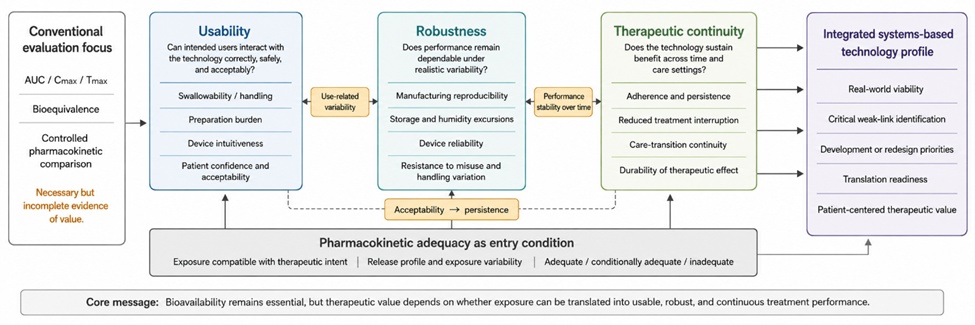
Figure 1. Systems-Based Evaluation Architecture for Pharmaceutical Technologies beyond Bioavailability
Usability refers to the ease, effectiveness, safety, and satisfaction with which patients, caregivers, and healthcare professionals interact with a pharmaceutical technology. In this model, usability includes swallowability, preparation burden, device intuitiveness, dosing accuracy, administration confidence, acceptability, and fit with patient routines. Patient-centered formulation research shows that acceptability and appropriateness vary across populations and cannot be inferred from dosage form category alone [1]. Usability is therefore not a cosmetic feature, but a determinant of whether the intended pharmacological intervention can actually be delivered.
Robustness refers to the ability of a pharmaceutical technology to maintain quality, functionality, and performance across realistic variability. This includes manufacturing reproducibility, storage stability, environmental resilience, resistance to misuse, device reliability, and consistency across diverse patient populations. Recent work on long-acting delivery platforms and formulation technologies shows that extended duration introduces complex robustness requirements, including release control, administration feasibility, and predictable performance over time [17]. Robustness therefore expands quality from product conformance to dependable performance in the real world.
Therapeutic continuity refers to sustained delivery of intended benefit over time. It includes adherence, persistence, reduced treatment interruption, continuity across care settings, and maintenance of therapeutic effect beyond the first successful dose. The growing literature on adherence-oriented drug delivery argues that technologies should be designed to reduce barriers that interrupt treatment rather than merely optimize exposure under isolated conditions [14]. Continuity is especially important when disease control depends on repeated, correct, and acceptable use over months or years.
These three components are conceptually distinct but operationally inseparable. Usability determines whether the technology can be handled and accepted, robustness determines whether it continues to perform under variability, and therapeutic continuity determines whether benefit is sustained through time. Patient-centric science increasingly emphasizes that measurable patient outcomes should be embedded into product design rather than added after formulation decisions are fixed [11]. The proposed model therefore treats usability, robustness, and therapeutic continuity as co-equal dimensions of pharmaceutical technology performance.
Poor usability can directly undermine therapeutic continuity even when pharmacokinetic performance is favorable. A tablet that is difficult to swallow, an inhaler that is confusing to actuate, or an injectable system that causes anxiety may reduce initiation, correct use, or persistence. Evidence on oral dosage forms in pediatric and geriatric populations demonstrates that dosage form acceptability, manipulation requirements, and administration burden shape safe and sustained use [2]. In systems terms, usability failures can interrupt the pathway from exposure potential to therapeutic benefit.
Lack of robustness can compromise both bioavailability and usability at the same time. A formulation that is sensitive to humidity, temperature excursions, device clogging, dose preparation errors, or manufacturing variability may produce inconsistent exposure and increase user burden. Pharmaceutical quality literature has argued for future-oriented quality systems that anticipate variability and support reliable performance rather than merely documenting compliance [8]. Robustness therefore acts as a stabilizing layer between technical design and real-world use.
Therapeutic continuity depends on both usability and robustness because long-term benefit requires repeated successful interaction with a consistently performing product. Long-acting injectables illustrate this interaction clearly: they may reduce dosing frequency and support persistence, but they also require reliable release, appropriate administration infrastructure, and patient acceptance of prolonged exposure [10, 15]. If any of these conditions fails, duration of action may become a liability rather than an advantage. Continuity is therefore not simply a pharmacological duration; it is a systems outcome.
The interactions also imply that the weakest component may define total system performance. A highly usable technology may still fail if unstable under common storage conditions, while a robust technology may fail if patients reject or misuse it. Subcutaneous delivery perspectives similarly show that optimizing patient experience and adherence requires alignment among device design, formulation volume, administration setting, and treatment burden [18]. The model therefore evaluates pharmaceutical technologies through interaction effects rather than isolated attributes.
The proposed model evaluates pharmaceutical technologies through four linked layers: pharmacokinetic adequacy, usability, robustness, and therapeutic continuity. Pharmacokinetic adequacy remains the entry condition because a technology must deliver drug exposure compatible with therapeutic intent. However, the model then asks whether the technology can be used correctly, maintain performance under realistic variability, and sustain benefit over time. This structure reflects patient-centric development arguments that technical formulation success must be connected to measurable patient and treatment outcomes [12].
Usability is assessed through indicators such as ease of administration, clarity of instructions, dosing accuracy, patient confidence, acceptability, preference alignment, and suitability across intended populations. These indicators may be measured through structured usability testing, patient preference studies, human factors evaluation, and patient-reported experience measures. The broader patient preference literature supports the inclusion of patient views across the medical product life cycle when the methods are systematic and decision relevant [5]. In this model, usability evidence is therefore treated as core evaluative evidence rather than optional supporting information.
Robustness is assessed through indicators such as manufacturing reproducibility, release consistency, device reliability, stability during likely storage excursions, tolerance of handling variation, and performance across user groups. Regulatory and development discussions of patient-centric products highlight that chemistry, manufacturing, controls, and device considerations must be evaluated in relation to actual use conditions [13]. This means robustness cannot be restricted to release specifications or idealized stability data. It must also include stressors that plausibly occur between manufacture and administration.
Therapeutic continuity is assessed through indicators such as adherence support, persistence potential, reduced dosing burden, continuity across care transitions, durability of effect, reversibility where relevant, and patient-reported treatment satisfaction. Patient-reported outcomes can support drug development and decision-making when they capture aspects of treatment experience that matter to patients and are interpreted within a clear evaluation framework [19]. Table 2 presents the proposed evaluation model with its components, metrics, and scoring logic.
Table 2. Proposed Systems-Based Evaluation Model for Pharmaceutical Technologies: Usability, Robustness, and Therapeutic Continuity Dimensions
Dimension | Core evaluation question | Candidate indicators | Evidence sources | Scoring logic |
Pharmacokinetic adequacy | Does the technology deliver exposure compatible with therapeutic intent? | AUC, Cmax, Tmax, release profile, exposure variability, bioequivalence where relevant | Pharmacokinetic studies, comparative formulation studies, model-informed development | Entry condition scored as adequate, conditionally adequate, or inadequate before broader systems scoring |
Usability | Can intended users correctly, safely, and acceptably interact with the technology? | Swallowability, handling, preparation burden, instruction clarity, dosing accuracy, device intuitiveness, confidence, preference alignment | Human factors studies, usability testing, acceptability studies, preference studies, patient-reported experience measures | Higher scores reflect low use burden, low error potential, high acceptability, and suitability for diverse users |
Robustness | Does the technology maintain quality and performance under realistic variability? | Manufacturing reproducibility, stability under excursions, humidity tolerance, device reliability, resistance to misuse, performance across populations | Quality studies, stability studies, stress testing, device performance studies, real-world handling simulations | Higher scores reflect consistent performance across plausible manufacturing, environmental, and user-related variation |
Therapeutic continuity | Does the technology support sustained therapeutic benefit over time? | Adherence support, persistence potential, dosing interval, treatment satisfaction, continuity across care settings, durability of effect, reduced interruption | Adherence studies, persistence data, patient-reported outcomes, implementation studies, care pathway analysis | Higher scores reflect reduced treatment disruption and stronger alignment with long-term therapeutic routines |
Integrated systems profile | How well do the dimensions work together as a complete therapeutic technology? | Balance among usability, robustness, and continuity; absence of critical weak links; alignment with target product profile | Cross-functional evidence synthesis, multi-criteria assessment, stakeholder deliberation | Overall rating emphasizes interaction effects and flags technologies with high exposure but low real-world viability |
The model can be visualized as a three-dimensional systems space in which usability, robustness, and therapeutic continuity form the principal axes, while bioavailability functions as a foundational threshold. Technologies can then be mapped according to their strengths, weaknesses, and interaction risks rather than ranked solely by exposure. Multi-criteria decision analysis offers a methodological foundation for this type of structured comparison because it allows heterogeneous criteria to be weighted, scored, and deliberated transparently [6, 20]. The practical purpose is not to generate a single universal score, but to reveal where additional development, evidence generation, or risk mitigation is required.
For oral solid dosage forms, the model highlights attributes that a bioavailability-centered evaluation may miss. A formulation with improved absorption may still be unsuitable if it is too large, difficult to swallow, unpleasant, or incompatible with patient manipulation needs. Patient-centered work on oral dosage forms shows that safety, access, acceptability, and age appropriateness must be balanced in both pediatric and geriatric populations [2]. The systems model would therefore assess oral products through exposure, swallowability, handling, dosing routine, and persistence support.
For long-acting injectables, the model distinguishes duration of action from therapeutic continuity. Long duration may reduce dosing frequency, but it also increases the importance of injection acceptability, release predictability, reversibility, storage, administration infrastructure, and follow-up systems. Industry and formulation perspectives on long-acting injectables show that successful translation requires integration of patient needs, product performance, manufacturability, and clinical workflow [15, 17]. The model would therefore identify whether a long-acting product truly reduces treatment burden or merely shifts burden from daily use to complex administration and monitoring.
For inhalers, wearable pumps, and device-mediated products, usability and robustness become especially visible. Human factors, human-centered design, and usability research in digital and sensor-based health technologies shows that interface design, user capability, feedback, and workflow integration influence whether technologies function as intended in practice [21]. The same logic applies to drug delivery devices that depend on correct actuation, preparation, maintenance, or interpretation of cues. A systems evaluation would therefore test whether the device can be used accurately across realistic patient abilities and environments.
For health technology assessment, the model offers a way to compare pharmaceutical technologies according to real-world value rather than exposure alone. Current HTA and value assessment debates increasingly recognize the need to incorporate multiple dimensions, including patient experience, implementation, and broader decision criteria [16, 22]. Patient experience data can also inform medicines development, regulatory decision-making, and HTA when collected and interpreted systematically [23]. The model translates these ideas into a pharmaceutical technology-specific framework that can support formulary, coverage, and adoption decisions.
The first implication is that usability and robustness should be incorporated earlier in development pipelines. Rather than optimizing bioavailability first and testing usability late, developers should define patient-centered target product profiles that include handling, storage, administration, adherence support, and continuity expectations. Patient-centric quality standards reinforce this shift by linking quality to patient experience and meaningful product performance [24]. Early integration can prevent technologies from advancing with hidden use-related or robustness vulnerabilities.
The second implication is that regulatory and assessment systems need more standardized metrics for usability, robustness, and therapeutic continuity. These metrics should be sufficiently structured to support comparison while flexible enough to accommodate different dosage forms, devices, populations, and care pathways. Patient-reported outcome research demonstrates that treatment satisfaction and experience measures can inform decision-making when aligned with clear concepts of interest [19]. Standardization would help move systems evaluation from aspirational language to reproducible assessment.
The third implication is that translation decisions should explicitly consider interaction risks. A technology with strong bioavailability but weak usability may require redesign, training, or restricted population targeting, while a technology with strong continuity potential but fragile robustness may require additional stability, manufacturing, or implementation safeguards. Multi-criteria approaches in drug-oriented intervention evaluation show that structured deliberation can make such trade-offs more transparent [20]. In this sense, the proposed model supports not only development but also reimbursement, procurement, and clinical implementation decisions.
Figure 2 translates the proposed systems-based model into a staged decision pathway that routes pharmaceutical technologies from pharmacokinetic adequacy through usability, robustness, and continuity evidence toward translation, conditional adoption, mitigation, redesign, or rejection
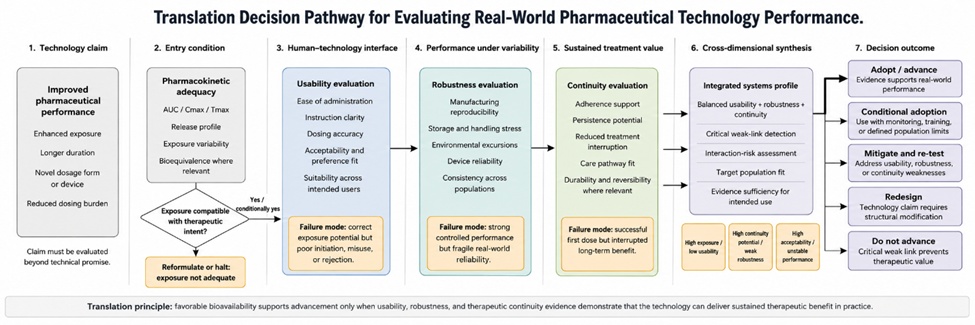
Figure 2. Translation Decision Pathway for Evaluating Real-World Pharmaceutical Technology Performance
Bioavailability remains an essential scientific endpoint, but it is too narrow to serve as the dominant proxy for pharmaceutical technology value. Real-world therapeutic success depends on whether patients and providers can use the technology, whether the product performs consistently under variability, and whether treatment benefit can be sustained over time. A technology that performs well in controlled pharmacokinetic studies may still fail if it is unusable, fragile, or unable to support continuity.
The systems-based model proposed here reframes pharmaceutical technologies as sociotechnical interventions rather than isolated delivery platforms. Usability, robustness, and therapeutic continuity are not secondary refinements; they are central determinants of whether drug delivery becomes durable therapeutic benefit. This perspective encourages evaluation that is more patient-centered, more resilient to real-world variation, and more aligned with translation.
Operationalizing this model will require collaboration among formulation scientists, human factors specialists, quality experts, clinicians, patients, regulators, payers, and health technology assessment bodies. The goal is not to replace pharmacokinetics, but to embed pharmacokinetics within a fuller account of use, performance, and continuity. Moving beyond bioavailability in this way can help pharmaceutical technologies become not only technically successful, but genuinely therapeutic in practice.
None
None
None
None
Open Access The author(s) retain copyright. This article is licensed under the Creative Commons Attribution-NonCommercial-ShareAlike 4.0 International License. It may be shared and adapted for non-commercial purposes with appropriate attribution, an indication of changes, and distribution of adaptations under the same license. Third-party material may be subject to separate terms identified in its credit line. View the license at https://creativecommons.org/licenses/by-nc-sa/4.0/.
 Publication System