The growing global population, particularly the increased density of urban areas in developed nations, has inevitably accelerated the transmission of various infectious diseases. Effective treatment of respiratory and gastrointestinal conditions often hinges on antibiotics. However, many viruses have developed resistance to specific antibiotic treatments. Currently, one of the most significant challenges in the pharmaceutical industry is developing and producing novel antibiotic classes. This article examines the properties of a new macrolide antibiotic, novomycin. Macrolides are widely prescribed antibiotics for both adults and children, functioning by disrupting protein synthesis within microbial cells. The study explored the acute and chronic toxicity of novomycin in laboratory animals, its potential allergic reactions on the skin, and its impact on pregnancy and fetal development. Furthermore, the antimicrobial properties of novomycin were investigated. Research into its antimicrobial efficacy revealed that, when administered 3 hours before infection in white mice, novomycin provided 63% protection against Bordetella infections, 44% against Salmonella infections, 56% against Pasteurella infections, and 80% against staphylococcal infections. The findings support the drug’s effectiveness and safety.
The dense concentration of populations in limited spaces fosters the rapid spread of gastrointestinal and respiratory illnesses while reducing overall nonspecific and specific immunity. Additionally, improper use of therapy contributes to the emergence of drug-resistant pathogen strains [1]. This situation results in a notable increase in morbidity among both adults and children. A decline in natural immunity and immunobiological responses, against which opportunistic microorganisms exert their effects, complicates efforts to prevent gastrointestinal and respiratory diseases [2, 3]. Furthermore, many gastrointestinal and respiratory disorders, such as gastroenteritis, pneumonia, and systemic pneumoenteritis, often involve multiple pathogens simultaneously [4].
This reality necessitates the frequent use of preventive and therapeutic agents, along with their cyclic application and rotation. It calls for the development of novel treatment and prevention protocols, as well as new drug compounds that offer enhanced, synergistic antimicrobial effects. These compounds should ideally be resistant to the development of addiction, providing superior therapeutic and preventive outcomes [5, 6]. A key focus in the creation of new pharmacological agents is the design of complex drugs [7].
Macrolides rank among the most widely used antibiotics for both adults and children. These antibiotics work by interfering with protein synthesis within microbial cells, effectively halting their growth and reproduction. Macrolides exhibit high efficacy against pathogens such as Staphylococcus, Streptococcus, and Neisseria gonorrhoeae, as well as intracellular bacteria such as Legionella, Chlamydia, and Mycoplasma [8].
These antibiotics are often preferred for individuals allergic to penicillins, cephalosporins, and other beta-lactam antibiotics. Their ability to rapidly penetrate inflamed tissues makes them both safe and well-tolerated by most patients [9, 10]. Macrolides are used to treat respiratory tract infections, gastrointestinal issues, sexually transmitted infections, and pelvic inflammatory disease. These include:
· Pneumonia caused by intracellular pathogens (such as Mycoplasma, Legionella, and Moraxella);
· Mild bronchitis, sore throat, otitis, and sinusitis;
· Skin infections such as streptodermia, erysipelas, and mastitis;
· Whooping cough;
· Diphtheria;
· Acne;
· Chlamydia, syphilis, gonorrhea, etc.
They are also used to prevent endocarditis and rheumatic fever and are incorporated into treatment regimens for conditions such as gastritis, peptic ulcers, and duodenal ulcers [11].
This article explores the properties of Novomycin, a new macrolide antibiotic, and evaluates its effectiveness in treating respiratory and gastrointestinal diseases through laboratory studies conducted on animals [12].
Novomycin is a semi-synthetic, broad-spectrum macrolide antibiotic, with azithromycin dihydrate as its primary active ingredient. The available dosages are 125.0 mg and 500.0 mg of azithromycin. The formulation contains excipients such as anhydrous calcium hydrophosphate, hypromellose, sodium lauryl sulfate, magnesium stearate, titanium dioxide, and polysorbate [13].
This article examines the properties of a new macrolide antibiotic, novomycin.
To assess the animals’ health status, several clinical parameters were measured, including rectal temperature, pulse rate, respiration rate, and the presence of nasal discharge and fecal matter. Nasal discharge samples were collected from 3-5 animals per experimental group, both before and after drug treatment, for microbial isolation and identification [14].
To evaluate biochemical and physiological changes in the animals, blood samples were collected at 1, 10, 15, 30, 35, and 60 days. These samples were then analyzed for erythrocyte and leukocyte counts using a Culture Count particle counter (France). Hemoglobin concentration was measured with the Sali hemometer and the hemoglobin cyanide method, while hematocrit was measured using an MPV-310 centrifuge (Poland). Erythrocyte sedimentation rate (ESR) was determined according to Panchenkov’s method, and the leukogram was performed by counting 200 stained cells using Romanovsky-Giemsa, calculating the percentage of each type [15-17].
Antimicrobial efficacy was tested on a variety of microbial strains, including reference strains of mycoplasmas and acholeplasmas, as well as field strains of Escherichia, Pasteurella, and Staphylococcus aureus. This was carried out using both liquid and solid culture media, with the inclusion of the 2,3,5-triphenyltetrazolium chloride indicator to assess both bactericidal and bacteriostatic activity of the drug [18].
To evaluate the drug’s safety profile, testing was performed on mongrel white rats weighing 160-250 g. The drug was administered in doses three times higher than the recommended therapeutic dosage and over extended periods [19].
A series of pharmacological and toxicological studies was conducted, including evaluations of acute and chronic toxicity, teratogenicity, embryotoxicity, allergenicity, and irritancy [20].
At the beginning, middle, and end of the study, various morphological and immunobiochemical parameters were measured in both blood and serum samples.
For the pharmacokinetic study, the drug was administered at a therapeutic dose for 10 days to laboratory rats. After the drug was discontinued, blood samples were collected at 3, 6, 12, 24, and 48 hours. Upon euthanasia, samples from various internal organs, including the liver, kidneys, spleen, heart, lungs, stomach, and both small and large intestines, along with tissue samples (skin, muscle, blood), stomach contents, and colon, were collected. The control group consisted of animals that didn’t receive drug treatment, and their organ homogenates were used as comparative samples [21].
The gathered data were subjected to statistical analysis using standard mathematical methods commonly used in biological and medical research, and processed in Microsoft Excel.
In vivo studies evaluating the antimicrobial activity of Novomycin (Table 1) showed varying protection indices depending on the timing of administration. When the drug was administered 3 hours before infection, the protection index in white mice was 63% against Bordetella, 44% against Salmonella, 56% against Pasteurellosis, and 80% against Staphylococcal infections. However, when administered simultaneously with the infection, the protection indices decreased significantly: 50% for Bordetellosis, 22% for Pasteurellosis, 50% for Staphylococcal infections, and 44% for Salmonella. If the drug was administered 3 hours post-infection, the protection index dropped further to 13% for Bordetellosis, 0% for Pasteurellosis, 20% for Staphylococcal infections, and 11% for Salmonella. Administering the drug 7 hours after infection, followed by twice-daily doses for 7 days, resulted in protection indices of 33% against Bordetellosis, 40% against Staphylococcal infections, and 44% against Salmonella. Post-mortem analysis of animals that died showed the re-isolation of original pathogens from the blood of the heart, liver, kidneys, and spleen.
These findings suggest that Novomycin provides the most significant protective effect when administered 3 hours before infection. The therapeutic efficacy of the drug diminishes if administered simultaneously or after the onset of disease, but a prolonged treatment course still offers relatively high protection.
To evaluate the acute toxicity of Novomycin, a series of experiments was conducted using 40 mongrel white rats weighing between 210 and 250 grams. The animals were divided into four groups. Groups 1-3 were given the drug orally as a 35% aqueous suspension at a volume of 6 ml, delivering a maximum possible dose of 9-10 g per rat. Group 4 rats were assigned as the control group. Over seven days, the animals were observed for changes in their overall condition and appetite.
In subsequent experiments, Novomycin was administered subcutaneously in aqueous solutions at doses ranging from 1200 to 3200 mg/kg body weight. Control animals were injected with distilled water at the highest possible volume for each injection. Daily clinical evaluations were conducted for one week, assessing intoxication symptoms, mortality, and results of necropsy in deceased animals. The findings of these experiments are illustrated in Figure 1.
Table 1. Antimicrobial activity of novomycin
№ | Schedule of drug administration | Died, individuals | Survived, individuals | Protection index |
Bordetella infection | ||||
1 | Control | 8 | 2 |
|
2 | Infection occurring three hours post-drug administration | 3 | 7 | 63% |
3 | Simultaneous infection and drug administration | 4 | 6 | 50% |
4 | Drug administration three hours after infection | 7 | 3 | 13% |
5 | Twice-daily drug administration alongside the infection | 5 | 5 | 38% |
Pasteurellosis infection | ||||
1 | Control | 9 | 1 |
|
2 | Infection occurring three hours post-drug administration | 5 | 5 | 44% |
3 | Simultaneous infection and drug administration | 7 | 3 | 22% |
4 | Drug administration three hours after infection | 9 | 1 | 0 |
5 | Twice-daily drug administration alongside the infection | 6 | 4 | 33% |
Salmonella infection | ||||
1 | Control | 9 | 1 |
|
2 | Infection occurring three hours post-drug administration | 4 | 6 | 56% |
3 | Simultaneous infection and drug administration | 5 | 5 | 44% |
4 | Drug administration three hours after infection | 8 | 2 | 11% |
5 | Twice-daily drug administration alongside the infection | 5 | 5 | 44% |
Staphylococcal infection | ||||
1 | Control | 10 | 0 |
|
2 | Infection occurring three hours post-drug administration | 2 | 8 | 80% |
3 | Simultaneous infection and drug administration | 5 | 5 | 50% |
4 | Drug administration three hours after infection | 8 | 2 | 20% |
5 | Twice-daily drug administration alongside the infection | 6 | 4 | 40% |
The intoxication pattern observed across all trials was largely consistent, marked by a state of depression following the administration of low doses. The animals tended to cluster in a corner, remaining there for 2 to 6 hours. Their breathing became shallow and rapid. Tactile sensitivity increased, although reflexes remained intact. After this duration, the animals’ condition improved, but their appetite remained diminished throughout the day.
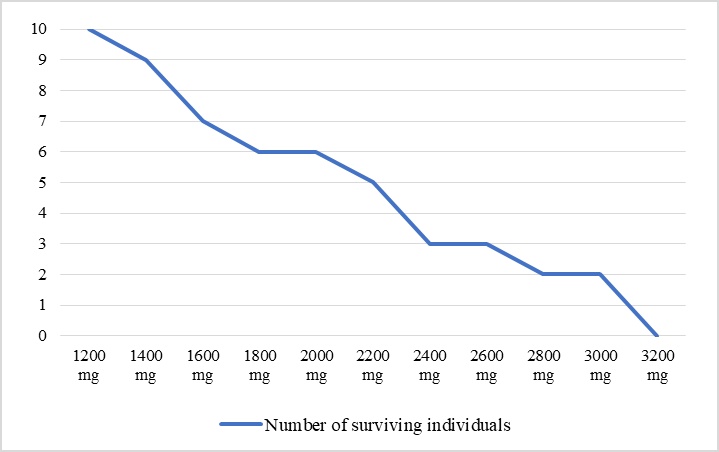 Figure 1. Results of an experiment on the study of acute toxicity of novomycin with subcutaneous administration.
To evaluate the chronic toxicity of novomycin, an experimental protocol was conducted with 5 rats in each group. For one month, the animals were administered a dose of novomycin three times greater than the standard therapeutic amount. This long-term exposure was followed by regular monitoring, including tracking body weight changes and collecting blood samples on days 1, 15, and 30.
The findings revealed that novomycin did not produce any harmful effects in the animals. No lesions, ulcers, or other abnormal pathologies were detected in the gastrointestinal mucosa during post-mortem examinations.
Additionally, an assessment of the animals’ growth showed that prolonged exposure to the drug resulted in a noticeable increase in body weight by days 15 and 30 of the study (Table 2).
Table 2. The effect of long-term administration of threefold increased therapeutic doses of drugs on the dynamics of animal body weight
Name of groups | Average daily body weight gain, g | |||
After 15 days | After 30 days | |||
Gram | % | Gram | % | |
Control | 2.3 | 100 | 2.4 | 100 |
Experience | 3.2 | 139 | 3.9 | 162 |
To assess the effects of novomycin on embryonic development and the reproductive function of female rats, 48 mature white rats weighing 200-250 g were used in the study (Table 3). In the experimental groups, female rats were paired with males at a 1:1 ratio, and novomycin was administered daily through feed at a dose of 0.06 g/kg of body weight from the day of mating. No treatment was given to the control group. On days 17 to 20 of gestation, half of the rats in each group were euthanized, and a morphological examination of their internal organs and fetuses was conducted following the procedure described by Lyashenko et al. [22].
The findings showed no signs of toxicity from novomycin on pregnancy outcomes. The number of corpora lutea and embryos implanted in the experimental group was similar to that in the control group. There was no significant difference in preimplantation losses between the groups. Throughout the experiment, no fetal deaths occurred, and the rate of embryo resorption was comparable between experimental and control animals.
The morphological analysis of the fetuses’ internal and external organs indicated no teratogenic or embryotoxic effects from the treatment. Additionally, the average weight of both embryos and neonates in the experimental groups was slightly greater than that of the control group.
Overall, the results demonstrate that novomycin has no harmful effects on embryonic or postnatal development. Instead, it appears to promote fetal growth and reduce instances of pre- and post-implantation loss.
Table 3. Results of the study of the teratogenic effect of the macrolide antibiotic novomycin
Indicators | Experience | Control |
Intrauterine period: | ||
Count of yellow bodies in the ovary | 13.3 | 12.3 |
Total implantation sites in the uterus | 13.1 | 11.7 |
Rate of preimplantation death (%) | 2.23 | 4.9 |
Mean number of resorbed embryos per female | 0.3 | 0.3 |
Dead fetuses per female | – | – |
Embryo body weight (g) | 5.7 | 5.6 |
Observed abnormalities in internal organs and skeletal development | – | – |
Lactation period: | ||
Live baby rats per female | 12.3 | 12.3 |
Mean body weight of a baby rat (g) | 32.5 | 30.2 |
Detected deformities and anomalies of internal organs and skeleton | – | – |
To evaluate the skin-resorptive and irritant properties of novomycin, researchers used both single- and repeated-exposure methods. In rats, the drug’s effects were assessed by immersing their tails in a novomycin solution, as described by Blino et al. [23]. Findings from these assessments showed no evidence of dermal resorption or irritation from novomycin.
Assessment of the drug’s potential to induce allergic reactions was conducted using epicutaneous application techniques, during which skin responses, including erythema, pruritus, and edema, were monitored. No signs of allergic reactions were observed in any of the test subjects following exposure to novomycin.
In conclusion, novomycin demonstrates low toxicity, is classified in the 4th toxicity class, and does not exhibit skin-resorptive or allergenic properties.
Upon administration of a toxic dosage of novomycin (30 mg/kg), comparative analysis of fecal matter from treated and control animals revealed no differences in visual or physical attributes. Parameters such as volume, coloration, odor, consistency, form, surface texture, and the absence of foreign substances were consistent across both groups. They were appropriate for the species and age-related digestive norms. The feces remained neutral, with no detectable bile pigments or blood. Microscopic examination identified occasional starch granules and lipid droplets in samples from all animals. A modest elevation in fecal protein levels was observed in the novomycin group compared with controls, a pattern consistent with prior studies [24–28].
To examine the prolonged impact of novomycin administered at toxic levels (600 mg/kg body weight), blood samples from clinically healthy rats were analyzed after a 30-day treatment period. Results indicated increased total protein and urea concentrations, suggesting upregulation of protein metabolic processes (Table 4). These biochemical changes are consistent with previously published data [29].
Table 4. Effect of long-term use of novomycin on biochemical parameters of rat blood
Indicators | Background | Day 1 | Day 15 | Day 30 |
Gamma Globulin(%) | 42.18 ± 4.79 | 39.33 ± 7.88 | 29.67 ± 3.77 | 50.17 ± 4.11 |
Total protein (g%) | 6.67 ± 0.31 | 7.38 ± 0.28 | 7.58 ± 0.41** | 7.17 ± 2.06 |
Urea (mg%) | 27.36 ± 2.2 | 37.21 ± 4.45* | 32.39 ± 5.14 | 30.29 ± 3.7 |
RNA (mg%) | 2.80 ± 0.48* | 3.09 ± 0 | 3.00 ± 0.38* | 3.37 ± 0.37 |
DNA (mg%) | 0.67 ± 0.05 | 0.48 ± 0.04 | 0.58 ± 0.11 | 0.78 ± 0.04 |
Total lipids (mg%) | 718 ± 20.55 | 573 ± 82.19 | 500 ± 34.24 | 632 ± 20.55 |
Lipoproteins (mg%) | 55 ± 3.08 | 39.6 ± 4.11* | 41.6 ± 0.34 | 46.0 ± 1.3 |
Cholesterol (mg%) | 98 ± 3.42 | 93.3 ± 16.44 | 68.0 ± 8.22 | 80 ± 2.74 |
Glucose (mg%) | 327.5 ± 9.59 | 372.5 ± 51.36 | 314.1 ± 51.36 | 270 ± 65.06 |
Research was conducted using mongrel white rats weighing 125-250 grams to assess the effects of the macrolide antibiotic novomycin on organ structure. The animals in the test group received doses three times the standard therapeutic amount, while the control group received no medication. To monitor morphological changes, blood samples were collected on days 1, 15, and 30 of the experiment. Following the final stage of the study, all animals were euthanized for histological examination. Both the overall body weights and the masses of internal organs were recorded for analysis. The quantitative data concerning internal organ weights in white rats are detailed in Table 5.
Table 5. Effect of long-term use of the macrolide antibiotic novomycin on the mass of the internal organs of white rats
Name of the group | № | Dose, mg/kg | Mass of organs, mg | ||||
Heart | Lungs | Liver | Kidneys | Spleen | |||
Control | 1 | - | 2.11 | 3.43 | 7.56 | 1.65 | 2.55 |
2 | - | 2.01 | 3.39 | 7.52 | 1.61 | 2.66 | |
3 | - | 1.71 | 3.12 | 7.48 | 1.76 | 2.12 | |
Experiment | 4 | 100 | 2.03 | 2.21 | 7.59 | 1.87 | 1.87 |
5 | 100 | 2.02 | 2.33 | 7.92 | 1.83 | 2.02 | |
6 | 100 | 1.93 | 2.33 | 8.15 | 1.53 | 2.02 | |
Table 5 highlights a noticeable trend toward increased mass in the liver, kidneys, and heart of white rats exposed to novomycin.
Comprehensive autopsy and histological analysis of tissue samples from all treated subjects showed no alterations in the morpho-functional condition of the gastrointestinal mucosa, its associated membranes, or the specific and connective tissue frameworks of parenchymal organs, including the liver, kidneys, adrenal glands, spleen, mesenteric lymph nodes, and lungs [30–33].
Gross anatomical assessment of internal organs did not reveal any topographical or structural deviations in animals administered novomycin. Additional pathomorphological examinations, conducted on rats involved in chronic toxicity tests and sacrificed immediately following the final drug administration, further supported these findings. In these animals, the epithelium of the gastrointestinal tract and renal tubules was predominantly intact. Moreover, the architecture and vascular integrity—both blood and lymphatic—of the assessed organs remained within the physiological range. Therefore, these investigations demonstrated no anatomical or histological differences between organs from the experimental and control groups.
This work provided an overview of several pharmacological properties of the novel macrolide antibiotic novomycin, focusing on its potential therapeutic use against respiratory and gastrointestinal infections, based on preclinical animal studies. The results from in vivo assessments of antimicrobial activity indicated notable protective effects when novomycin was administered three hours before infection: 63% efficacy against Bordetella, 44% against Salmonella, 56% against pasteurellosis, and 80% against staphylococcal pathogens. These findings suggest that pre-infection administration of novomycin offers optimal protection across these infectious models.
Regarding reproductive toxicity, novomycin did not adversely affect gestational outcomes. In experimental female rats, the number of yellow bodies in the ovaries and in implanted embryos was comparable to that in the control group, and the incidence of preimplantation death remained within the same range. Throughout the experimental period, no fetal deaths occurred, and the average number of resorbed embryos did not significantly deviate from control values. Additionally, the drug showed no signs of skin-resorptive or dermal irritation. Based on these findings, novomycin is characterized as a low-toxic compound, classified in the 4th toxicity category, and does not cause skin-resorptive or allergenic responses.
Furthermore, no anatomical discrepancies were identified between the internal organs of treated animals and controls, supporting the absence of structural toxicity.
None
None
None
All experimental procedures involving laboratory animals adhered to the guidelines of the European Convention for the Protection of Vertebrate Animals used for Experimental and other Scientific Purposes.
Open Access The author(s) retain copyright. This article is licensed under the Creative Commons Attribution-NonCommercial-ShareAlike 4.0 International License. It may be shared and adapted for non-commercial purposes with appropriate attribution, an indication of changes, and distribution of adaptations under the same license. Third-party material may be subject to separate terms identified in its credit line. View the license at https://creativecommons.org/licenses/by-nc-sa/4.0/.
 Publication System