The demand for the development of therapeutic compounds targeting infectious diseases has surged over the past three years, particularly in response to the COVID-19 pandemic. This study aims to compile and analyze the pharmacological effects of metal-based organic complexes against a variety of viral infections, including COVID-19. A systematic review of the existing literature was conducted using databases such as Medline, Scopus, PubMed, and ScienceDirect. The methodology involved data gathering, summarization, and analysis of relevant studies. Antiviral activities are exhibited by metal complexes with various ligands, including hydrazones and thiosemi-carbazones (Pt(II), Pd(II), Ga(III), Pd(II), Co(III), Ni(II), Cu(II)), fluoroquinolones and quinolines (Pd(II)), phenylquinoline, phenylpyridine, tetrahydropyrimidines (Ag(I)), phenanthroline (Cu(II)), and valacyclovir (Cu(II)). Metal complexes containing Zn(II), Co(II), Cu(II), Ni(II), Mg(II), and Mn(II) have shown antiviral properties against DNA viruses, particularly herpes simplex viruses HSV-1 and HSV-2. HIV-inhibiting complexes have been identified with metals such as Au(II), Co(II), Cu(II), Fe(III), La(III), Mg(II), Ni(II), Pd(II), Pt(II), and Ru(II). In light of the persistent global spread of SARS-CoV-2, the development of effective treatments for COVID-19 remains a priority. Investigations into potential therapeutic agents for combating SARS-CoV-2 are focusing on compounds like auranofin and metal complexes of Cu(II), Ni(II), Mn(II), and Zn(II) combined with Coumarin.
The demand for the development of therapeutic compounds targeting infectious diseases has surged over the past three years, particularly in response to the COVID-19 pandemic. This study aims to compile and analyze the pharmacological effects of metal-based organic complexes against a variety of viral infections, including COVID-19.
A systematic review of the existing literature was conducted using databases such as Medline, Scopus, PubMed, and ScienceDirect. The methodology involved data gathering, summarization, and analysis of relevant studies.
Viral infections occur when viruses bind to specific receptors on the surface of host cells, allowing them to enter via receptor-mediated endocytosis. Once inside the cell, the virus begins replicating by producing viral mRNA and proteins that, in turn, replicate the virus’s genome. DNA viruses replicate in the cell nucleus, while RNA viruses replicate in the cytoplasm.
Research indicates that certain viruses, including Herpes, Coxsackie B, and Influenza A, are associated with the development of autoimmune diseases [1].
Viruses that infect humans can be classified into the following categories:
1. DNA viruses: Epstein-Barr virus, Herpes simplex viruses (HSV-1 and HSV-2), Human papillomavirus, Human cytomegalovirus, Hepatitis B
2. RNA viruses: Coxsackievirus B3, Chikungunya, Ebola, Dengue, Human norovirus, Hepatitis C, Enterovirus 71, Human immunodeficiency virus (HIV), Human T-lymphocyte virus, Japanese encephalitis virus, Influenza A, Parainfluenza 3, Rift Valley fever virus, Respiratory syncytial virus, Zika virus, Vesicular stomatitis virus [1].
The Baltimore classification system categorizes viruses based on their mechanisms of mRNA production. This classification divides viral genomes into groups depending on whether they are single-stranded (ssDNA or ssRNA), double-stranded (dsRNA or dsDNA), or involve reverse transcription (RT). The seven categories of viruses in the Baltimore classification include:
1. dsDNA viruses: Herpesviruses, Adenoviruses, Poxviruses
2. ssDNA viruses: Parvoviruses
3. dsRNA viruses: Reoviruses
4. (+) ssRNA viruses: Picornaviruses, Coronaviruses, Togaviruses
5. (−) ssRNA viruses: Rhabdoviruses, Orthomyxoviruses
6. dsDNA-RT viruses: Hepadnaviruses (with DNA and RNA intermediates)
7. ssRNA-RT viruses: Retroviruses (with RNA and DNA intermediates)
Table 1 summarizes viral diseases associated with these viral groups [1].
Table 1. Different virus types cause viral diseases
Viral diseases | Virus types |
AIDS (acquired immunodeficiency syndrome) | HIV (Human immunodeficiency virus) [2] |
Chikungunya fever | Chikungunya virus (Alphavirus) (Togaviridae) [3] |
Coronavirus disease 2019 (COVID-19) | Severe acute respiratory syndrome Coronavirus 2 (SARS-CoV-2) [4] |
Dengue viruses (DEN-1, DEN-2, DEN-3 and DEN-4) – Flavi viruses [3, 5] | |
Ebola hemorrhagic fever (Ebola virus disease) | Ebola virus (EBOV) [6] |
Hepatitis A, B, C, D, E diseases | Hepatitis A, B, C, D, E viruses [7] |
Herpes simplex diseases | Herpes simplex virus 1 and 2 (HSV-1 and HSV-2) [8] |
Human papillomavirus infection | Human papillomavirus (HPV), Papillomaviridae [9] |
Human parainfluenza virus infection | Human parainfluenza viruses (HPIV) [10] |
Influenza A/Victoria 3/75, influenza A/Jena 48/78, influenza A/fowl plague, influenza B/Johannesburg) | Orthomyxoviridae species [11] |
Newcastle disease | Avian paramyxovirus serotype-1 (APMV-1), Paramyxoviridae [12] |
Vaccinia | Orthopoxvirus (Poxviridae) [13] |
Zika virus [3] |
Organic metal complexes have shown considerable promise as antiviral agents against various viral infections [14, 15]. Among these, complexes formed with compounds like Curcumin [16], flavonoids [17], chalcones [18], and metals such as Ag(I) [19], Co(II) [20], Cu(II), Fe(III), Ni(II), Zn(II), Ti(IV) [21], Co(II), Cu(II), Ni(II), Zn(II) [22], and Pd(II) [23] have been investigated for their antiviral effects.
The antiviral properties of these complexes are attributed to the metal-ligand interactions, including:
1. Hydrazone-based complexes [24]; 1-adamantoylhydrazone derivatives: Pd(II) and Pt(II) [25];
2. Thiosemicarbazone-based complexes: Pt(II), Pd(II) [26]; Ga(III) [22]; Pd(II) [27]; Co(III), Ni(II), Cu(II) [28];
3. Bis(thiosemicarbazones): Pd(II) [29];
4. Fluoroquinolone derivatives: Cu(II) [30];
5. Quinoline-based complexes: Pd(II) [31];
6. Phenylquinoline and phenylpyridine complexes [32];
7. Tetrahydropyrimidine derivatives: Ag(I) [19];
8. Phenanthroline-based complexes: Cu(II) [21];
9. Acyclovir complexes: Zn(II), Cu(II) [33].
A variety of metal-based complexes containing Au, Fe, Co, Cu, Mn, Ni, Ru, Pd, Zn, and V have been reported to exhibit noteworthy antiviral activity against multiple virus families [34]. Specifically, compounds derived from 6-arylthio-3-hydroxypyrimidine-2,4-diones and their metal complexes have been shown to inhibit Cytomegalovirus replication [35]. In vitro studies have highlighted that the Cu(II)-anthracenyl terpyridine complex can induce enhanced aggregation of Papillomavirus particles [36]. Additionally, investigations into ruthenium-p-cymene complexes [37], along with Pd(II) and Pt(II) complexes containing 2-(diphenylphosphino) benzaldehyde 1-adamantoylhydrazone [25], have confirmed their antiviral efficacy against poliovirus type 1 [37].
Research into metal-coordinated acylhydrazone derivatives has unveiled promising antiviral activity, especially against Herpes simplex viruses. Notably, complexes formed between N’-(2-hydroxy-3-methoxybenzylidene)-2-hydroxybenzoyl hydrazone and transition metals such as Co(II), Cu(II), Ni(II), Mg(II), Mn(II), and Zn(II) have demonstrated inhibitory effects on HSV-1 and HSV-2 DNA viruses [24]. Furthermore, Pd(II) complexes utilizing pyridine-2-carbaldehyde thiosemicarbazone show specific inhibition against HSV-1 [26]. Compounds based on Pd(II) coordinated with benzylbis(thiosemicarbazone) or 3,5-diacyl-1,2,4-triazole bis(4-methylthiosemicarbazone) have proven effective in suppressing strains of HSV-1 and HSV-2 that are resistant to Acyclovir. These complexes appear to function by interrupting the virus’s ability to transactivate its genome and by downregulating proteins such as gG and gD, which are critical for HSV-1 propagation. Additionally, they seem to impair the spread of the virus between adjacent host cells [29]. Cyclometalated iridium(III) compounds containing fluorinated phenylpyridine, phenylquinoline, or pyridine-2-carboxylate ligands exhibit antiviral action via hydrophobic binding with HSV-1 and HSV-2 DNA helices, disrupting viral structure and replication [32]. Metal-conjugated forms of bovine lactoferrin, including those bound to Mn, Fe, or Zn ions, have also been found to inhibit viral growth in vitro [38]. Moreover, cobalt biguanide complexes show activity against HSV-2 infections [39]. Ruthenium-p-cymene compounds have demonstrated a degree of effectiveness against Herpes simplex [37, 40], as have metallocene dichlorides of titanium and molybdenum in bis-cyclopentadienyl form [41]. Studies on mononuclear complexes of Cu(II), Fe(III), Ru(III), and Zn(II) derived from Acyclovir suggest activity against BHV-1 (Bovine herpes virus type-1) [42]. Compounds such as the Curcumin-Cu(II) complex [43], along with plant-derived ligands such as Caffeic acid, Rosmarinic acid, and Chicoric acid, have also been reported to exhibit antiviral activity against Herpes simplex [44]. Interestingly, chelation of Caffeic acid with Fe(III) leads to a marked increase—up to 100-fold—in its antiviral potency against HSV-1 and HSV-2, compared to the unchelated form [44].
Among the seven known genera of the Orthomyxoviridae family, four are responsible for influenza viruses: Alphainfluenzavirus (IAV), Betainfluenzavirus (IBV), Gammainfluenzavirus (ICV), and Deltainfluenzavirus (IDV). Investigations into the antiviral activity of metallic complexes containing Co, Fe, Zn, Pd, Cu, Mn, Ru, Ni, Au, and V have shown that these agents can inhibit influenza virus replication by disrupting viral RNA synthesis [34]. Bis-cyclopentadienyl titanium dichloride has been documented to interfere not only with Orthomyxoviruses such as Influenza A/Victoria 3/75, Influenza A/Jena 48/78, Influenza A/fowl plague, and Influenza B/Johannesburg, but also with unrelated viruses like Orthopoxvirus (Vaccinia), Paramyxovirus (Newcastle disease), and Rhabdovirus (Vesicular stomatitis) [41]. Specific metal complexes of copper exhibit efficacy against Influenza A variants carrying the S31N mutation in the M2 ion channel [45], and Co(III) biguanide derivatives inhibit the California strain of the influenza virus [39]. Caffeic acid chelates, especially when complexed with transition metals, are effective against the Vaccinia virus [44]. Furthermore, a selenium-ruthenium complex has emerged as a novel candidate with documented inhibitory action against Influenza virus strains [46].
Chikungunya fever is caused by infection with the Chikungunya virus, an Alphavirus belonging to the Togaviridae family, which is transmitted to humans by the bite of female mosquitoes from the Aedes genus, specifically Aedes aegypti and Aedes albopictus, which serve as the primary vectors. The virus was first identified in Africa during the 1950s, with subsequent outbreaks reported in Tanzania in 1955, Bangkok in 1960, and across India from 1963 to 1973. A significant reemergence of the disease occurred in Kenya in 2004, sparking global concern due to its rapid geographical spread. The virus first appeared in Europe in 2007, with confirmed cases in Italy [47].
Several compounds and metal-based complexes have been evaluated for their antiviral activity against the Chikungunya virus. These include:
1. Ag(I) complexes derived from the antibacterial agent Mafenide [48];
2. Co(III) complexes coordinated with pyridine-thiosemicarbazone ligands [49];
3. Ruthenium p-cymene complexes [50];
4. Metal complexes were synthesized using the naturally occurring monoterpene alpha-phellandrene [50].
In addition, triphenylphosphine Au(I) derivatives have been shown to deactivate the Chikungunya virus effectively [51]. Notably, a Cu(I) complex of the N-heterocyclic carbene ligand 1,3-bis(2,6-diisopropylphenyl)imidazole-2-ylidene has shown approximately 60% suppression of viral replication [52]. Furthermore, cobalt(III)-thiosemicarbazone complexes have shown a pronounced inhibitory effect, achieving up to an 80% reduction in viral replication [53]. A platinum(II)-rimantadine complex has also been identified as a potential antiviral agent that blocks viral entry into human host cells [54].
Dengue virus is a global pathogen responsible for mosquito-borne infections that affect tropical and subtropical regions. The first recorded outbreak occurred in Jakarta in 1968. The virus consists of four distinct serotypes, namely DENV-1 to DENV-4, and belongs to the Flaviviridae family, within the genus Flavivirus. Transmission to humans is facilitated primarily by the mosquitoes Aedes aegypti and Aedes albopictus. Despite the growing prevalence of dengue, no vaccine has been approved for widespread use. Therefore, developing effective antiviral agents to curb the virus’s rapid spread is critical. The NS5 protein of the Dengue virus has emerged as a key target for antiviral research. For instance, the cobalt(II)-Morin complex (2-(2,4-dihydroxyphenyl)-3,5,7-trihydroxychromen-4-one) has demonstrated antiviral activity by inhibiting the replication of Dengue serotype 2 virus [55]. Additionally, the Zn(II) complex of the same ligand has shown activity against the same serotype of the virus [56].
Several other compounds have been identified for their anti-Dengue virus properties, including:
1. Metal complexes of 1,4,4′-diaminobenzanilide Schiff base [57];
2. Cu(2,4,5-triphenyl-1H-imidazole) complex [58];
3. Zn(II)-2,4,5-triphenyl-1H-imidazole complex [59];
4. Cobalt-protoporphyrin IX and tin-protoporphyrin IX complexes [60].
Reports indicate that both cobalt-protoporphyrin IX and tin-protoporphyrin IX complexes can inactivate both Dengue and Yellow Fever viruses [60].
Ebola virus disease is classified as a viral hemorrhagic fever [61]. The disease was first identified in 1976, with initial cases occurring in Sudan and Congo, close to the Ebola River, from which the disease derived its name [62]. Several metal complexes, including Au, Cu, Co, Fe, Ni, Mn, Pd, Zn, Ru, and V, have demonstrated antiviral activity against the Ebola virus by preventing viral entry into cells and inhibiting viral RNA replication [34]. Additionally, Caffeic acid metal complexes have been shown to inhibit the Ebola pseudotyped virus [44].
The Zika virus belongs to the Flaviviridae family and is transmitted through Aedes mosquitoes. Infection with the Zika virus has been linked to the development of microcephaly, a condition characterized by brain abnormalities in newborns, which is associated with a neural disorder [63]. Furthermore, Zika virus infection can trigger Guillain–Barré syndrome, an autoimmune disorder. Copper(II) and cobalt(III) thiosemicarbazones have been reported to exhibit activity against the Zika virus [64].
A variety of organic metal complexes with potential antiviral effects against viruses such as Herpes simplex, Chikungunya, Dengue, and Zika are summarized in Table 2.
Table 2. Metal complexes with potential antiviral activity against Herpes simplex, Chikungunya, Dengue, and Zika viruses
Metal | Ligand |
Ag(I) | |
Co(III) | |
Cu(II) | |
Ga(II) | α-(N)-heterocyclic thiosemicarbazones [22] |
Ir(III) | pyridine-2-carboxylate [32] |
Pd(II) | |
Ru(II) |
Various organic metal complexes with identical ligands have been reported to exhibit potential antiviral effects against Herpes simplex, Dengue, Chikungunya, and Zika viruses. A selection of these metals and ligands is outlined in Table 3.
Table 3. Complexes of different metals with equal ligands with potential antiviral activity against Herpes simplex, Chikungunya, Dengue, and Zika viruses
Metal | Ligand |
Fe(III) ne Co(III), ne Cu(II), Ni(II) | thiosemicarbazone [28] |
Cu(II), Ni(II), Zn(II) | chalcones [18] |
Cu(II), Fe(III), Zn(II), Ru(III) | Acyclovir [42] |
Co(II), Cu(II), Fe(III), Ni(II), Zn(II), Ti(IV) | 3,5-disubstituted salicylates [21] |
Co(II), Cu(II), Ni(II), Mg(II), Mn(II), Zn(II) | N’-(2-hydroxy-3-methoxybenzylidene)-2-hydroxybenzoyl hydrazone [24] |
HIV is a globally prevalent infection, affecting millions of individuals worldwide [65]. Reverse transcriptase remains a key therapeutic target for combating the virus [66]. Several metal complexes, including those of Au, Cu, Co, Fe, Ni, Mn, Pd, Zn, Ru, and V, have been shown to possess antiviral activity against HIV, primarily by inhibiting the RNA replication process [34]. Studies have explored the anti-HIV potential of metal complexes featuring sulfonate-N-donor ligands [65].
Research has highlighted the antiviral effects of various compounds, such as the curcumin boron complex [16], polypyridyl ruthenium complexes [67], and metal complexes including Au(II) in auranofin [68], Au(III) [69], Cu(II) [66], Co(II), Cu(II), Ni(II), Pd(II) [70], Zn(II) [71], Pt(II), Ru(II) [72], vanadium [73], Fe(II), Fe(III), La(III) [74], and Mg(II), along with zinc-based Lactoferrin complexes [75]. Additional antiviral activity has been observed for metal complexes containing ligands such as imidazole [66], bisthiosemicarbazone [69], bicyclams, porphyrins [70], benzofuran [74], and thiosemicarbazones [76]. Platinum(II) and ruthenium(II) complexes [77], as well as triazolyl Ru(II), Os(II), and Ir(III) complexes [78], and thiouracil metal complexes [79], have also demonstrated potential in combating HIV (Table 4).
Table 4. Organic metal complexes with potential anti-HIV activity
Metal | Ligand |
Au(III) | bis(thiosemicarbazone) [69] |
Cu(II) | |
Ni(II) | [bis(citronellathiosemisemicarbazone) [76] |
Ru(II), Os(II), and Ir(III) Pd(II) | triazole [78] |
Fe(III), (Ni) | porphyrins [70] |
Various metal complexes, each containing identical ligands, have been reported to exhibit potential antiviral effects against HIV (Table 5).
Table 5. Complexes of different metals with equal ligands have anti-HIV activity
Metal Ligand | |
Co(II), Cu(II), Ni(II), Zn(II), Pt(II) | bicyclam [70] |
Cu(II), Fe(III), La(III), Zn(II) | (5-(1H-benzo[d]imidazol-2-yl)-1H-pyrrol-3-yl)(6-hydroxy-4,7-dimethoxybenzofuran-5-yl)methanone [74] |
Co(II), Cu(II), Fe(II), La(III) | 3-(6-hydroxy-4,7-dimethoxybenzofuran-5-carbonyl)-6H-pyrimido [1,6-a]pyrimidine-6,8(7H)-dione [74] |
Auranofin, a gold-based medication approved by the FDA for treating rheumatoid arthritis, has also been studied for its potential use in cancer, neurodegenerative diseases, and HIV treatment [67, 68]. The antiviral properties of bovine lactoferrin, when enriched with ferric, manganese, or zinc ions, are attributed to its ability to inhibit HIV’s DNA replication [57].
Metallic bicyclam complexes (including JM3100, JM3462, JM3469, JM3461, and JM3158, which incorporate Cu, Co, Ni, Zn, and Pd, respectively) represent a novel class of potent HIV inhibitors. These compounds are particularly valued for their specific action against HIV. Among them, JM3100—chemically known as 1,1’-[1,4-phenylenebis-(methylene)]-bis-1,4,8,11-tetraazacyclotetradecane octahydrochloride dehydrate—demonstrates the highest level of activity. Furthermore, metalloporphyrins, particularly those containing Fe and Ni, have been shown to suppress HIV replication [70].
SARS-CoV-2, the virus that causes COVID-19, has triggered a global pandemic, affecting millions worldwide [80]. The outbreak was officially recognized by the World Health Organization on March 11, 2020 [81]. The virus targets ACE2 receptors on alveolar cells [82], and the disease is notably characterized by a cytokine storm syndrome [83, 84]. The replication and infectivity of SARS-CoV-2 depend on polyproteins, which play crucial roles in viral replication and transcription [81, 82]. Targeting the RNA polymerase complex to inhibit replication is a promising approach for antiviral treatment [80].
As the pandemic continues and death tolls rise [85], the development of metal-based antiviral compounds has emerged as a significant focus for combating SARS-CoV-2 [86, 87]. Several metal complexes are being explored for their potential as therapeutic agents against COVID-19, including:
1. Auranofin [88], an established treatment for rheumatoid arthritis, has shown promise in reducing SARS-CoV-2 replication [88] and mitigating inflammation in infected cells [89, 90];
2. Ferroquine, an antimalarial drug approved by the FDA, may inhibit the spike glycoprotein of SARS-CoV-2 [91];
3. Fe-porphyrin complexes that could block RNA-dependent RNA polymerase activity [91];
4. Fe(III) complexes made from 4-methoxy-salicylaldehyde and S-methylthiosemicarbazone derivatives of 1,1,1-trifluoroacetylacetone [92];
5. Ni(II) complexes with 4-methoxy-salicylaldehyde and S-methylthiosemicarbazone derivatives of methylacetoacetate [92];
6. Cu(II), Ni(II), Mn(II), Zn(II) complexes incorporating 3-acetyl-7-hydroxy coumarin [93];
7. Rhodium pentamethylcyclopentadienyl complexes, which show direct virucidal effects against SARS-CoV-2 [85];
8. Metal-containing polymers [94].
Auranofin, initially approved in 1985 for the treatment of rheumatoid arthritis, is also effective against multidrug-resistant infections, including Staphylococcus aureus and Enterococcus faecalis. Additionally, auranofin has been found to have antiparasitic properties against Leishmania infantum [95, 96]. In comparison, Sodium stibogluconate (Pentostam) (Figure 1) is another anti-Leishmanial agent used intravenously. Other gold-based compounds, such as chloroquinoline-Au(I) complexes, are employed in malaria treatment. Among the earliest approved metal-based anti-infectives, salvarsan — the first arsenic-based treatment for syphilis — was introduced in 1910, while Benzoxaborole (SCYX-7158) and Melarsoprol are used for oral treatment of human African trypanosomiasis (Figure 2).
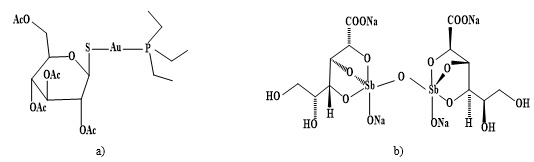
Figure 1. Structures of auranofin and sodium stibogluconate: a) auranofin, and b) sodium stibogluconate.
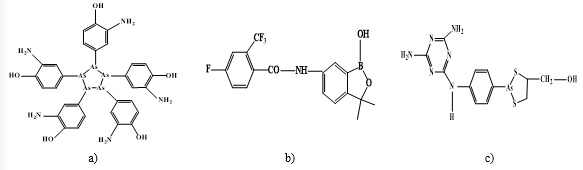
Figure 2. Structures of salvarsan, benzoxaborole, and melarsoprol: a) salvarsan, b) benzoxaborole, and c) melarsoprol.
Auranofin, a metal-based compound, has demonstrated considerable potential as an antiviral agent [95]. It exhibits therapeutic effects against COVID-19, specifically by targeting SARS-CoV-2 replication through multiple mechanisms [90], such as:
1. Inhibiting the redox enzyme thioredoxin reductase, leading to increased oxidative stress;
2. Suppressing the activity of papain-like protease, further contributing to oxidative stress [81];
3. Inducing stress within the endoplasmic reticulum;
4. Activating the unfolded protein response within cells [81];
5. Decreasing levels of SARS-CoV-2 RNA [81];
6. Stimulating the generation of reactive oxygen species [88];
7. Disrupting the regulation of intracellular redox balance [88];
8. Alleviating inflammation in human cells by:
Blocking interleukin-6 signaling via inhibition of JAK1 phosphorylation [96];
Reducing the production of pro-inflammatory cytokines;
Inhibiting cyclooxygenase expression;
Preventing the formation of PGE2 in macrophages [96];
Lowering the expression of cytokines induced by SARS-CoV-2 in human cells [96].
In addition, studies have shown that gold(III) cyclometallated complexes [97] and silver N-heterocyclic carbene complexes [98] show promising antiviral properties.
Organometallic complexes have emerged as promising candidates for combating various viral infections in humans. These include both DNA viruses, such as herpes simplex virus types 1 and 2 (HSV-1, HSV-2), human papillomavirus, and human cytomegalovirus, as well as RNA viruses like influenza A, parainfluenza 3, coxsackievirus B3, Chikungunya, Dengue, Zika, and HIV. Several metal-based compounds have been identified for their antiviral effects, especially those containing ligands such as hydrazones, thiosemicarbazones, quinolines, fluoroquinolones, and tetrahydropyrimidines. Notably, metal complexes containing Zn(II), Co(II), Cu(II), Ni(II), Mg(II), and Mn(II) have shown activity against HSV infections. Other complexes, particularly Cu(II), Ni(II), Mg(II), Mn(II), and Zn(II), have demonstrated potential in countering viral infections such as Chikungunya, Dengue, and Zika. For HIV, promising antiviral activity has been reported for complexes with metals like Au(II), Co(II), Cu(II), Fe(III), La(III), and Mg(II), along with Ni(II), Pd(II), Pt(II), and Ru(II). As the global threat from SARS-CoV-2 persists, the development of effective antiviral agents for COVID-19 has become increasingly urgent. Among ongoing efforts, the exploration of auranofin and metal complexes, such as Cu(II), Ni(II), Mn(II), and Zn(II), with Coumarin or thiosemicarbazone derivatives holds significant promise for their potential role in treating COVID-19.
None
None
None
None
Open Access The author(s) retain copyright. This article is licensed under the Creative Commons Attribution-NonCommercial-ShareAlike 4.0 International License. It may be shared and adapted for non-commercial purposes with appropriate attribution, an indication of changes, and distribution of adaptations under the same license. Third-party material may be subject to separate terms identified in its credit line. View the license at https://creativecommons.org/licenses/by-nc-sa/4.0/.
 Publication System