Smart drug delivery systems promise to transform therapy by linking drug release to physiological need, local microenvironmental cues, or algorithmic feedback. Their ambition is not merely to administer medicines more conveniently, but to create therapeutic platforms that sense, decide, and act. Yet this promise remains vulnerable to sensor errors, biological noise, material instability, actuator failure, and unpredictable patient behaviour. The dominant design philosophy in smart delivery has been shaped by precision, specificity, and near-perfect triggering. Systems are often evaluated as though the correct signal will be detected, the intended release pathway will activate, and the therapeutic response will follow the modelled trajectory. This assumption makes many platforms appear elegant in controlled studies but fragile in messy clinical environments. This perspective argues that smart drug delivery needs a failure-tolerant design paradigm. Rather than treating malfunction as an exceptional event to be eliminated, failure-tolerant design treats drift, delay, degradation, and misclassification as expected operating conditions. The aim is not to abandon precision, but to make precision recoverable when the system deviates from its intended state. The framework proposed here integrates control logic, risk engineering, and pharmaceutical performance principles. Control logic supplies feedback, fault detection, and adaptive recovery; risk engineering supplies structured failure anticipation and mitigation; pharmaceutical performance anchors every decision in pharmacokinetics, pharmacodynamics, material stability, and patient use. Together, these domains can move smart drug delivery beyond the brittle ideal of error-free function. The central claim is that smart drug delivery systems should be designed to fail intelligently. A clinically useful system must detect its own unreliability, degrade toward a safer state, activate independent recovery pathways, and preserve therapeutic performance within acceptable bounds. Such a shift would require new engineering practice, new regulatory expectations, and a more honest understanding of biological variability.
Smart drug delivery systems have been promoted as a decisive step beyond conventional dosage forms because they promise spatiotemporal precision, responsive release, and tighter coupling between therapy and patient need. Glucose-responsive insulin platforms, for example, are designed to convert a fluctuating metabolic signal into release behaviour that approximates physiological regulation [1]. Stimuli-responsive nanoparticles similarly seek to exploit pH, redox state, enzymes, inflammation, or other disease-associated signals as triggers for selective therapeutic action [2].
The problem is that these systems are usually imagined under cleaner conditions than those in which they must eventually operate. Biological compartments are noisy, heterogeneous, and dynamic, and the very cues used to activate delivery may vary across patients, disease stages, anatomical sites, and treatment histories. When smart carriers or closed-loop devices are built around narrow assumptions about signal fidelity, the system can become exquisitely sensitive to precisely the variability it was supposed to manage [3].
The clinical stakes are clearest in insulin delivery, where excessive release, delayed release, or failure to release can translate into hypoglycaemia, hyperglycaemia, alarm fatigue, or loss of trust in automation. Closed-loop and glucose-responsive designs have made important progress, but their success depends on sensing, prediction, actuation, and patient interaction remaining within assumed tolerances [4]. A design philosophy that celebrates precise triggering without equally formalising failure behaviour is therefore incomplete.
Smart delivery also inherits risks from both pharmaceutical products and medical devices. A nanocarrier may lose responsiveness because its material chemistry changes, whereas a pump may fail through infusion-set occlusion, sensor drift, or algorithmic misinterpretation [5]. Table 1 catalogues common failure modes in smart drug delivery systems and their clinical consequences.
Table 1. Failure Modes in Smart Drug Delivery Systems: Triggers, Mechanisms, and Consequences
System class | Representative failure trigger | Mechanistic failure pathway | Likely clinical consequence | Failure-tolerant design implication |
Glucose-responsive insulin systems | Weak, delayed, or excessive glucose signal interpretation | Mismatch between glucose concentration and insulin release kinetics | Hypoglycaemia, hyperglycaemia, or oscillatory control | Add release-rate bounds, independent sensing, and fallback basal delivery |
Stimuli-responsive nanoparticles | Non-specific pH, redox, enzyme, or inflammatory cues | Premature activation or failure to activate at the target site | Off-target toxicity or therapeutic underexposure | Require activation verification and conservative release thresholds |
Closed-loop insulin pumps | Sensor drift, infusion-set failure, or actuator interruption | Incorrect control action based on unreliable input or failed delivery | Undetected insulin underdelivery or overdose | Integrate fault detection, isolation, and safe-state control |
Implantable or injectable depots | Material fatigue, fouling, swelling, or degradation | Altered diffusion, burst release, or loss of reservoir integrity | Dose dumping or prolonged subtherapeutic exposure | Engineer degradation-aware release envelopes and monitoring surrogates |
Nanomedicine platforms | Protein corona formation, immune clearance, or instability | Loss of targeting, aggregation, or changed biodistribution | Reduced efficacy, unexpected toxicity, or variable exposure | Treat pharmacokinetic drift as a design input rather than an exception |
Patient-interactive devices | Missed calibrations, delayed site changes, or misuse | Human behaviour disrupts sensing, dosing, or maintenance assumptions | Cumulative control error and avoidable adverse events | Include human factors as part of the control-risk architecture |
A failure-tolerant paradigm begins by accepting that malfunction is not an anomaly but a foreseeable operating mode. This is especially important for systems whose therapeutic output cannot be instantly withdrawn once delivered, because pharmaceutical action persists after the control decision has been made. The core question is therefore not whether smart drug delivery can be made perfect, but whether it can be made resilient when perfection fails [6].
Existing approaches often fail because they confuse responsiveness with robustness. A delivery system that releases drug in response to a laboratory stimulus is not necessarily able to discriminate clinically meaningful signals from background variation, competing biochemical cues, or transient artefacts. This gap is visible in stimuli-responsive platforms where elegant triggering chemistries do not automatically solve biodistribution, stability, or patient-to-patient variability [7].
The closed-loop insulin field illustrates a second fragility: the tendency to over-rely on a single measurement stream. Model predictive control and related approaches can improve dosing decisions, but their performance is constrained by sensor accuracy, prediction horizons, meal disturbances, exercise, infusion-site changes, and physiological delay [8]. When the control architecture assumes that the measured signal is sufficiently truthful, a drifting or delayed sensor can convert automation into structured error.
A third failure is open-loop activation without verification. Many smart carriers are engineered to release when exposed to a local stimulus, yet the system rarely confirms whether the trigger reflects true pathology, whether the released drug reached the intended compartment, or whether the therapeutic response is moving toward target [9]. Table 2 summarises the limitations of current fail-safe design paradigms in drug delivery.
Table 2. Why Current Design Paradigms Fail: Inherent Fragilities in Stimuli-Responsive and Closed-Loop Delivery Systems
Current design assumption | Why it is fragile | Example manifestation | Consequence for design philosophy |
The biological trigger is specific | Pathophysiological signals overlap with normal or unrelated inflammatory states | pH-responsive or inflammation-responsive release outside the intended microenvironment | Trigger specificity must be treated probabilistically, not absolutely |
The sensor represents the therapeutic state | Sensors measure surrogates with lag, drift, and calibration limits | Glucose sensor error driving inappropriate insulin action | Control must include sensor credibility assessment |
The actuator delivers what the controller commands | Pumps, depots, patches, and materials degrade or malfunction | Infusion-set failure, reservoir obstruction, or altered diffusion | Actuator confirmation must be part of the loop |
Safety equals stopping delivery | Some drugs persist, depots continue releasing, and underdosing may also be dangerous | Abrupt fallback causing rebound disease or subtherapeutic exposure | Safe states must be pharmacologically defined, not merely mechanically defined |
Preclinical responsiveness predicts clinical resilience | In vitro and animal models simplify variability, adherence, and long-term degradation | Good stimulus response under controlled conditions but weak translation | Validation must include failure scenarios and degraded operation |
Risk assessment is separate from control | FMEA-like thinking often occurs before deployment rather than during operation | Known hazards are documented but not monitored dynamically | Risk logic should inform real-time decisions |
Fail-safe language can itself be misleading. In many smart delivery settings, there is no universally safe off-switch: withholding insulin can be dangerous, releasing too much chemotherapy can be toxic, and stopping an implantable device may create a different hazard from continuing degraded operation [10]. A system that simply shuts down when uncertain may be safer for the device manufacturer than for the patient.
The dominant paradigm also underestimates the pharmaceutical irreversibility of dosing. Software can roll back a decision, and an aircraft control surface can be adjusted again milliseconds later, but a released drug molecule enters distribution, metabolism, receptor binding, and downstream pharmacodynamics. This means failure-tolerant smart delivery must be stricter than ordinary automation: it must anticipate that a wrong release decision may outlive the signal that caused it [11].
The root flaw is not the absence of clever materials, algorithms, or sensors; it is the absence of an integrated failure model. Glucose-responsive materials, microneedle patches, and automated insulin systems each address parts of the therapeutic control problem, but they often do so through different scientific languages [12]. Materials papers emphasise stimulus response, control papers emphasise regulation, and pharmaceutical development papers emphasise quality and manufacturability, while failure crosses all three domains.
Control-theoretic redundancy remains underdeveloped in most smart delivery concepts. Artificial pancreas studies have shown the value of detecting infusion site failures and pump malfunction, because a controller cannot regulate what it cannot distinguish from normal physiology [13]. Yet many drug delivery platforms still lack independent checks that separate biological nonresponse, sensor error, actuator failure, and material degradation.
Risk engineering is also too often treated as a premarket documentation exercise rather than a living component of system behaviour. Healthcare FMEA and medication safety analyses demonstrate that foreseeable failures can be systematically identified, prioritised, and mitigated [14]. The weakness is that these methods are rarely translated into real-time delivery logic that changes what the system does when a hazard pathway begins to emerge.
Pharmaceutical performance further complicates the problem because therapeutic output is governed by pharmacokinetics, pharmacodynamics, formulation stability, and patient adherence. Quality-by-design approaches for nanomedicine show that critical quality attributes must be linked to clinical performance rather than treated as isolated manufacturing specifications [15]. A failure-tolerant system therefore needs performance margins, not merely component-level reliability.
The siloed approach is the fundamental flaw. A nanoparticle that responds beautifully but cannot be monitored, a pump algorithm that predicts well but cannot verify infusion, or a risk file that lists hazards but does not shape control behaviour all remain fragile designs [16]. Failure tolerance requires a common architecture in which sensing, release, risk, and pharmacology continuously interrogate one another.
The first principle is to expect and detect faults before they become clinical failures. In automated insulin delivery, algorithms for anomaly recognition and infusion-failure detection show that abnormal patterns can be identified from data streams before harm becomes obvious [17]. Translating this principle to smart delivery means designing diagnostic observability into the platform from the beginning, rather than adding alarms after adverse events occur.
The second principle is graceful degradation. A degraded smart delivery system should not pretend to operate normally, but it also should not default reflexively to therapeutic abandonment. Pregnancy-specific closed-loop insulin studies underscore that control targets and fallback decisions must be context-sensitive, because the safety envelope differs across populations and physiological states [18].
The third principle is independent recovery. A system that uses the same failing sensor, material pathway, or actuator to diagnose and correct its own fault is vulnerable to common-cause failure. Fault-tolerant drug delivery should therefore combine independent information streams, conservative fallback dosing, material-level release constraints, and human-supervised recovery where appropriate [19].
The fourth principle is continuous alignment with pharmaceutical performance targets. Injectable combination products highlight that drug and device functions cannot be validated as independent modules when clinical performance depends on their integration [20]. Table 3 outlines the core principles of failure-tolerant design translated to smart drug delivery.
Table 3. Core Principles of Failure-Tolerant Design for Smart Drug Delivery Systems
Principle | Meaning in engineering terms | Translation to smart drug delivery | Practical design requirement |
Fault expectation | Failure is a normal operating condition | Assume sensor drift, trigger ambiguity, material ageing, and patient misuse will occur | Define fault libraries during early design |
Fault detection and isolation | Identify what failed and separate it from other disturbances | Distinguish biological nonresponse from sensor error, actuator failure, or formulation degradation | Use diagnostic algorithms and independent verification signals |
Graceful degradation | Reduce function without catastrophic collapse | Move from adaptive release to bounded basal release, conservative dosing, or clinician-supervised mode | Predefine pharmacologically safe fallback states |
Redundancy without excess complexity | Use independent safeguards to avoid single-point failure | Combine sensor, material, algorithmic, and patient-facing safeguards | Avoid redundant components that create opaque failure chains |
Recovery pathway | Restore useful function after degraded operation | Recalibrate, replace infusion sites, adjust dose model, or switch delivery mode | Specify recovery triggers and validation criteria |
Performance anchoring | Keep control decisions tied to therapeutic exposure | Align fallback and adaptation with pharmacokinetic and pharmacodynamic targets | Monitor exposure surrogates and clinical response indicators |
The fifth principle is that redundancy must be intelligent, not ornamental. Adding more sensors, triggers, or materials may increase reliability, but it can also multiply hidden dependencies and regulatory complexity. Failure-tolerant design should privilege interpretable redundancy that makes faults easier to detect, isolate, and recover from, rather than complexity that merely appears sophisticated [21].
The proposed framework has four interacting loops: a primary control loop, a fault detection and isolation loop, a risk-mitigation loop, and a performance adaptation loop. The primary control loop governs drug release or dosing in response to physiological or environmental signals, as in glucose-responsive delivery and algorithmic insulin systems [22]. Its defining feature is that it is no longer trusted as a solitary authority.
The fault detection and isolation loop continuously asks whether the primary loop should be believed. In closed-loop insulin systems, detection of infusion-set actuation losses and pump malfunction offers a concrete model for separating control failure from ordinary metabolic disturbance [5]. In nanocarriers, the analogous task would be to infer loss of responsiveness, premature activation, aggregation, or altered biodistribution from measurable surrogates where direct sensing is unavailable.
The risk-mitigation loop then determines what the system should do once doubt is established. Medical device and combination-product risk frameworks show that hazards must be linked to severity, probability, detectability, and mitigation, but failure-tolerant design extends this logic into operational behaviour [23]. Instead of merely documenting that overdosing or underdosing is dangerous, the system must encode bounded fallback modes that are pharmacologically justified.
The performance adaptation loop recalibrates the system against therapeutic outcomes rather than internal signals alone. Drug delivery platforms for diabetes, inflammation, cancer, and musculoskeletal repair show that local release behaviour must ultimately be judged by exposure, response, safety, and durability, not by trigger activation in isolation [24].
Figure 1 presents the proposed failure-tolerant architecture for smart drug delivery systems, showing how primary control, fault detection, risk mitigation, pharmaceutical performance adaptation, and governance must operate as an integrated resilience system rather than as isolated design components.
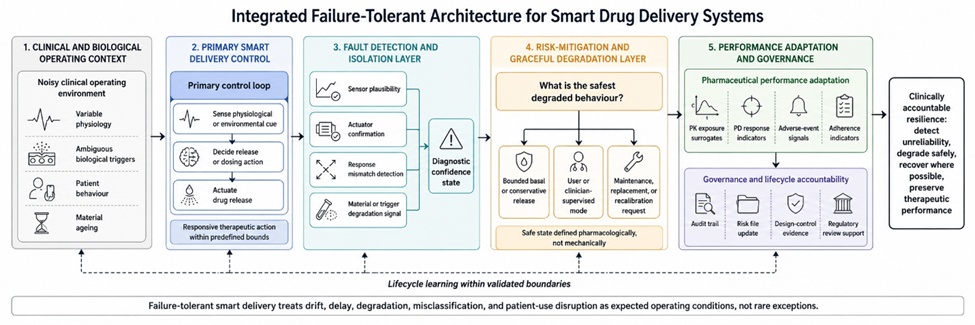
Figure 1. Integrated Failure-Tolerant Architecture for Smart Drug Delivery Systems
Table 4 presents the integrated failure-tolerant design framework.
Table 4. Integrated Failure-Tolerant Design Framework: Control Logic, Risk Engineering, and Pharmaceutical Performance Loops
Framework loop | Primary question | Key inputs | Design actions | Failure-tolerant output |
Primary control loop | What dose or release action is intended now? | Physiological signal, programmed target, material response, dosing history | Adjust release rate, activate depot, modulate pump output, or maintain basal delivery | Responsive therapeutic action within predefined bounds |
Fault detection and isolation loop | Can the current signal-action relationship be trusted? | Sensor plausibility, actuator confirmation, response mismatch, anomaly patterns | Detect drift, isolate likely failure source, downgrade confidence, trigger verification | Diagnostic state distinguishing normal variability from malfunction |
Risk-mitigation loop | What is the safest degraded behaviour? | Failure severity, exposure risk, reversibility, patient context, detectability | Enter fallback mode, limit release, alert user, request replacement, or shift to manual supervision | Graceful degradation rather than uncontrolled continuation or abrupt unsafe shutdown |
Performance adaptation loop | Is therapeutic performance still acceptable? | Pharmacokinetic surrogates, pharmacodynamic response, adverse events, adherence indicators | Recalibrate model, adjust thresholds, update risk ranking, revise maintenance schedule | Continued alignment with clinical performance targets |
Governance layer | Has the system remained explainable and validatable? | Audit trail, risk file, clinical data, quality attributes, user interactions | Document decisions, support regulatory review, update design controls | Transparent, learnable, and clinically accountable resilience |
This framework is deliberately conservative because drug delivery is not an arena where adaptive behaviour should become opaque improvisation. The system should adapt only within validated boundaries, and every fallback state should be justified by pharmacological performance rather than engineering convenience. Emerging stimulus-responsive platforms for inflammatory disease and advanced responsive materials demonstrate why this matters: the more biologically ambitious the trigger, the more essential it becomes to design for uncertain activation, partial response, and recovery [25].
Implementation should begin with closed-loop insulin delivery because it is the clearest clinical testbed for failure-tolerant smart drug delivery. The field already has mature sensing, actuation, control algorithms, and documented failure modes, making it possible to compare conventional control against control augmented by fault detection and degraded-operation logic [10]. The first practical step is not to redesign every pump, but to require every automated dosing system to declare the confidence it has in its own sensing, infusion, and prediction states.
A second implementation path is to embed failure-tolerant logic into glucose-responsive insulin patches, cannulas, and microneedle systems. Recent microneedle and cannula concepts show that responsive insulin delivery can be made less dependent on external electronics, but they also raise new questions about verification, exhaustion, delayed response, and local tissue effects [26]. These systems should therefore be developed with measurable release envelopes, conservative maximum-output constraints, and indicators that reveal when responsiveness is weakening.
A third pathway is model-based design, where failure scenarios are simulated before they are encountered clinically. Model predictive control already provides a disciplined way to incorporate future glucose trajectories, constraints, and disturbances into automated insulin delivery, but failure-tolerant design would extend those models to include sensor drift, infusion interruption, actuator saturation, patient behaviour, and pharmacokinetic lag [8]. Such modelling should be paired with risk analysis so that each simulated fault maps to a defined mitigation state rather than an abstract alarm.
Clinical validation should proceed stepwise from technical verification to controlled degradation studies and then to real-world performance monitoring. Medication safety research using failure mode and effects analysis shows that hazards become visible when workflows, users, and system interfaces are examined together rather than separately [27]. For smart delivery, this means trials should not only ask whether the system works under ideal use, but whether it behaves acceptably during partial failure, ambiguous signals, missed maintenance, or biological nonresponse.
Figure 2 illustrates a staged translation pathway for failure-tolerant smart drug delivery systems, emphasizing that clinical and regulatory confidence should grow through explicit fault modelling, degraded-operation testing, pharmacological fallback justification, controlled validation, and lifecycle monitoring.
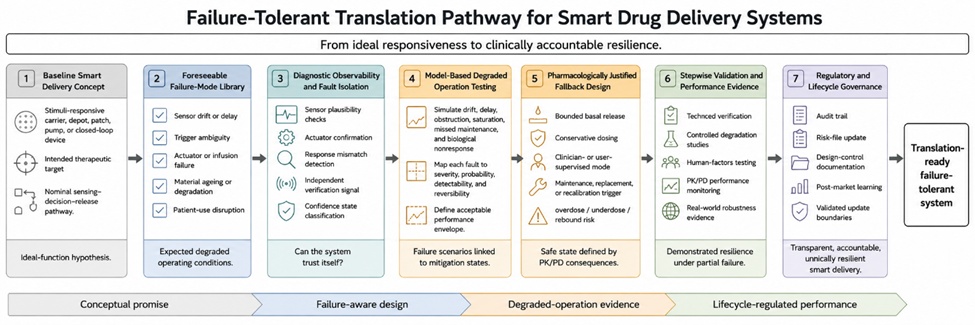
Figure 2. Failure-Tolerant Translation Pathway for Smart Drug Delivery Systems
Failure-tolerant design introduces its own risks, and the first is unnecessary fallback activation. If a system becomes too suspicious of its own signals, it may downgrade therapy during harmless variability, thereby producing preventable underdosing, patient frustration, or clinician distrust [13]. The challenge is to tune fault sensitivity so that the system detects meaningful degradation without turning normal physiology into a continuous stream of false alarms.
The second limitation is complexity. Adding diagnostic loops, risk-mitigation states, and adaptive performance recalibration may improve resilience, but it may also create new interaction failures that are harder to understand than the original malfunction [21]. This is especially serious for drug-device combination products, where software, mechanics, formulation, packaging, user behaviour, and regulatory documentation must remain coherent throughout development and lifecycle management [20].
A third risk is that biological variability may exceed the observability of the system. Stimuli-responsive nanocarriers and inflammatory-disease nanoplatforms may encounter protein corona formation, immune clearance, heterogeneous microenvironments, and disease-stage-dependent triggers that cannot be directly sensed after administration [28]. In such cases, failure tolerance may need to rely on probabilistic design margins and pharmacokinetic monitoring rather than real-time confirmation, which limits how adaptive the system can responsibly become.
The fourth limitation is regulatory and evidentiary. Adaptive systems that change their behaviour during degraded operation are harder to validate than static products because safety depends on decision logic, context, and failure classification, not only on nominal performance [23]. Regulators and developers will need shared expectations for validating safe states, audit trails, post-market learning, and updates to risk controls without allowing uncontrolled algorithmic drift.
Smart drug delivery has reached a point where its central challenge is no longer imagination but resilience. The field has produced responsive materials, intelligent devices, and increasingly sophisticated control strategies, yet many of these systems still depend on assumptions of clean sensing, precise triggering, and faithful actuation. That dependence is the hidden fragility at the heart of the current paradigm.
A failure-tolerant philosophy changes the design question. Instead of asking only how accurately a system can release drug when everything works, it asks how safely and transparently the system behaves when something goes wrong. This shift is essential because clinical environments are not controlled demonstrations; they are noisy, variable, and full of degraded states.
The proposed framework argues for four linked loops: primary control, fault detection and isolation, risk mitigation, and performance adaptation. These loops make resilience an explicit architectural feature rather than an afterthought. They also force designers to connect engineering decisions to pharmacological consequences, which is where smart delivery systems ultimately succeed or fail.
The transition will not be easy. Failure-tolerant systems may be harder to design, validate, regulate, and explain than conventional responsive platforms. Yet the alternative is to continue building technologies that appear intelligent under ideal conditions but become brittle when faced with the ordinary messiness of human biology.
The next generation of smart drug delivery should therefore be designed to fail intelligently. It should recognise uncertainty, degrade gracefully, recover where possible, and remain anchored to therapeutic performance. Achieving this will require collaboration among pharmaceutical scientists, control engineers, clinicians, risk specialists, human-factors experts, and regulators, but it is the most credible route from promising prototypes to robust clinical systems.
None
None
None
None
Open Access The author(s) retain copyright. This article is licensed under the Creative Commons Attribution-NonCommercial-ShareAlike 4.0 International License. It may be shared and adapted for non-commercial purposes with appropriate attribution, an indication of changes, and distribution of adaptations under the same license. Third-party material may be subject to separate terms identified in its credit line. View the license at https://creativecommons.org/licenses/by-nc-sa/4.0/.
 Publication System