By the mid-20th century, the growing ineffectiveness of sulfonamides and antibiotics in treating bacterial infections led to the emergence of numerous antibiotic-resistant strains. In response, efforts have focused on developing new chemotherapeutic agents, modifying existing antibiotics, and employing enzyme inhibitors to counteract resistance mechanisms. Neocytin is a multicomponent chemotherapeutic formulation composed of tetracycline, levomycetin, novocaine, and ascorbic acid. This study investigates the physico-chemical properties of Neocytin and assesses its toxicological profile, including acute and chronic toxicity, irritant effects, and impact on mucous membranes. Additionally, its influence on body weight in animal models was evaluated. The findings indicate that Neocytin is a low-toxicity agent for warm-blooded animals, exhibiting mild acute toxicity at a dose of 0.3 ml/kg, and is classified as a Class IV hazardous substance (minor hazard). Long-term administration at doses 3–5 times therapeutic levels did not adversely affect animal health, clinical status, metabolic function, or the integrity of vital organs and tissues.
Antibiotics are potent antimicrobial agents with low toxicity compared to other antibacterial treatments, which contributes to their high therapeutic effectiveness [1]. These drugs are commonly used either alone or in combination with other substances, taking into account their compatibility, synergistic effects, and potential for potentiation [2].
The initial success of antibiotics, sulfonamides, and nitrofurans, which significantly reduced mortality from various infectious diseases, led to the widespread belief in their unlimited potential for combating pathogenic and opportunistic microorganisms [3]. However, by the 1950s, reports emerged suggesting that sulfonamides and antibiotics were becoming ineffective against certain bacterial infections. Soon after, antibiotic-resistant bacterial strains emerged [4], dramatically reducing the efficacy of previously potent drugs such as penicillins, tetracyclines, and streptomycin.
Enterococci have become increasingly responsible for infections, not only due to their pathogenic potential but also because of their rapid development of antibiotic resistance. They are naturally resistant to certain antibiotics, including cephalosporins, due to selective pressure from frequent antibiotic use [5]. Over the past two decades, enterococci have developed resistance to antibiotics like chloramphenicol, erythromycin, and tetracycline [6].
Unfortunately, there are currently no new medications on the horizon that can replace those effective against multidrug-resistant pathogens. In Russia, strains of pathogenic and opportunistic microorganisms resistant to numerous antibiotics are widespread across all regions. For instance, E. coli and Salmonella strains resistant to tetracyclines and “older” aminoglycosides may reach resistance rates of 67.3%–89.6% and 56.2%–73.1%, respectively [7].
Additionally, a significant body of research shows that various drug-resistant microorganisms release enzymes that inactivate antibiotics such as tetracyclines, aminoglycosides, penicillins, and levomycetin, severely reducing the effectiveness of treatment [8, 9].
The fight against drug-resistant bacteria is pursued in several ways. One approach is the development of new chemotherapeutic agents with mechanisms distinct from existing antibiotics. Another is modifying existing antibiotics chemically (e.g., by adding functional groups). The third approach involves using inhibitors to block bacterial enzymes that degrade antibiotics [10].
This research presents a newly developed antibiotic, Neocytin, and explores its fundamental physico-chemical and toxicological properties.
Neocytin is a multicomponent chemotherapeutic agent consisting of a solution of tetracycline, chloramphenicol, novocaine, and ascorbic acid in propylene glycol. It is soluble in most organic solvents, including polyethylene glycol, xylene, acetone, hexane, and methanol. The organoleptic and physico-chemical characteristics of Neocytin are outlined in Table 1.
Table 1. Physicochemical properties of neocytin.
Indicator | Characteristics and norms |
Appearance and color | Light brown liquid |
Mechanical inclusions | None (Not allowed) |
Chloramphenicol | Cherry color |
Tetracycline hydrochloride | Brown color |
Novocaine | Greenish color |
Ascorbic acid | Sediment formation |
Sterility | Sterile |
Toxicity (subcutaneous test dose, ml) | 0.05 ml per mouse |
Neocytin is a transparent, light brown liquid with an odorless, bitter taste. Based on the LD50 value following oral administration, it is classified as a moderately hazardous substance. All procedures for manufacturing this drug must adhere to safety regulations for handling toxic substances, and personal protective equipment must be used in accordance with approved standards.
The primary focus of this research was Neocytin, a new antibiotic developed and manufactured in the educational laboratory at Astrakhan State Medical University. To assess the drug’s appearance, color, and the presence of any impurities, each vial was visually inspected against a white background. Vials exhibiting defects were discarded to ensure only high-quality samples were tested.
To test Neocytin’s sterility, the drug was diluted in a liquid thioglycol medium at various concentrations. A suspension of the test microorganism Staphylococcus aureus 209P, containing one billion cells, was prepared for the test.
Both preclinical and clinical studies were conducted following the “Guidelines for the experimental study of new pharmacological substances” and the “Guidelines for conducting clinical trials of new drugs.” These guidelines covered the selection of test animals, their care and feeding, and the assessment of their physiological and pathological conditions throughout the experiments [11, 12].
The general toxicological properties of Neocytin, including acute and chronic toxicity, as well as potential side effects and long-term consequences, were evaluated based on the “Guidelines for determining the toxic properties of drugs used in veterinary medicine and animal husbandry” and the “Scientific and methodological aspects of the study of the toxic properties of pharmacological drugs for animals” [13].
The acute toxicity of Neocytin was assessed using the Kerber method on white mice [14]. Neocytin was administered intraperitoneally, and the animals’ behavior, motor activity, responses to stimuli, and intake of food and water were carefully monitored. Additionally, their feces and urine were analyzed for any changes.
For chronic toxicity studies, white rats were used, with Neocytin administered intraperitoneally. Doses of 1/5 and 1/10 of the LD50 were given, ensuring the administered volume did not exceed the maximum allowable dosage as per the guidelines. The rats were observed daily for any signs of intoxication. Key observations included changes in their feed and water consumption, the condition of their fur and mucous membranes, behavioral changes, and measurements of respiration, pulse, and body temperature.
The effects of Neocytin on kidney and gastrointestinal function were evaluated by monitoring changes in the physico-chemical properties of urine and feces. Parameters such as urine color, odor, pH, specific gravity, and the presence of protein, carbohydrates, bile pigments, and blood were recorded. In feces, factors such as color, odor, consistency, blood, and fat content were analyzed using tests including benzidine for blood, iron chloride for bile pigments, and Sudan-3 for fat and fatty acids [15].
The resorptive effect of Neocytin on the skin was evaluated in rabbits through skin application tests [11].
Sterility was confirmed by inoculating 10 mL of the drug samples onto a thioglycol medium. The samples were distributed into ten test tubes—five for stable microflora and five for sensitive microflora [15, 16].
Antibiotic-resistant strains were identified by testing the Neocytin’s antibacterial components at a concentration of 1000 µg/ml. Initial samples (1 ml at 100,000 µg/ml) were diluted in 9 ml of thioglycol medium, and 1 ml of this dilution was transferred to each of the five tubes to detect resistant cultures [17].
To identify antibiotic-sensitive microorganisms, a concentration of 0.01 µg/ml was used. Initially, 1 ml of the drug sample was diluted in two flasks containing sterile water and thioglycol medium. From the first flask containing sterile water, 1 ml of the solution was transferred into a second flask. The next step was to transfer 1 mL from the second flask into a test tube containing thioglycol medium. This procedure was repeated in a series of steps, transferring and diluting the sample across multiple test tubes containing thioglycol medium. A test culture of Staphylococcus aureus 209P was added to a separate test tube without any antibiotics to serve as the control. The concentration of the test microbe was adjusted to 250 cells/mL.
Additionally, an agar-grown culture of Staphylococcus aureus was diluted in sterile sodium chloride solution, and small amounts of the diluted solution were transferred to test tubes containing thioglycol medium. The incubation of these test tubes was carried out at 37 ± 0.5 °C and 26 ± 0.5 °C for 7 days to ensure accurate growth and analysis of the microbial cultures [18].
In the harmlessness test, a subcutaneous dose of 0.05 ml Neocytin was injected into white mice weighing 18-20 g. This dose was diluted in isotonic sodium chloride solution, and a group of five mice was treated with 0.5 ml of the resulting solution each. Observations were conducted over 48 hours, and Neocytin was considered safe if all mice survived the procedure without significant adverse effects.
The acute toxicity of Neocytin was assessed in 20-22 g white mice, divided into five groups. Each group consisted of six animals, and daily observations were conducted over 14 days to monitor for any signs of toxicity. Special attention was given to behavioral changes, motor skills, and any potential signs of poisoning.
Neocytin was administered intraperitoneally at different doses ranging from 1.0 to 6.0 ml/kg. At low doses, the animals exhibited mild symptoms, including brief muscular spasms, lack of coordination, and slight depression. As the dosage increased, stronger symptoms emerged, such as prolonged tetanic convulsions and significant muscle spasms. At the highest doses, the mice exhibited severe physical reactions like continuous tetanus, abdominal spasms, and progressive depression.
The drug also appeared to affect the liver and excretory system, with some indicators exceeding the normal physiological range for this species. Notably, an increase in bactericidal activity in the serum was noted with higher dosages.
Ultimately, the clinical progression of poisoning included initial agitation, followed by convulsive spasms, and then a rapid decline leading to the death of the mice, typically within the first day of testing [17-19].
In examining the cumulative toxicity of Neocytin, doses of 114,000 mg/kg for white mice and 108,000 mg/kg for white rats were administered without causing any fatalities. This outcome prevented the calculation of a cumulation coefficient based on lethal effects. However, since these administered doses were four times the LD50, it can be inferred that the cumulation coefficient likely exceeds 4, categorizing Neocytin as a substance with minimal cumulative effects.
Throughout the chronic toxicity study, no deaths occurred among the mice or rats.
The results of monitoring body weight changes in white mice during the experiment are shown in Figure 1.
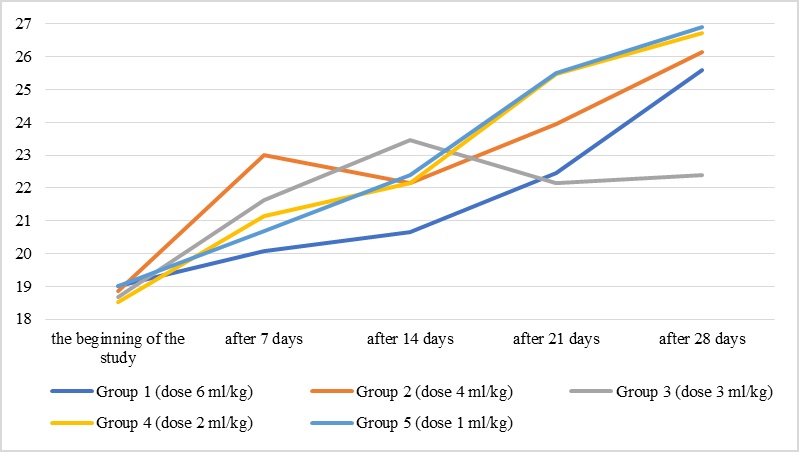
Figure 1. Average body weight of mice during the experiment (g).
Among the mice in group 1, which received the highest dose (6 ml/kg), body weight gain was the least, suggesting the presence of some toxic effects. However, 11 days after discontinuing the drug, the body weight in this group began to normalize, indicating that the body’s response to the drug was reversible. A slight reduction in body weight gain was observed on day 14 for Group 2, which can be interpreted as a mild manifestation of the drug’s toxicity. Conversely, the highest weight gains were observed in groups 2 and 4 on days 21 and 28, respectively.
To assess the drug’s impact on the digestive system, the physical and chemical properties of the animals’ feces were analyzed. Samples were taken at the beginning and then every 7 days during the experiment. An organoleptic examination focused on the shape, consistency, color, smell, and the presence of foreign materials.
Chemical analysis included pH testing, and the presence of blood, bile pigments, bilirubin, fats, and starch was investigated using various reagents like benzidine, Terquay, Fouche, Sudan III, and Lugol.
The study found that both the experimental and control groups defecated naturally, with no signs of pain or strain. Fecal samples showed no blood, mucus, pus, or gas bubbles, and no eggs of parasites or protozoa were present.
Microscopic examination revealed only rare starch grains and neutral fats in the feces. The chemical tests did not show any abnormal blood pigments, and bile pigments remained within normal levels. The fecal pH was 7.0-7.4, confirming the proper functioning of the intestinal flora.
These results suggest that Neocytin, even when administered at doses well above therapeutic levels for extended periods, does not adversely affect the animals’ digestive processes.
The irritating effect of Neocytin was tested by administering intradermal injections in two rabbits. The rabbits were placed in a dorsal position, and the fur on their abdomen was shaved. The shaved skin area was divided into six sections, and each section received a Neocytin injection in the center. A 0.3 cm³ dose of the drug was injected into each of three sections.
Twenty minutes after the injection, a 1% solution of trypan blue was administered intravenously at a dose of 1 cm³ per kg of the rabbit’s body weight. After 30, 60, and 180 minutes, the skin at the injection sites was examined for color changes.
The severity of irritation was assessed on an 8-point scale based on tissue staining.
The results showed a weak irritating effect 30 minutes after the dye injection, which increased to moderate after 60 and 180 minutes. After 4 hours, the irritation was mild, and it completely disappeared after 5 hours. These observations are summarized in Table 2.
Table 2. The effect of a Neocytin on the intensity of tissue staining
Rabbit | Indicators | Study time (hours) | |||||
0 | 0.5 | 1 | 3 | 4 | 5 | ||
№ 1 | Score in points | 0 | 4 | 6 | 6 | 4 | 0 |
Effect | Absent | Weak | Moderate | Moderate | Weak | Absent | |
№ 2 | Score in points | 0 | 4 | 6 | 6 | 4 | 0 |
Effect | Absent | Weak | Moderate | Moderate | Weak | Absent | |
Upon visually inspecting the conjunctiva, cornea, and eyelids of rabbits, it was observed that Neocytin induces mild conjunctival irritation 2 to 3 hours following administration, with the symptoms subsiding by the fourth hour (Table 3).
Table 3. The effect of the drug Neocytin on the rabbit’s eye
Rabbit | Indicators | Study time (hours) | |||||||
0 | 0.5 | 1 | 2 | 3 | 4 | 5 | 6 | ||
№1 | Score in points | 0 | 0 | 0 | 2 | 2 | 0 | 0 | 0 |
Effect | Absent | Absent | Absent | Weak | Weak | Absent | Absent | Absent | |
№2 | Score in points | 0 | 0 | 0 | 2 | 2 | 0 | 0 | 0 |
Effect | Absent | Absent | Absent | Weak | Weak | Absent | Absent | Absent | |
Therefore, Neocytin does not exhibit a significant irritant effect when applied externally. The clinical condition of the rabbits remained normal after Neocytin application to the conjunctiva, with no changes in body temperature, heart rate, or respiratory rate (Table 4).
Table 4. Data on the clinical condition of rabbits
Rabbit | Indicators | Study time (hours) | |||||||
0 | 0.5 | 1 | 2 | 3 | 4 | 5 | 6 | ||
№1 | Body temperature | 38,65 | 38,65 | 38,65 | 38,6 | 38,7 | 38,75 | 38,75 | 38,7 |
Heart rate | 126 | 126 | 125 | 125 | 126 | 125 | 127 | 126 | |
Respiratory rate | 54 | 53 | 52 | 53 | 52 | 52 | 53 | 53 | |
№2 | Body temperature | 38,7 | 38,7 | 38,7 | 38,65 | 38,6 | 38,8 | 38,8 | 38,75 |
Heart rate | 128 | 128 | 126 | 126 | 128 | 128 | 128 | 127 | |
Respiratory rate | 55 | 56 | 56 | 55 | 56 | 57 | 57 | 57 | |
Thus, the results from the experiment indicate that Neocytin does not cause significant irritation when applied externally.
Neocytin is a new combined antibiotic formulation containing chloramphenicol and tetracycline. The drug’s quality is monitored in accordance with approved standards that assess its appearance, odor, taste, sterility, microbiological purity, and toxicity.
The drug’s toxic effects were observed in animals, with symptoms including light tetanic spasms, low energy, and reduced movement. Moderate toxicity involved muscle spasms followed by general weakness, while continuous muscle contractions, stomach cramps, abdominal tightness, and further lethargy marked severe toxicity.
The impact of Neocytin on the digestive system was assessed through regular fecal analysis. The results showed no abnormal substances, such as blood, mucus, or parasites, and the pH and chemical composition of the stool remained normal, indicating no harmful effects on digestion, even at doses significantly higher than therapeutic levels.
In irritation studies, Neocytin showed a mild irritant effect 30 minutes after application, progressing to moderate irritation at 60 and 180 minutes, then subsiding to weak irritation by the fourth hour, disappearing by the fifth hour.
Upon examining the conjunctiva, cornea, and eyelids of rabbits, mild conjunctival irritation was noted 2-3 hours after application, resolving by the fourth hour. Overall, Neocytin does not demonstrate significant external irritancy. The rabbits’ general health remained unaffected, with no changes in body temperature, pulse rate, or respiratory rate.
None
None
None
None
Open Access The author(s) retain copyright. This article is licensed under the Creative Commons Attribution-NonCommercial-ShareAlike 4.0 International License. It may be shared and adapted for non-commercial purposes with appropriate attribution, an indication of changes, and distribution of adaptations under the same license. Third-party material may be subject to separate terms identified in its credit line. View the license at https://creativecommons.org/licenses/by-nc-sa/4.0/.
 Publication System