Microorganisms are the primary triggers of various inflammatory diseases in the human body. Diseases such as bronchitis, otitis media, pneumonia, conjunctivitis, cystitis, endometritis, and infections of the fallopian tubes and ovaries are routinely treated with antimicrobial agents in global medical protocols. Bacterial infections like chlamydia, streptodermia, scarlet fever, meningitis, and tuberculosis cannot be treated without the application of antimicrobial therapies. Likewise, viral conditions such as herpes, chickenpox, hepatitis C and B, and HIV are now addressed using antiviral treatments. Antibiotics are used to treat fungal infections of the skin, mucous membranes, and nails, as well as systemic mycoses. For protozoal diseases such as giardiasis, amoebic dysentery, trichomoniasis, malaria, and toxoplasmosis, antiprotozoal drugs are prescribed. These therapeutic agents target a wide range of pathogens, including bacteria, viruses, fungi, and protozoa. This article offers a succinct review of various antimicrobial drugs and provides an in-depth analysis of the Russian antimicrobial drug market.
Diseases such as bronchitis, otitis media, pneumonia, conjunctivitis, cystitis, endometritis, and infections of the fallopian tubes and ovaries are routinely treated with antimicrobial agents in global medical protocols.
Bacterial infections like chlamydia, streptodermia, scarlet fever, meningitis, and tuberculosis cannot be treated without the application of antimicrobial therapies. Likewise, viral conditions such as herpes, chickenpox, hepatitis C and B, and HIV are now addressed using antiviral treatments. Antibiotics are used to treat fungal infections of the skin, mucous membranes, and nails, as well as systemic mycoses. For protozoal diseases such as giardiasis, amoebic dysentery, trichomoniasis, malaria, and toxoplasmosis, antiprotozoal drugs are prescribed. These therapeutic agents target a wide range of pathogens, including bacteria, viruses, fungi, and protozoa.
This article offers a succinct review of various antimicrobial drugs and provides an in-depth analysis of the Russian antimicrobial drug market.
Antimicrobial agents can be grouped into three categories: antiseptics, disinfectants, and chemotherapeutic agents. A detailed discussion of each category follows.
Antiseptics are agents designed to be applied to the skin, mucous membranes, and wound or burn surfaces, as well as within body cavities, to eliminate microorganisms [1]. These substances are effective at killing a broad range of pathogens and are routinely used to prevent infections during surgery and to reduce the risk of hospital-acquired infections. Medical professionals commonly use antiseptics on their hands to prevent the transmission of pathogens. Due to their broad spectrum of activity, antiseptics are effective against most infection-causing microorganisms [2, 3].
Common antiseptics include various alcohols (ethyl, isopropyl, propyl), hydrogen peroxide, iodine, brilliant green, boric acid, miramistin, chlorhexidine, benzalkonium chloride, and octenidine dihydrochloride [4, 5].
These agents serve both therapeutic and preventative purposes, such as treating wounds, cuts, abrasions, burns, ulcers, bedsores, and certain dermatological conditions [6].
Disinfectants are powerful antimicrobial substances used to sterilize environmental objects, including medical instruments, devices, and furniture in healthcare facilities [7].
Similar to antiseptics, disinfectants are effective against a wide range of microbial agents, including bacteria (such as tuberculosis pathogens), viruses, fungi (e.g., candidiasis, dermatophytosis), and protozoa [8]. They are available in various forms, such as pure solutions, dilutable concentrates, and disinfectant wipes [9]. Disinfectants are classified into several categories, including:
Halogen-based disinfectants: These include chlorine, iodine, and bromine compounds. Among them, chlorine-based disinfectants like chloramine, bleach, and calcium/sodium hypochlorite are the most widely used. However, these disinfectants can corrode metals, irritate the respiratory tract, and pollute the environment, requiring careful handling [10, 11].
Oxygen-based disinfectants: These include hydrogen peroxide (“Alaminol”), peracids, perborates, and percarbonates [12].
Surfactants: These compounds are used as both cleaning agents and disinfectants, especially for sterilizing medical equipment. Due to their low toxicity, they are suitable for general cleaning and are gentle on instruments and surfaces [13].
Aldehyde-based disinfectants include formalin and formaldehyde. These chemicals are toxic, have strong odors, and often cause allergic reactions [14].
Phenol-based disinfectants: Disinfectants like “Triacid” belong to this group. They are particularly effective against tuberculosis but are limited in use due to their strong smell and irritating properties [15].
Guanidine-based disinfectants: These compounds are less toxic but exhibit weak antimicrobial effects when biological contaminants are present. They form a protective bactericidal layer on surfaces and are particularly effective for hand disinfection, though they should not be used on copper items [16].
Alcohol-based disinfectants: Ethanol, propanol, and isopropanol are commonly used for skin antisepsis and disinfecting metal instruments and tools [17, 18]. Many disinfectant products combine ingredients from several categories of disinfectants.
Chemotherapeutic agents are crucial in combating infections caused by bacteria, viruses, fungi, and protozoa [19]. These agents include:
· Antibacterial agents: These substances either kill bacteria or prevent their growth. The bactericidal effect results in bacterial death via mechanisms such as cell wall destruction and protein denaturation [20].
· Antimycotics: These medications are used to treat fungal infections, such as candidiasis of the skin and mucous membranes, dermatophyte infections of the skin, hair, and nails, and systemic mycoses that impact internal organs. They may show either fungicidal or fungistatic effects [21].
· Antiviral drugs: A broad category of medications used to treat infections caused by viruses, including herpesvirus infections, HIV, active hepatitis C and B, and influenza [22].
· Antiprotozoal medications: These drugs target protozoal infections, such as those caused by Giardia, Trichomonas, amoebas, malaria, and Toxoplasma. In Russia, nitroimidazoles, which are synthetic antimicrobial agents, dominate this market [23].
The antiseptic industry is one of the few sectors to have experienced significant growth amid the current economic climate. Alcohol-based hand sanitizers have been officially recognized by the World Health Organization (WHO) as the most effective solution for quickly eliminating various harmful microorganisms, leading to a surge in demand for these products [24, 25]. In Russia, sanitizer production surged sixfold in spring 2020. Major companies from industries such as perfumery, cosmetics, pharmaceuticals, and even alcoholic beverages entered the market. Analysts expect alcohol disinfectant consumption to increase four to six times by 2024-2025 due to new sanitary and hygienic standards introduced for households, businesses, and public spaces [26].
Before the COVID-19 pandemic, Russia’s antiseptic disinfectant production had already been expanding. In 2018, market volume increased by more than 30%, and in 2019, it rose by over 90%. By the time the pandemic reached Russia, five major companies were producing 17 million liters of sanitizers, while another 23 million liters were imported, accounting for 56.8% of the total. By the end of 2019, the overall market size reached nearly 40 million liters [27].
Figure 1 shows the dynamics of the Russian antiseptic market, thousands of liters.
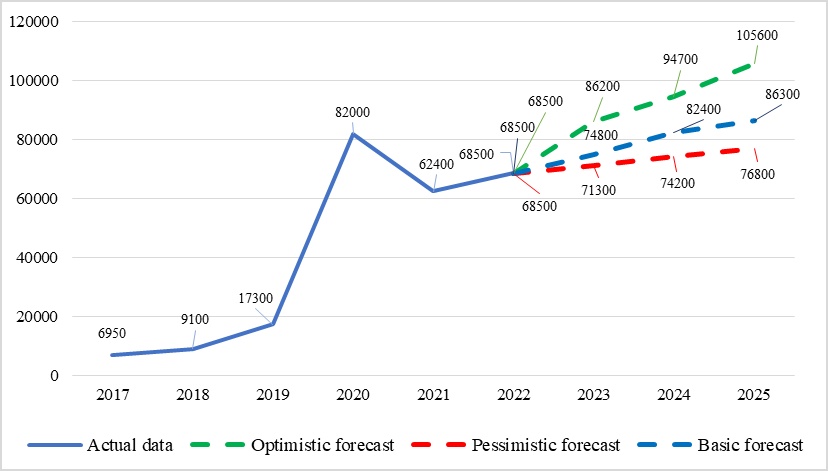
Figure 1. Dynamics of the Russian antiseptic market, thousands of liters.
Despite the considerable production volumes, when the coronavirus pandemic began, antiseptics rapidly depleted, resulting in a significant shortage [28]. This occurred due to a combination of factors: a sharp increase in public demand and government-imposed distribution mandates that prioritized hospitals and clinics. Additionally, a regulation enacted by state authorities in 2020 required all organizations to maintain a stockpile of disinfectants, without which they could not continue operations.
By early March 2020, daily alcohol-based disinfectant production reached 50,000 liters, with 10 companies already supplying the market, most of which specialized in this field [29]. By mid-April, the following developments had taken place:
1. Daily production had increased to 300,000 liters.
2. The number of companies manufacturing these products had grown to 60.
3. 25% of the total antiseptics produced came from companies in the perfume and cosmetics industry.
4. Plans were to initiate production of alcohol-based disinfectants in factories that previously manufactured alcoholic beverages, offering liquor companies an opportunity to offset revenue losses from reduced spirits demand [30].
Major manufacturers quickly adapted to the surge in demand:
· Bentus Laboratories, the leading disinfectant producer, reported a threefold increase in domestic demand. During peak demand, production facilities operated at full capacity, and exports were severely restricted.
· The pharmaceutical company Evalar had already set up a line for bottling alcohol-based cosmetics before the epidemic. Within a week of the outbreak, they shifted production to antiseptics and acquired a license for the new production line in an expedited process.
· Faberlic, a giant in the perfume and cosmetics sector, redirected its production to produce up to 6 million bottles of sanitizers per month. According to the company’s CEO, production would continue to meet market demand.
· The Laboratory of Modern Cosmetics had been producing alcohol-based disinfectants since August 2019, well before the pandemic. When the coronavirus spread, they ceased cosmetic production and shifted all resources to antiseptic manufacturing, with the capacity to supply up to 600,000 units per month.
As the peak of the coronavirus pandemic subsided, other virus variants emerged that, while still concerning, did not cause the same level of panic. Consequently, the demand for sanitizers began to decrease. Although the market is expected to experience slower growth moving forward, it will still operate at levels well above pre-crisis levels due to stricter sanitary regulations at workplaces and public venues, including those introduced by new legislation [31].
In all scenarios—optimistic, pessimistic, and baseline—the market is expected to undergo slight adjustments, with overall positive growth trends. The most conservative forecast anticipates a market increase of 4.4 times by 2025 compared to 2019. Over time, the number of companies producing antiseptic solutions is also expected to rise.
Broad-spectrum antibiotics are essential in treating various infections that affect the digestive, respiratory, and genitourinary systems. This category represents one of the largest groups of medications. Over 100 distinct active substances classified as antibiotics are currently available on the market, and when considering different formulations and dosages, the total number of antibiotic products exceeds 1,700 [32].
In 2020, the consumption of “Antibacterial drugs for systemic use” (PBX group) totaled 82 billion rubles, corresponding to 548 million units sold. The trend in antibiotic consumption had been declining until 2020, when it sharply increased. Although the overall volume showed slight positive growth, this was mainly driven by a shift towards higher-priced antibiotics and a substantial rise in unit costs. The year 2020 marked a peak in antibacterial drug sales, driven by the inclusion of certain antibiotics in COVID-19 treatment protocols. As a result, sales of broad-spectrum antibiotics increased by 19% [33].
Antibiotics are used in both inpatient and outpatient settings [34]. Consequently, sales are divided into two main channels: 62% of total antibiotic volume is purchased by the public through pharmacies. At the same time, medical and preventive institutions annually acquire antibiotics worth 21.8 billion rubles (38% of total consumption) through government funding (Table 1).
Table 1. Structure of antibiotic sales from 2020 to 2022
| Share, rubles | Share, packaging | ||||||
By the place of production | ||||||||
Localized | 47% | 67% | ||||||
Imported | 53% | 33% | ||||||
By origin | ||||||||
Original | 81% | 9% | ||||||
Generik | 19% | 6% | ||||||
By entering the rating of vital medicines | ||||||||
Is included | 77% | 89% | ||||||
Is not included | 23% | 11% | ||||||
By the method of purchase | ||||||||
Hospital purchases | 38% | 33% | ||||||
Pharmacy purchases | 62% | 67% | ||||||
By price segmentation, rubles | ||||||||
| < 50 | 50-150 | 150-500 | > 500 | < 50 | 50-150 | 150-500 | > 500 |
Hospital purchases | 7% | 13% | 26% | 54% | 51% | 25% | 18% | 7% |
Pharmacy purchases | 6% | 14% | 51% | 29% | 36% | 28% | 29% | 7% |
On average, a package of broad-spectrum antibiotics costs approximately 238 rubles. Before 2020, the annual price increase was about 6%, but during the pandemic, this surged to 19%. The demand for certain antibiotic groups in 2020 not only drove up prices for popular drugs but also led to the elimination of cheaper options from the market. Consequently, there was a forced shift toward more expensive medicines [33]. For instance, azithromycin from the INN group saw a 71% increase in revenue and a 58% increase in package sales over 9 months. The most commonly purchased dosage, “Azithromycin tab. 500 mg No. 3,” saw its average price rise from 73 rubles in 2019 to 101 rubles in 2020. By early 2023, the cost for this dosage had climbed to at least 151 rubles [33]. Despite this, azithromycin remains in short supply in pharmacies nationwide.
Consumers typically favor affordable antibacterial medications, with products under 150 rubles accounting for 64% of sales by volume. However, antibiotics priced at 150-500 rubles yield the greatest profit for pharmacies, accounting for 51% of sales by value (Table 1). The government spends the most on medications priced over 500 rubles, accounting for 54% of expenditures. However, the largest share by package volume belongs to drugs in the lowest price bracket of up to 50 rubles (51%) [35].
Sales of systemic antibacterial drugs peak during the autumn-winter months [36], mainly due to the incidence of colds and viral infections. This seasonality is more evident in pharmacy sales. Many patients self-medicate, which, coupled with the uncontrolled use of antibiotics for common colds, contributes to the development of antimicrobial resistance. Antibiotic consumption in the summer months is approximately 1.5 times lower than in the winter.
In hospitals, antibiotic consumption tends to be more consistent, influenced mainly by budget allocations and tender schedules. As a result, the first half of the year accounts for 44% of the annual demand, while the second half accounts for 56%.
Although imported antibiotics dominate the Russian market in terms of value, their share has been steadily decreasing, dropping from 53% in 2020 and 64% in 2015 to 37% in 2022. This reflects the success of the “import substitution” program [37]. In terms of volume, however, Russian-made antibiotics make up 67% of the market. The cost of domestic drugs was about 128 rubles per pack in 2020 (167 rubles in 2022), while foreign antibiotics cost 289 rubles per pack in 2020 (412 rubles in 2022).
The Russian antibiotic market is composed mainly of generics [38], which account for around 81% of sales by value and 94% by volume. Original drugs, although more expensive, constitute only 6% of sales by volume and 19% by value. These original drugs are mainly sold in pharmacies [39]. In the hospital sector, generics dominate, representing 98.4% of all purchases by volume. The average price for generics in 2022 was 184 rubles per pack, compared to 760 rubles per pack for original drugs.
As of the first nine months of 2020, only 10 of the 106 INNs associated with antibiotics were available exclusively as original drugs, without any generic alternatives. Among the most prominent original antibiotics were josamycin (2.4% by value), thiamphenicol glycinate acetylcysteinate (0.87%), and ceftaroline fosamil (0.78%). All systemic antibacterial drugs are available only with a prescription, and most are included in the list of essential medicines, meaning their prices are regulated by the government [40].
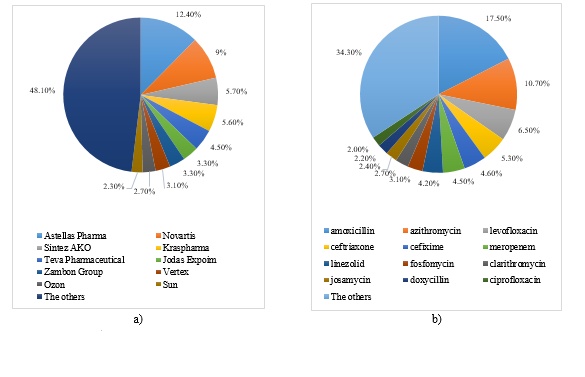
Figure 2. Segmentation of the Russian antimicrobial drugs market: a) rating of manufacturers of antibacterial agents for systemic use in 2020-2021, and b) rating of antibacterial agents for systemic use in 2020-2021.
Over 220 companies produce antibiotics in Russia, with the top 10 manufacturers accounting for 52% of total sales value (Figure 2a). This group includes both foreign firms and local manufacturers. Astellas Pharma leads in antibiotic sales, with popular brands such as Suprax, Flemoxin Solutab, Unidox Solutab, and Vilprafen. Domestic manufacturers offer the broadest range of antibiotics, and the top 20 INNs account for more than 76% of the market value of antibacterial drugs (Figure 2b). The most commonly produced INNs include metronidazole (produced by 54 manufacturers), ciprofloxacin (46 manufacturers), ceftriaxone (44 manufacturers), azithromycin (38 manufacturers), and levofloxacin (37 manufacturers).
Overall, sales of these INNs increased by 31% in value and 16% in volume in 2020, with azithromycin and levofloxacin experiencing the most significant growth.
The management of bacterial, viral, and fungal infections hinges on antimicrobial therapy, which is essential for effective treatment [41]. These substances can be categorized into three main types: antiseptics, disinfectants, and chemotherapeutic agents [42, 43]. In Russia, the market for antiseptics and disinfectants has experienced significant expansion since 2017, with a dramatic surge in demand in 2020, reaching 82,000 liters. However, by 2021, the demand dropped to 62,400 thousand liters annually, though production has continued to rise steadily since then.
Regarding the broad-spectrum antibiotics market, several notable trends have been observed:
· A rise in both the number and production volume of Russian manufacturers;
· A decline in the market share of foreign-made antibiotics, especially from 2022 onwards;
· A gradual increase in the cost of antibiotics, including those on the essential medicines list;
· Generics dominate the market, accounting for over 90%, with hospitals as the primary consumers.
The authors would like to thank their colleagues from North Caucasus Federal University for their assistance in data processing.
None
None
None
Open Access The author(s) retain copyright. This article is licensed under the Creative Commons Attribution-NonCommercial-ShareAlike 4.0 International License. It may be shared and adapted for non-commercial purposes with appropriate attribution, an indication of changes, and distribution of adaptations under the same license. Third-party material may be subject to separate terms identified in its credit line. View the license at https://creativecommons.org/licenses/by-nc-sa/4.0/.
 Publication System