Pharmaceutical development is increasingly moving beyond the traditional emphasis on drug substance performance to include the full experience of medicine use. This shift reflects the recognition that therapeutic value is shaped not only by pharmacology, but also by whether patients can understand, accept, handle, administer, and continue using a product in everyday life. Despite major advances in dosage form engineering, digital health tools, adherence monitoring, and personalised pharmaceutical manufacturing, many innovations remain disconnected from the practical contexts in which medicines are used. A dosage form may be technically sophisticated but still fail if it is difficult to swallow, unattractive to children, burdensome for older adults, incompatible with daily routines, or unsupported by feedback systems that encourage continued use. This narrative review integrates three domains that are often discussed separately: dosage design, adherence logic, and real-world use systems. It argues that patient-centric pharmaceutical technologies should be understood as integrated use systems rather than isolated product features. The central question is how pharmaceutical technologies can be designed to support not only drug delivery, but also patient acceptance, behavioural continuity, and implementation in real healthcare settings. The review concludes that patient-centricity should be treated as a foundational development logic rather than a late-stage product attribute. Future pharmaceutical technologies will require early patient involvement, scalable manufacturing pathways, human factors validation, digital support systems, and regulatory strategies that define success according to real-world usability and patient-defined outcomes.
Medication non-adherence remains one of the clearest signs that pharmaceutical performance cannot be understood through drug efficacy alone. Reviews of adherence interventions show that even clinically effective medicines may underperform when patients face complex regimens, poor product usability, weak feedback, or limited integration into daily life [1]. In this context, patient-centric pharmaceutical design has emerged as a response to the mismatch between conventional dosage form assumptions and the varied needs of children, older adults, people with swallowing difficulties, and patients managing long-term conditions [2].
The movement toward patient-centricity reframes the dosage form as part of a broader therapeutic experience rather than a neutral container for an active substance. Menditto and colleagues argue that pharmaceutical drug product design can influence adherence when formulation attributes are aligned with patient capability, preference, and routine use [2]. This perspective is reinforced by evidence that acceptability, palatability, swallowability, and handling are not secondary considerations, but practical determinants of whether a medicine can be used as intended [3].
Technological innovation alone, however, does not guarantee patient-centred outcomes. Three-dimensional printing, smart blister systems, digital pill technologies, and sensor-based monitoring platforms can extend the design space, but their value depends on whether they solve real patient problems and can be translated into usable, scalable, and trusted systems [4-6]. A technology that improves customisation but increases burden, cost, privacy risk, or workflow complexity may reproduce the very barriers that patient-centric design seeks to overcome.
This narrative review examines patient-centric pharmaceutical technologies through the integrated lenses of dosage design, adherence logic, and real-world use systems. It focuses on peer-reviewed literature published between 2017 and 2025 and synthesises developments in oral dosage adaptation, digital adherence support, usability research, human-centred design, and translational implementation [7-9]. The aim is not to report new empirical data, but to construct a critical narrative of how pharmaceutical technologies can move from product-centred innovation toward patient-defined therapeutic success.
The evolution of patient-centric pharmaceutical design reflects a gradual departure from the assumption that standard solid oral dosage forms can serve all populations equally. Traditional tablets and capsules remain dominant because they are stable, scalable, and familiar, yet they often fail to accommodate developmental, sensory, cognitive, and functional differences among users [3]. Patient-centric design therefore emerged as a corrective framework that asks whether a medicine is not only pharmacologically appropriate, but also acceptable, manageable, and meaningful for the person expected to use it [10].
A major driver of this evolution has been the growing recognition that patient acceptability can be studied, measured, and incorporated into product development. Methodological reviews have highlighted the need for structured approaches to assess acceptability in children and older adults, including swallowability, palatability, dose flexibility, handling, and caregiver involvement [11]. More recent work has extended this logic by proposing patient-centred target product profiles that link formulation attributes to measurable patient outcomes and development decisions [7].
Patient-centricity has also been shaped by the wider rise of personalised medicine and by regulatory interest in patient-focused development. Although personalisation is often associated with genomic targeting or individualised dosing, pharmaceutical technology adds another layer by enabling dosage forms to be adapted to physical, behavioural, and contextual needs [9]. The resulting paradigm does not replace conventional quality standards; rather, it expands them by requiring evidence that the final product can be used safely, consistently, and acceptably in real patient populations [12].
Dosage form adaptation is one of the most visible routes through which patient-centric design enters pharmaceutical technology. Orally disintegrating tablets, multiparticulates, minitablets, chewable forms, and liquid alternatives have been explored to address swallowing difficulty, dose flexibility, paediatric administration, geriatric use, and patient preference [3, 11]. The underlying design logic is that administration burden is not a marginal inconvenience but a structural determinant of treatment continuation.
Evidence from acceptability and preference studies shows that dosage form attributes can shape the willingness and ability of patients to use medicines. In older adults, factors such as tablet size, shape, surface, visual recognition, and handling can influence swallowability and medication management [13]. In paediatric populations, visual appearance, taste, mouthfeel, and child involvement in formulation research have become increasingly important dimensions of product acceptability [14].
Three-dimensional printing has expanded the patient-centric design space by enabling flexible geometry, dose personalisation, and visual tailoring. Early work on patient acceptability of printed medicines suggested that patients may respond positively to novel forms when the technology is linked to recognisable benefits such as personalised dosing or improved usability [4]. Subsequent paediatric studies further showed that children’s visual preferences and clinical needs can inform the design of printed tablets, while more recent clinical work has demonstrated the potential of personalised printed medicines for rare metabolic disorders [15-17].
At the same time, dosage form adaptation should not be treated as automatically patient-centric simply because it is novel or customisable. A formulation strategy must be judged by whether it improves administration, acceptability, adherence, safety, manufacturability, and regulatory feasibility for a defined population [8, 18]. Table 1 maps the spectrum of dosage form adaptations to specific patient-centric needs.
Table 1. Dosage Form Adaptation Strategies for Patient-Centricity: Technology, Target Population, and Performance Requirements
Dosage form adaptation strategy | Main patient-centric need addressed | Relevant target population or use context | Key performance requirements | Critical implementation concern |
Orally disintegrating tablets | Reduced swallowing burden and simplified administration without water | Children, older adults, patients with dysphagia, patients needing discreet administration | Rapid disintegration, acceptable taste, manageable mouthfeel, dose accuracy, physical stability | Palatability and mechanical robustness must be balanced with manufacturability and packaging protection |
Minitablets | Flexible dosing with improved swallowability compared with conventional tablets | Paediatric patients, older adults, patients requiring dose titration | Small size, dose uniformity, counting accuracy, acceptable handling, low choking risk | Caregiver and patient ability to administer the correct number of units must be evaluated |
Multiparticulates | Dose flexibility and mixing with soft food or liquids | Paediatric and geriatric use, patients with swallowing limitations | Uniform drug distribution, taste masking, compatibility with vehicles, reproducible administration | Real administration practices may alter dose delivery, especially when mixed with food or drink |
Chewable dosage forms | Improved acceptability where swallowing intact tablets is difficult | Children, selected adults, patients preferring chewable administration | Pleasant texture, acceptable flavour, dose uniformity after chewing, low residue burden | Sugar content, sensory fatigue, and chewing ability may limit broad applicability |
Oral liquids | Dose flexibility and ease of administration | Infants, children, older adults, patients with severe swallowing difficulty | Accurate dosing, palatability, microbial stability, suitable viscosity, caregiver usability | Measuring errors, storage burden, and taste issues can undermine adherence |
Three-dimensional printed tablets | Personalised dose, shape, size, colour, and release behaviour | Rare disease therapy, personalised dosing, paediatric and complex-dose contexts | Print accuracy, mechanical strength, content uniformity, release reproducibility, visual acceptability | Translation requires validated manufacturing platforms, regulatory clarity, and scalable quality control |
Fixed-dose or multi-drug customised forms | Reduced regimen complexity and improved treatment continuity | Patients with polypharmacy or chronic disease burden | Compatibility among drugs, predictable release, stability, clear identification, safe substitution logic | Clinical flexibility must be balanced against risks of inappropriate combination or dose inflexibility |
Patient-preference-informed solid forms | Alignment of appearance, size, and handling with user expectations | Broad chronic disease populations, paediatric users, older adults | Acceptable shape, colour, size, surface, packaging, and identification | Preference evidence must be linked to clinically meaningful adherence or usability outcomes |
Adherence logic refers to the way a pharmaceutical product anticipates, reduces, or compensates for the behavioural demands placed on patients. Conventional adherence discussions often focus on patient motivation, but product design can either support or undermine motivation by shaping dosing frequency, administration complexity, feedback, and perceived burden [19]. Innovative drug delivery systems are therefore increasingly evaluated not only by pharmacokinetic performance, but also by their ability to make correct and repeated use easier over time [19].
Simplified regimens remain one of the most direct ways to embed adherence logic into pharmaceutical technologies. Reduced dosing frequency, long-acting delivery, fixed-dose combinations, and easier administration formats can reduce decision points and lessen the cognitive burden associated with chronic treatment [1]. However, simplification is not universally beneficial if it reduces dose flexibility, creates confusion during therapy changes, or makes adverse-event management more difficult [2].
Digital technologies have expanded adherence logic from passive design support to active monitoring and feedback. Medication adherence monitoring technologies include electronic pill bottles, smart blister packs, ingestible sensors, and mobile-linked systems that record or infer medication-taking behaviour [5]. These tools can create new opportunities for timely intervention, but they also raise questions about patient autonomy, data interpretation, privacy, and whether monitoring itself improves outcomes rather than merely documenting non-use [20].
Smart packaging and digital pill systems illustrate both the promise and limitation of product-embedded adherence logic. Usability work on digital pill systems shows that patients and providers may value objective adherence information, but such systems must remain understandable, acceptable, and minimally burdensome in daily use [20]. Table 2 summarises adherence-enhancing technologies embedded in pharmaceutical products and their supporting evidence.
Table 2. Pharmaceutical Technologies Integrating Adherence Logic: Mechanisms, Evidence Level, and Patient-Reported Outcomes
Technology or adherence-supportive approach | Embedded adherence mechanism | Main evidence contribution | Patient-reported or use-related outcome | Critical limitation |
Simplified oral regimens | Reduces dosing frequency and decision burden | Adherence intervention reviews identify regimen simplification as a recurring strategy | Lower perceived treatment complexity and easier routine formation | May reduce flexibility when dose adjustment is needed |
Fixed-dose combinations | Combines multiple medicines into fewer units | Supports reduced pill burden in chronic therapy contexts | Improved convenience for patients with polypharmacy | Drug compatibility, dose inflexibility, and substitution issues may limit use |
Long-acting or sustained delivery systems | Reduces frequency of patient-administered dosing | Drug delivery innovation literature links reduced administration burden to adherence support | Less frequent treatment action and reduced forgetfulness risk | Requires careful management of adverse effects and discontinuation |
Smart blister packaging | Records dose removal and can support reminders | Usability studies show potential for monitoring and supporting adherence | Improved awareness of medication-taking behaviour | Opening a blister does not always confirm ingestion |
Electronic medication monitors | Tracks access events and generates adherence data | Technology reviews describe electronic monitoring as a major adherence measurement approach | Supports feedback to patients, caregivers, and clinicians | Data may be incomplete, intrusive, or misinterpreted |
Digital pill systems | Confirms ingestion through ingestible sensor-linked reporting | Usability validation studies show feasibility of adherence measurement and reporting | Objective ingestion-related feedback may support clinical decision-making | Acceptability depends on privacy, trust, and perceived value |
Mobile-linked reminder systems | Provides prompts, alerts, and behavioural nudges | Smart medication product reviews identify reminders as common design features | Reduced forgetfulness and greater engagement for selected users | Alert fatigue may reduce sustained effectiveness |
Feedback-loop adherence platforms | Connects adherence data to healthcare professionals or caregivers | Digital adherence literature supports the value of feedback-enabled monitoring | Enables timely support when non-adherence patterns appear | Integration into clinical workflow remains challenging |
Real-world use systems extend patient-centric pharmaceutical design beyond the physical dosage form. They include the packaging, instructions, reminder tools, digital platforms, caregiver involvement, pharmacy workflows, and clinical feedback loops that determine how the product is actually used after dispensing [6]. This broader perspective is important because a medicine that performs well under controlled conditions may fail when everyday routines, sensory preferences, device handling, and social contexts are ignored [8].
Smart blister packages demonstrate how pharmaceutical products can become part of connected use systems. Usability research on electronic smart blister packages indicates that adherence support depends not only on the sensor or reminder function, but also on package handling, patient understanding, and the perceived usefulness of the information generated [6]. These findings show that real-world use systems must be evaluated as socio-technical arrangements rather than as isolated digital add-ons.
Mobile health applications, cloud-based platforms, and connected medication products create the possibility of continuous feedback between patients, caregivers, pharmacists, and clinicians. Reviews of smart medication adherence products describe features such as dose reminders, adherence tracking, caregiver alerts, educational content, and medication history dashboards [21]. Yet the same features can become burdensome if they require excessive interaction, produce confusing feedback, or fail to fit the patient’s health literacy and digital confidence [21].
The real-world use perspective also highlights the fragility of adherence technologies when implementation conditions are weak. Innovative approaches to measuring and enhancing adherence in chronic disease management may produce meaningful support only when they are aligned with patient routines, provider workflows, reimbursement structures, and data governance expectations [22]. For patient-centric pharmaceutical technology, the critical question is therefore not whether a product can generate data, but whether that data can be converted into trustworthy, acceptable, and actionable support [22].
Human factors engineering provides the methodological bridge between patient-centric intention and safe, usable product performance. In pharmaceutical design, it examines whether patients, caregivers, and healthcare professionals can correctly interpret, handle, administer, and continue using a product under realistic conditions [23]. This is especially important for technologies that combine dosage forms with devices, digital interfaces, packaging, or complex preparation steps [24].
Patient preference research is one human factors route for identifying product attributes that matter to real users. Scoping work on solid oral dosage form preferences shows that attributes such as size, shape, colour, surface, taste, smell, and ease of swallowing may influence acceptability and willingness to continue treatment [8]. Preference evidence should not be interpreted as cosmetic feedback; it can reveal practical usability barriers that conventional pharmaceutical testing may miss [25].
Human factors evidence is particularly important in older adults and other populations with functional limitations. Studies of oral liquid acceptability in older adults show that palatability, swallowability, dosing accuracy, and administration context can all affect whether a product is practically usable [26]. Reviews focused on medication use in older adults further emphasise that vision, dexterity, cognition, swallowing function, and polypharmacy should be considered together when designing patient-centred dosage forms [27].
For combination products and device-enabled delivery, human factors must be integrated with regulatory and development strategy rather than added late in design. Injectable combination product development has been described as a patient-centric challenge because the device, formulation, administration setting, and user training jointly determine delivery success [24]. Table 3 outlines key human factors studies in pharmaceutical design and their regulatory implications.
Table 3. Human Factors Evidence in Patient-Centric Pharmaceutical Design: Study Types, Endpoints, and Regulatory Alignment
Human factors evidence type | Typical study focus | Key endpoints | Regulatory or development relevance | Main design implication |
Patient preference studies | Desired dosage form attributes and user priorities | Preference ranking, acceptability, willingness to use | Supports patient-focused product design decisions | Preference data should guide early target product profiles |
Swallowability studies | Ability to swallow tablets, capsules, minitablets, or liquids | Ease of swallowing, discomfort, choking concern, water need | Helps justify age-appropriate and dysphagia-friendly designs | Size, shape, surface, and mouthfeel must be optimised together |
Palatability studies | Taste, smell, texture, aftertaste, and mouthfeel | Taste acceptability, sensory burden, refusal risk | Especially relevant for paediatric and geriatric formulations | Taste masking must be balanced with stability and manufacturability |
Handling studies | Opening, dosing, counting, measuring, or administering products | Error rate, task completion, dexterity burden | Supports safe-use claims for packaging and administration systems | Packaging and dosing tools must match user capability |
Digital usability studies | Interaction with apps, smart packages, or digital pill platforms | Comprehension, navigation, trust, privacy concern, task burden | Supports implementation of connected adherence systems | Digital functions must provide clear value without excessive burden |
Combination product usability studies | Use of injectable, inhaled, or device-linked products | Use errors, critical task success, training needs | Aligns with regulatory expectations for safe and effective use | Device design, instructions, and formulation must be co-developed |
Caregiver-use studies | Administration by parents, family members, or professional carers | Dosing accuracy, confidence, workflow fit | Important where the patient is not the sole product user | Patient-centricity must include caregiver capability |
Real-world simulation studies | Product use under realistic constraints | Routine fit, interruption management, persistence, error recovery | Strengthens evidence beyond controlled laboratory testing | Development should test use environments, not only product attributes |
Translation is the point at which many patient-centric technologies reveal the gap between promising prototypes and sustainable pharmaceutical products. Three-dimensional printing, personalised dosage forms, smart packaging, and connected adherence systems may demonstrate technical feasibility, but they also introduce manufacturing, quality control, regulatory, reimbursement, and workflow challenges [28, 29]. Patient-centricity therefore requires an implementation pathway that is planned from the beginning rather than added after proof of concept [9].
Manufacturing scalability is a central barrier because many personalised or adaptive technologies are easier to demonstrate than to produce under routine quality systems. Patient-centred manufacturing concepts call for integration between formulation design, production control, digital records, and supply-chain models that can support individualised therapy without compromising consistency or safety [9]. For printed medicines, recent work coupling hot-melt extrusion with additive manufacturing platforms shows how patient-centric concepts must be linked to quality-by-design, material control, and process validation [28].
Regulatory translation also depends on whether developers can explain the patient-relevant value of a technology in terms that align with quality, safety, usability, and clinical benefit. Industry perspectives on subcutaneous drug delivery design emphasise that patient experience and treatment adherence are influenced by delivery duration, injection burden, device usability, and healthcare setting, not by formulation performance alone [30]. Table 4 frames a translation pathway for patient-centric technologies from concept to marketed product.
Table 4. Translation and Implementation Pathway for Patient-Centric Pharmaceutical Technologies: Milestones, Barriers, and Enablers
Translation stage | Main milestone | Common barrier | Key enabling action | Patient-centric success criterion |
Unmet-use problem definition | Identify the practical patient burden the technology should solve | Technology chosen before the patient problem is clearly defined | Conduct early patient, caregiver, clinician, and pharmacist input | The target problem reflects real administration or adherence difficulty |
Patient-centred target product profile | Translate patient needs into product attributes | Patient preferences remain descriptive rather than actionable | Link acceptability, usability, and adherence aims to measurable product requirements | Product attributes are justified by defined user needs |
Prototype design | Develop dosage form, packaging, device, or digital support concept | Novelty is prioritised over routine usability | Use iterative design and early human factors screening | Users can understand and perform key tasks |
Formulation and process development | Establish manufacturable and stable product design | Customisation creates uncontrolled variability | Apply quality-by-design and platform manufacturing principles | Patient adaptation does not compromise pharmaceutical quality |
Usability and acceptability evaluation | Test handling, administration, and routine fit | Studies are too controlled or population samples are too narrow | Include representative users and realistic use scenarios | Evidence shows the product can be used as intended |
Adherence-support evaluation | Assess whether the product supports sustained use | Monitoring is mistaken for adherence improvement | Measure patient burden, engagement, feedback value, and persistence | The technology reduces barriers rather than adding new ones |
Regulatory evidence alignment | Prepare evidence for quality, safety, usability, and risk control | Human factors and patient evidence are treated as separate from CMC strategy | Integrate usability, device, digital, and formulation evidence into development planning | Regulatory submission explains both product performance and safe use |
Market and healthcare implementation | Embed product into care pathways and reimbursement models | Cost, workflow disruption, and data governance block adoption | Plan pharmacy, clinician, payer, and digital infrastructure requirements | The product delivers patient-defined value in real care settings |
Figure 1 presents an integrated patient-centric pharmaceutical technology pathway linking dosage design, adherence logic, real-world use systems, human factors evidence, and translation readiness.
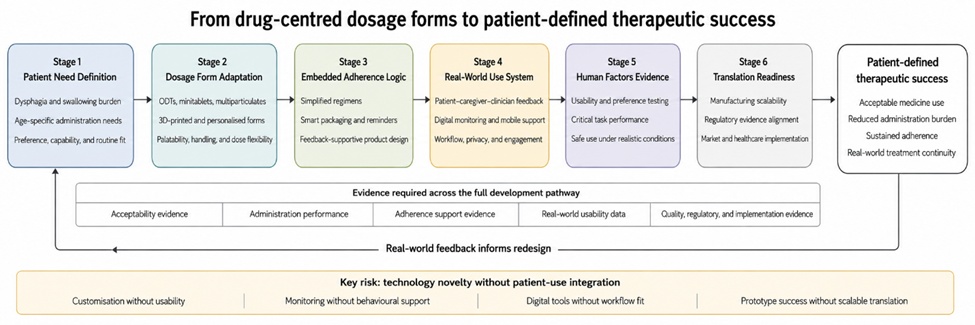
Figure 1. Integrated Patient-Centric Pharmaceutical Technology Pathway from Dosage Design to Real-World Therapeutic Use
The future of patient-centric pharmaceutical technology will depend on deeper integration between co-creation, digital health, and scalable manufacturing. Human-centred design methods offer a route for involving patients, caregivers, and healthcare professionals earlier in the development process, but their value depends on converting qualitative insight into concrete formulation, packaging, device, and digital design decisions [23]. This means that patient involvement should not be symbolic; it should shape the target product profile, risk assessment, and implementation strategy.
Artificial intelligence and sensor-based digital health may also influence the next generation of adherence prediction and product support systems. Sensor-based health technologies can collect behavioural and physiological data, but human factors and usability remain decisive for whether patients trust, understand, and continue using such systems [31]. Future adherence platforms will need to move beyond reminders toward adaptive support that respects patient autonomy, privacy, and changing life circumstances [21, 31].
Platform technologies may help decouple dosage form customisation from excessive manufacturing complexity. Additive manufacturing, modular oral dosage systems, and flexible drug delivery platforms could make it easier to personalise dose, appearance, release profile, and administration format while maintaining quality control [28, 29]. The most important future shift will be cultural as much as technical: pharmaceutical scientists, digital health developers, clinicians, regulators, and patients must learn to define product success through real-world use rather than laboratory performance alone [7, 12].
Patient-centric pharmaceutical technologies require a unified development logic that connects dosage design, adherence support, and real-world use systems. A dosage form cannot be considered patient-centred simply because it is novel, personalised, or digitally connected. It becomes patient-centred only when it reduces practical burden, supports safe administration, fits patient routines, and contributes to sustained therapeutic use.
The narrative developed in this review shows that patient-centricity is not a decorative feature added to a finished product. It is a foundational principle that must shape early problem definition, target product profiles, formulation choices, usability testing, adherence strategy, manufacturing planning, and regulatory evidence generation. Without this integrated logic, technically impressive innovations may fail to improve the everyday experience of medicine use.
The next phase of pharmaceutical technology should therefore align industry, regulators, healthcare systems, and patients around patient-defined success. This requires evidence that medicines can be accepted, handled, administered, monitored, and continued in real life. The strongest patient-centric technologies will be those that transform pharmaceutical products from isolated dosage forms into usable, trusted, and sustainable therapeutic systems.
None
None
None
None
Open Access The author(s) retain copyright. This article is licensed under the Creative Commons Attribution-NonCommercial-ShareAlike 4.0 International License. It may be shared and adapted for non-commercial purposes with appropriate attribution, an indication of changes, and distribution of adaptations under the same license. Third-party material may be subject to separate terms identified in its credit line. View the license at https://creativecommons.org/licenses/by-nc-sa/4.0/.
 Publication System