Pharmaceutical platform technologies are reshaping drug delivery by enabling systems that can be adapted, configured, or personalised across multiple therapeutic contexts. Rather than treating each medicine as a discrete formulation problem, platform thinking emphasises reusable design principles, shared technological architectures, and translational scalability. This shift is visible across lipid nanoparticles, polymeric micelles, implantable devices, three-dimensional printed dosage forms, and digitally connected delivery systems. Despite this progress, the terminology surrounding platform technologies remains inconsistent. Terms such as smart, adaptive, programmable, modular, intelligent, responsive, and personalised are often used interchangeably, even when the systems being described operate through different mechanisms. This ambiguity limits meaningful comparison between technologies and can obscure the design assumptions that determine manufacturability, clinical suitability, and regulatory evaluation. This classification review and perspective develops a critical taxonomy of pharmaceutical platform technologies. It classifies platforms into four categories: modular, adaptive, programmable, and patient-responsive systems. The taxonomy is based on operational logic and design intent rather than material class, route of administration, or therapeutic area. The proposed taxonomy defines explicit criteria for distinguishing the four platform types. Modular systems are organised around interchangeable components, adaptive systems around dynamic response to environmental or physiological cues, programmable systems around rule-based therapeutic logic, and patient-responsive systems around real-time patient-specific data and feedback control. Five tables support the manuscript by defining classification criteria, summarising representative platform types, and comparing the translational implications of each category. This taxonomy provides a shared conceptual language for platform-based pharmaceutical development. It clarifies design philosophies, translational risks, manufacturing implications, and regulatory questions that differ across platform types. Its purpose is to support clearer communication among pharmaceutical scientists, engineers, clinicians, regulators, and translational teams as drug delivery platforms become increasingly configurable, biologically interactive, and data-linked.
Pharmaceutical technology is increasingly organised around platforms rather than single products, reflecting a broader shift from isolated formulation development toward reusable delivery architectures. Commercial and translational analyses show that drug delivery technologies have evolved from relatively passive release systems toward engineered platforms that can support multiple drugs, routes, and therapeutic indications [1]. This transition is especially evident in precision nanoparticles, where material composition, surface properties, and cargo compatibility can be tuned within a broader delivery framework [2]. Platform thinking therefore reframes pharmaceutical development as the design of adaptable technological systems rather than one-off dosage forms.
Lipid nanoparticles illustrate the platform concept particularly clearly because a shared structural architecture can be modified for different RNA payloads, biodistribution profiles, and therapeutic applications [3]. More broadly, nucleic acid therapeutics depend on delivery platforms that can accommodate differences in payload size, chemistry, immunogenicity, intracellular trafficking, and target tissue [4]. Nanodelivery systems for nucleic acids have accordingly become central examples of how common design principles can be adapted across vaccines, gene silencing, protein replacement, and genome editing [5]. These examples show that pharmaceutical platforms are defined not only by materials but also by repeatable rules for adaptation.
The growth of platform-based drug delivery has created a terminology problem. Polymeric micelles, stimuli-responsive carriers, DNA origami nanostructures, wearable-linked delivery systems, and three-dimensional printed dosage forms may all be described as advanced or smart, even though their design logics differ substantially [6-8]. A micellar carrier that improves solubilisation, a pH-responsive system that alters release, and a DNA nanorobot that executes a molecularly triggered therapeutic function should not be treated as equivalent platform types [9, 10]. Without a clearer taxonomy, the field risks conflating formulation versatility, environmental responsiveness, molecular computation, and patient-specific feedback.
This article develops a classification taxonomy for pharmaceutical platform technologies based on operational logic and design intent. It distinguishes modular, adaptive, programmable, and patient-responsive systems as related but analytically distinct categories. The purpose is not to replace existing classifications based on materials, dosage forms, or routes of administration, but to add a functional classification layer that improves comparison across technologies. Such a taxonomy can support clearer design decisions, translational planning, regulatory discussion, and future platform development [11, 12].
A taxonomy is needed because platform technologies are currently discussed through several overlapping disciplinary vocabularies. Nanomedicine literature often emphasises particle composition, biological interface, and targeting behaviour, whereas pharmaceutical development literature tends to emphasise manufacturability, quality attributes, and clinical translation [13, 14]. Digital health-linked delivery systems foreground sensing and feedback, while DNA nanotechnology emphasises molecular recognition, structural precision, and programmed behaviour [12, 15]. These vocabularies are valuable, but without a shared taxonomy they make it difficult to compare platforms across technological domains.
The distinction between platform capacity and product performance is also critical. A delivery technology may be clinically successful as a single product but have limited reconfigurability, while another may be technologically immature yet possess substantial platform potential [1, 2]. Lipid nanoparticles, polymeric micelles, and implantable systems each demonstrate that platform value depends on whether the underlying architecture can be predictably modified for different drugs, doses, tissues, or indications [3, 16]. A useful taxonomy should therefore classify how a platform operates rather than merely whether it has reached clinical or commercial use.
A structured taxonomy can support translation by clarifying what must remain constant and what may be varied when a platform is adapted. For example, selective organ targeting nanoparticles raise questions about whether compositional changes represent permissible platform optimisation or create a materially distinct product requiring separate evaluation [17]. Three-dimensional printed medicines raise related questions about whether patient-specific geometry, dose, or release profiles remain within a validated platform design space [18]. Classification can therefore inform quality control, comparability assessment, clinical evidence generation, and regulatory strategy.
The first criterion is modularity, defined as the extent to which a platform is built from interchangeable and standardised components that can be recombined without redesigning the entire system. Modular logic is evident in nanoparticle systems where ionisable lipids, helper lipids, targeting ligands, surface coatings, and therapeutic cargos can be varied to tune delivery properties [3, 4]. It is also visible in broader drug delivery technologies that use recurring formulation principles to support multiple therapeutic products [1]. In this taxonomy, modularity refers to intentional reconfigurability rather than mere compositional complexity.
The second criterion is adaptivity, defined as the capacity of a platform to respond to physiological or external cues by modifying release, transport, activation, or localisation. Stimuli-responsive delivery systems triggered by pH, enzymes, temperature, redox gradients, light, or other cues provide much of the technical basis for this category [7]. However, adaptivity is narrower than general responsiveness because it implies that the system changes behaviour in relation to dynamic conditions in a therapeutically meaningful way. Adaptive systems therefore occupy a middle position between passive controlled release and fully programmed therapeutic decision-making.
The third criterion is programmability, defined as the capacity to execute predefined therapeutic operations based on molecular recognition, temporal sequencing, Boolean logic, or engineered biological computation. DNA nanorobots, DNA origami carriers, logic-gated nanomaterials, and synthetic biology-inspired systems demonstrate this rule-based design logic [10, 19, 20]. Programmable platforms differ from adaptive platforms because they do not merely respond to a cue; they interpret one or more inputs according to an encoded rule or decision architecture. This makes programmability a category based on information processing rather than stimulus sensitivity alone.
The fourth criterion is patient-responsiveness, defined as the integration of real-time or near real-time patient-specific data into delivery decisions, dose modulation, or therapeutic timing. Wearable biosensors and closed-loop delivery concepts provide the clearest examples because they connect sensing, interpretation, and actuation around individual physiology [11, 12]. Patient-responsive systems may incorporate modular, adaptive, or programmable components, but they become a distinct platform class when patient data are essential to therapeutic operation. Table 1 defines the classification criteria and how they differentiate the four platform types.
Table 1. Classification Criteria for Pharmaceutical Platform Technologies: Modularity, Adaptivity, Programmability, and Patient-Responsiveness
Classification criterion | Definition in this taxonomy | Primary design question | Typical enabling features | Boundary condition |
Modularity | Capacity to reconfigure a platform through interchangeable components while retaining a shared technological architecture. | Which components can be exchanged without redesigning the entire product? | Standardised carriers, interchangeable lipids or polymers, modular ligands, swappable cargos, configurable implants, repeatable manufacturing units. | A complex formulation is not modular unless its components are intentionally replaceable within a coherent platform design. |
Adaptivity | Capacity to modify platform behaviour in response to physiological or external cues. | Which environmental or biological changes alter release, activation, localisation, or transport? | pH-sensitive materials, enzyme-responsive linkers, thermoresponsive polymers, redox-sensitive bonds, externally triggered release mechanisms. | A simple triggerable material is not fully adaptive unless the response changes therapeutic behaviour in relation to dynamic conditions. |
Programmability | Capacity to execute predefined logic-based therapeutic functions. | What encoded rule, sequence, or molecular computation governs the therapeutic output? | DNA origami, molecular locks, Boolean logic gates, multi-input nanocarriers, synthetic gene circuits, biomarker-triggered nanodevices. | Programmability requires encoded decision logic and cannot be reduced to simple stimulus sensitivity. |
Patient-responsiveness | Capacity to individualise delivery through patient-specific monitoring and feedback. | What patient data influence dose, timing, release, or actuation? | Wearable sensors, implantable biosensors, closed-loop controllers, continuous monitoring, connected delivery devices, feedback algorithms. | Personalisation by fixed prescription is not patient-responsive unless ongoing patient data influence delivery decisions. |
Translational implication | Each platform type generates different evidence, manufacturing, and regulatory questions. | What must be standardised, validated, controlled, and clinically demonstrated? | Platform comparability, design-space validation, control strategies, device integration, human-factor assessment, feedback-loop verification. | Hybrid systems should be classified according to their dominant therapeutic logic while acknowledging secondary platform features. |
Figure 1 presents the proposed taxonomy of pharmaceutical platform technologies by distinguishing modular, adaptive, programmable, and patient-responsive systems according to their dominant operational logic, design intent, enabling features, and translational evidence requirements.
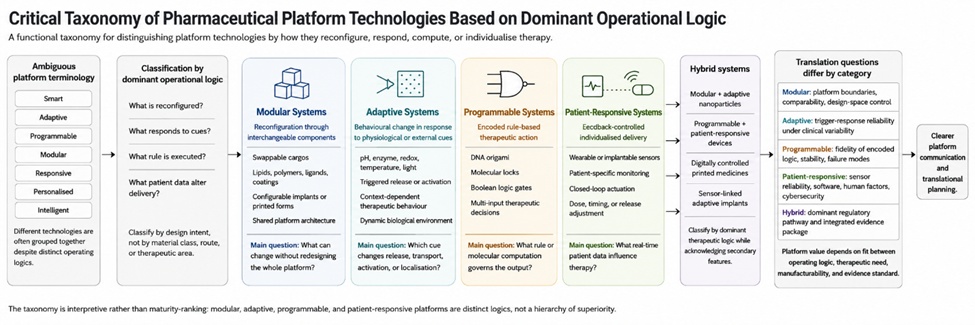
Figure 1. Critical Taxonomy of Pharmaceutical Platform Technologies Based on Dominant Operational Logic
Modular pharmaceutical platform systems are built around interchangeable components that can be recombined while preserving a recognisable platform architecture. In drug delivery, this means that the carrier, payload, surface chemistry, targeting element, release-controlling element, or manufacturing unit can be varied without redefining the entire technology. Lipid nanoparticles are a leading example because changes in ionisable lipid chemistry, helper lipids, polyethylene glycol-lipids, cargo type, and formulation conditions can shift potency, tolerability, and tissue distribution while retaining a common platform logic [3, 21]. This modularity has been especially important for RNA therapeutics, where different nucleic acid cargos require related but adjustable delivery solutions [22].
The key value of modular systems is speed of reconfiguration. A modular platform can support multiple therapeutic products because its components are designed to be exchanged, screened, or optimised within a repeatable design space. Selective organ targeting nanoparticles illustrate this principle because compositional changes can redirect delivery toward different tissues, suggesting a configurable approach to tissue-specific RNA delivery and genome editing [17]. Dendrimer-based lipid nanoparticles similarly show how chemical architecture and formulation design can be adjusted to deliver therapeutic mRNA in disease-relevant settings [23].
Modularity is not limited to lipid nanoparticles. Polymeric micelles provide another platform class in which polymer blocks, hydrophobic cores, corona properties, and drug-loading strategies can be varied to improve solubilisation and delivery of poorly soluble drugs [6, 9]. Cell membrane-coated nanoparticles add a further modular layer by combining synthetic cores with biologically derived membranes that can alter immune interaction, circulation, or targeting behaviour [24]. Table 2 provides representative examples of modular pharmaceutical platform systems.
Table 2. Modular Platform Systems: Examples, Components, and Reconfigurability Features
Platform example | Interchangeable or configurable components | Reconfigurability feature | Representative application area | Main translational consideration |
Lipid nanoparticles for RNA delivery | Ionisable lipid, helper lipid, cholesterol, polyethylene glycol-lipid, RNA cargo, formulation ratio | Cargo and lipid composition can be altered while preserving a shared nanoparticle architecture | Vaccines, protein replacement, gene silencing, genome editing | Comparability between formulations and control of critical material attributes |
Selective organ targeting nanoparticles | Lipid composition, charge-altering components, payload type, particle formulation parameters | Tissue tropism can be tuned through compositional modification | Liver, lung, spleen, and immune-cell delivery | Demonstrating reproducible biodistribution and safety across variants |
Polymeric micelles | Amphiphilic polymer blocks, hydrophobic core, corona chemistry, drug-loading method | Core and shell chemistry can be adjusted for different poorly soluble drugs | Oncology, inflammatory disease, poorly soluble small molecules | Stability, dilution behaviour, drug loading, and batch reproducibility |
Cell membrane-coated nanoparticles | Synthetic core, membrane source, surface proteins, therapeutic cargo | Biological interface can be changed by selecting different membrane sources | Immune modulation, cancer targeting, biomimetic delivery | Source material variability and biological characterisation |
Three-dimensional printed dosage forms | Geometry, infill, polymer matrix, dose, release channel, drug combination | Dose and release design can be digitally configured | Personalised oral medicines, paediatric dosing, polypharmacy | Process validation, digital design control, and patient-specific quality assurance |
Implantable delivery systems | Device geometry, reservoir, polymer matrix, release membrane, drug combination | Long-acting delivery can be configured by changing device architecture or payload | Chronic disease, oncology, contraception, local therapy | Sterility, device reliability, local tissue response, and long-term safety |
The boundary of modularity must be drawn carefully. A product with many ingredients is not necessarily modular if changing one ingredient requires complete redevelopment of the system. Conversely, a relatively simple formulation may be strongly modular if it has a defined architecture that supports systematic substitution of components. This distinction matters because modular platforms promise accelerated development, but they also create regulatory questions about when a modified version remains within the same platform family [1, 14].
Adaptive pharmaceutical platform systems respond to changing physiological or external conditions by altering release, activation, localisation, or transport. Their defining feature is not simply sensitivity to a stimulus, but the capacity to modify therapeutic behaviour in relation to dynamic cues. Stimuli-responsive drug delivery systems triggered by pH, enzymes, redox gradients, temperature, light, magnetic fields, or other inputs provide the technological foundation of this category [7]. Adaptive systems therefore sit between passive controlled-release platforms and programmable systems that execute encoded decision rules.
The distinction between adaptive and merely stimuli-responsive systems is important. A formulation that releases a drug faster at low pH may be stimulus-responsive, but it becomes more clearly adaptive when that response is tied to a disease-relevant microenvironment and changes therapeutic exposure over time. Intracellular and subcellular microenvironments provide many such opportunities because endosomes, lysosomes, tumour tissue, inflamed regions, and redox-altered compartments can supply dynamic release cues [7]. In this sense, adaptivity depends on the relationship between trigger, biological context, and therapeutic consequence.
Adaptive behaviour can also be engineered through material transformation. Polymeric micelles may alter stability, drug release, or cellular uptake in response to dilution, pH, enzymatic activity, or local tissue conditions, making them candidates for adaptive delivery when their structural response is therapeutically meaningful [6, 9]. Implantable systems can also be adaptive when release kinetics are influenced by local tissue conditions, degradation, swelling, or externally applied actuation [16]. These examples show that adaptivity can occur at nanoscale, microscale, or device scale.
Adaptive systems are translationally attractive because they can improve therapeutic selectivity without requiring full computational logic or external digital infrastructure. However, they are also difficult to evaluate because their performance depends on variable biological environments that may differ between preclinical models and patients. The foreign body response to implantable systems, for example, can alter local diffusion, inflammation, fibrosis, and long-term release behaviour [16]. For adaptive platforms, translation therefore requires evidence that the trigger-response relationship remains reliable under clinically realistic variability.
Programmable pharmaceutical platform systems execute predefined therapeutic operations according to encoded molecular, structural, or biological rules. Their defining feature is information processing: the platform does not simply react to a condition but interprets input signals according to an organised design. Logic-gated nanomaterials, DNA nanostructures, and synthetic biology-inspired therapeutic systems represent this category because they can be designed to respond only when specified molecular conditions are met [19, 25]. Programmability therefore marks a shift from material responsiveness to rule-based therapeutic action.
DNA nanotechnology provides the clearest examples of programmable pharmaceutical platforms. DNA origami carriers can be designed with predictable geometry, spatial addressability, molecular locks, and trigger-responsive opening mechanisms [15, 20]. DNA nanorobots that expose therapeutic payloads in response to molecular triggers demonstrate how structural design can be linked to disease-associated recognition [10]. Chemically modified DNA nanostructures extend this logic by improving stability, function, and delivery potential in biological environments [26].
Programmable systems may also use Boolean or multi-input logic to improve therapeutic specificity. A logic-gated modular nanovesicle can be designed to release drug only when defined molecular conditions are satisfied, linking therapeutic output to a programmed decision structure [27]. Engineered biomaterial logic gates similarly show that therapeutic delivery can be controlled through combinations of environmental signals rather than a single trigger [28]. Table 3 summarises programmable platform technologies and their logic-based therapeutic functions.
Table 3. Programmable Platform Systems: Logic Gates, Biological Triggers, and Therapeutic Outputs
Programmable platform type | Logic or programming mechanism | Biological or external trigger | Therapeutic output | Classification rationale |
DNA nanorobot | Molecular lock-and-key recognition controlling structural opening | Disease-associated molecular trigger | Exposure or release of therapeutic payload | Executes a predefined structural program in response to a molecular input |
DNA origami drug carrier | Spatially organised nanoscale architecture with addressable functional sites | Nucleases, receptor binding, molecular recognition, or designed unlocking events | Targeted presentation, release, or localisation of cargo | Uses encoded DNA structure to organise therapeutic function |
Logic-gated nanovesicle | Boolean-like molecular gate controlling release | Combination of biomarkers or microenvironmental conditions | On-demand chemotherapy or drug release | Requires defined input conditions before therapeutic output occurs |
Engineered biomaterial logic gate | Material response governed by combined environmental inputs | Enzymes, pH, redox state, or other local signals | Environmentally triggered therapeutic delivery | Converts multiple cues into a designed release decision |
Programmable T-cell engager platform | DNA origami scaffold arranging multiple binding elements | Antigen recognition and immune-cell engagement | Multispecific immune activation | Uses programmable nanoscale geometry to control cell-engaging function |
Synthetic biology-inspired therapeutic system | Engineered genetic or cellular circuit | Biomarker, metabolite, or disease-state signal | Regulated therapeutic production or activity | Therapeutic action follows an encoded biological rule |
The translational promise of programmable platforms is high, but so is their development burden. Programmable DNA-origami-based T-cell engagers show how nanoscale organisation can be used to control multispecific immune interactions, yet such systems require rigorous assessment of stability, immunogenicity, biodistribution, and manufacturing reproducibility [29]. Cancer immunotherapy delivery platforms more broadly illustrate that sophisticated therapeutic control must be matched by scalable production and predictable in vivo behaviour [30]. Programmable systems therefore require evaluation frameworks that address both pharmaceutical quality and the fidelity of encoded therapeutic logic.
Patient-responsive pharmaceutical platform systems close the loop between individual patient data and therapeutic delivery. Their defining feature is the use of real-time or near real-time monitoring to influence dose, timing, actuation, or release. Wearable biosensors have made this category increasingly plausible by enabling continuous or repeated measurement of physiological signals relevant to health and disease [12]. Closed-loop drug delivery concepts extend this logic by linking sensing technologies to delivery systems that can adjust therapy based on patient-specific feedback [11].
Patient-responsiveness differs from conventional personalisation. A fixed dose selected according to age, weight, genotype, or disease severity is personalised, but it is not necessarily patient-responsive. A patient-responsive system requires ongoing data capture and a mechanism by which those data alter therapeutic action. Transdermal and wearable-linked delivery systems are especially relevant because they can potentially combine non-invasive monitoring, algorithmic interpretation, and controlled drug administration within a connected platform [11].
The design logic of patient-responsive systems can include modular, adaptive, or programmable components, but the dominant classification criterion is feedback from the patient. For example, a sensor-linked delivery patch may use a modular drug reservoir, an adaptive release membrane, and a programmable control algorithm, yet its therapeutic identity is defined by closed-loop adjustment to individual physiology. Wearable biosensors for healthcare monitoring demonstrate the expanding range of measurable signals, including biochemical, physiological, and behavioural data streams [12]. Table 4 maps patient-responsive platforms to their sensing, feedback, and personalisation mechanisms.
Table 4. Patient-Responsive Platform Systems: Sensors, Closed-Loop Feedback, and Individualised Delivery
Patient-responsive platform type | Patient-specific input | Feedback mechanism | Delivery or therapeutic response | Key development challenge |
Wearable-linked transdermal delivery | Physiological or biochemical signal from wearable sensor | Sensor data guide timing or intensity of delivery | Adjusted transdermal dosing or triggered administration | Integrating reliable sensing with reproducible drug flux |
Closed-loop implantable system | Local or systemic biomarker, device signal, or physiological state | Device interprets monitored signal and actuates release | Responsive long-acting or localised drug delivery | Long-term reliability, biocompatibility, and fail-safe control |
Digital personalised oral platform | Patient data, dosing history, adherence data, or therapeutic response | Software-guided dose or schedule adjustment | Individually adjusted dosing regimen or printed dosage design | Validating digital control and product quality together |
Biosensor-actuator combination platform | Continuous monitoring of disease-relevant signal | Algorithm converts patient data into actuation command | Real-time release, infusion, or device activation | Avoiding sensor drift, dosing error, and unsafe feedback loops |
Connected chronic-disease delivery platform | Longitudinal patient physiology and treatment response | Adaptive controller updates therapeutic timing or amount | Individualised chronic therapy management | Clinical evidence for outcome improvement over standard care |
Patient-responsive platforms have strong translational potential in chronic diseases where physiological states fluctuate over time. They are particularly relevant when under-dosing, over-dosing, non-adherence, or delayed clinical response can substantially affect outcomes. However, they also create complex evidence requirements because the product may include a drug, device, sensor, software component, and feedback algorithm. The platform must therefore be evaluated not only for pharmacological safety and efficacy but also for data quality, human factors, cybersecurity, reliability, and clinical decision performance [11, 12].
The four platform categories differ in their dominant operational logic. Modular systems are organised around reconfiguration, adaptive systems around dynamic cue-response behaviour, programmable systems around encoded decision rules, and patient-responsive systems around feedback from individual patient data. These distinctions help prevent overuse of broad labels such as smart or advanced, which often obscure meaningful design differences [1, 19]. A comparative taxonomy therefore helps identify what a platform is designed to do before assessing how well it performs.
Design complexity increases differently across the categories. Modular systems may be compositionally complex but conceptually straightforward if their components and substitution rules are well defined. Adaptive systems require reliable coupling between biological conditions and material behaviour, while programmable systems require encoded logic that remains functional in vivo [7, 10]. Patient-responsive systems add another layer because sensing, data interpretation, actuation, and therapeutic delivery must operate together in the patient context [11].
Manufacturing and regulatory challenges also vary across the taxonomy. Modular platforms require control over component interchangeability and comparability across variants, whereas adaptive systems require validation of trigger-response behaviour under relevant biological conditions. Programmable platforms demand evidence that molecular or biological logic operates reproducibly, and patient-responsive systems require verification of the full feedback loop. These differences are consistent with broader concerns in nanoparticle translation, where quality attributes, clinical evidence, and product-specific evaluation remain central [13, 14].
Clinical suitability depends on matching platform logic to therapeutic need. Modular systems are well suited to rapid product family development, adaptive systems to diseases with exploitable microenvironmental cues, programmable systems to conditions requiring high specificity, and patient-responsive systems to diseases marked by temporal physiological variability. Table 5 presents the comparative taxonomy matrix across all four categories.
Table 5. Comparative Taxonomy Matrix of Pharmaceutical Platform Technologies
Taxonomy category | Dominant platform logic | Typical examples | Design complexity | Manufacturing challenge | Regulatory challenge | Best-fit clinical use cases |
Modular systems | Reconfiguration through interchangeable components | Lipid nanoparticles, polymeric micelles, modular implants, three-dimensional printed dosage forms | Moderate to high, depending on number of exchangeable components | Maintaining comparability and quality across platform variants | Defining platform boundaries and acceptable design-space changes | Product families, multiple payloads, combination therapy, rapid adaptation |
Adaptive systems | Behavioural change in response to physiological or external cues | pH-responsive carriers, enzyme-responsive systems, thermoresponsive materials, externally triggered devices | Moderate to high because trigger-response behaviour must be engineered | Reproducible stimulus sensitivity and release behaviour | Demonstrating clinically meaningful response under variable biological conditions | Tumours, inflamed tissues, intracellular delivery, local disease environments |
Programmable systems | Encoded rule-based therapeutic action | DNA nanorobots, DNA origami carriers, logic-gated nanovesicles, engineered biomaterial logic gates | High because molecular recognition and output logic must be integrated | Preserving structural fidelity, stability, and logic function during production | Validating programmed behaviour, safety, biodistribution, and failure modes | Precision oncology, immune modulation, biomarker-defined therapy |
Patient-responsive systems | Feedback-controlled individualised delivery | Wearable-linked delivery, closed-loop implants, biosensor-actuator systems, digitally guided dosing | Very high because drug, device, sensor, software, and patient interaction are integrated | Integrating pharmaceutical quality with sensor and device reliability | Assessing feedback algorithms, human factors, cybersecurity, and clinical benefit | Chronic disease, fluctuating physiology, adherence-sensitive therapy |
Hybrid systems | Combination of two or more platform logics | Sensor-linked adaptive implants, modular programmable nanoparticles, digitally controlled printed medicines | Variable and often high | Coordinating quality attributes across multiple technology layers | Determining the dominant regulatory pathway and evidence requirements | Complex diseases requiring both technological flexibility and therapeutic control |
The matrix is not intended to rank technologies from simple to advanced. Instead, it identifies the dominant design logic that should guide development strategy. A modular platform is not inferior to a programmable system, and a patient-responsive platform is not automatically more clinically useful than an adaptive formulation. The central translational question is whether the platform logic fits the therapeutic problem, manufacturing context, and evidence standard.
In oncology, all four platform types have plausible but distinct roles. Modular nanoparticles and micelles can support combination therapy, cargo substitution, and tumour-targeted formulation development [6, 30]. Adaptive systems can exploit acidic, enzymatic, hypoxic, or redox-altered tumour microenvironments to improve local release or intracellular activation [7]. Programmable systems may be especially relevant when therapy should occur only in the presence of defined tumour-associated molecular patterns, as shown by DNA nanorobots and logic-gated therapeutic designs [10, 27].
In infectious disease and vaccination, modular platform logic is particularly valuable because rapid adaptation to new antigens or nucleic acid sequences can accelerate product development. Lipid nanoparticles for mRNA delivery show how a shared formulation class can support different RNA payloads, making platform development central to vaccine and therapeutic pipelines [3, 21]. Broader RNA delivery systems also show that payload substitution must still be accompanied by rigorous evaluation of stability, immunogenicity, biodistribution, and potency [22]. Translation therefore depends on demonstrating which attributes are platform-general and which remain product-specific.
In chronic disease, patient-responsive systems may offer the strongest conceptual fit because therapeutic needs can change over hours, days, or months. Wearable biosensors and closed-loop delivery platforms can potentially adjust therapy according to physiological state, adherence behaviour, or disease dynamics [11, 12]. Three-dimensional printing may complement this by enabling digitally configured dosage forms, dose combinations, or release profiles for individual patients [8, 18]. The translational challenge is to show that personalisation improves outcomes without introducing unacceptable complexity, error, or inequity.
Across therapeutic areas, platform translation depends on manufacturability, quality control, and regulatory framing. Nanoparticle-based medicines have reached clinical use, but their translation remains shaped by batch reproducibility, characterisation, biodistribution, and safety evaluation [13, 14]. The experience of Doxil demonstrates that even successful nanomedicines require careful attention to manufacturing, product definition, and clinical positioning [31]. More recent reviews of lipid-based nanoparticle production similarly emphasise that industrial development depends on scalable processes, robust analytics, and control of formulation variability [32].
The first limitation of this taxonomy is that platform categories can overlap. A lipid nanoparticle may be modular in composition, adaptive in endosomal behaviour, and programmable if engineered with logic-gated release. A three-dimensional printed dosage form may be modular in design and patient-specific in dose, but not patient-responsive unless real-time patient data influence delivery [8, 18]. For this reason, the taxonomy classifies platforms by dominant operational logic rather than by exclusive membership.
The second limitation is that the field is evolving rapidly. Nanoparticle delivery of CRISPR/Cas9, for example, is advancing through diverse materials, cargos, and targeting strategies that may combine modular, adaptive, and programmable features [33]. Reviews of CRISPR/Cas9 delivery in cancer also show that new therapeutic designs often blur boundaries between gene editing, nanomedicine, and precision oncology [34]. As platform technologies mature, additional categories or subcategories may be needed.
The third limitation is that the taxonomy is conceptual rather than regulatory or systematic. It does not provide a formal evidence-grading framework, nor does it claim that all technologies within a category share the same maturity or clinical readiness. Broad reviews of drug delivery advances show that the field includes platforms at very different stages of development, from exploratory laboratory systems to clinically established technologies [35]. The taxonomy should therefore be used as an interpretive framework for design and translation, not as a substitute for product-specific assessment.
This article has proposed a critical taxonomy of pharmaceutical platform technologies organised around four categories: modular, adaptive, programmable, and patient-responsive systems. The taxonomy distinguishes platforms according to their operational logic and design intent rather than material class, route of administration, or therapeutic area. This approach clarifies why technologies that are often grouped together as smart or advanced may in fact require different development strategies.
The proposed framework can help researchers, formulators, engineers, clinicians, and regulators communicate more precisely about platform-based pharmaceutical development. It highlights what each platform type is designed to change, control, interpret, or individualise. It also encourages earlier consideration of manufacturing feasibility, clinical suitability, evidence generation, and regulatory expectations.
Future pharmaceutical platforms are likely to become increasingly hybrid, combining modular components, adaptive materials, programmable therapeutic logic, and patient-responsive feedback. The taxonomy should therefore be treated as a living framework that can be refined as technologies evolve. Its value lies not in fixing rigid boundaries but in making the assumptions behind platform design more explicit, comparable, and translatable.
None
None
None
None
Open Access The author(s) retain copyright. This article is licensed under the Creative Commons Attribution-NonCommercial-ShareAlike 4.0 International License. It may be shared and adapted for non-commercial purposes with appropriate attribution, an indication of changes, and distribution of adaptations under the same license. Third-party material may be subject to separate terms identified in its credit line. View the license at https://creativecommons.org/licenses/by-nc-sa/4.0/.
 Publication System